Why Did Israel Continue to Multiply Under Oppression?
Exodus 1 Explained: Pharaoh’s Demographic Fear, Hebrew Wordplay, Forced Labor, and the Promise to Abraham
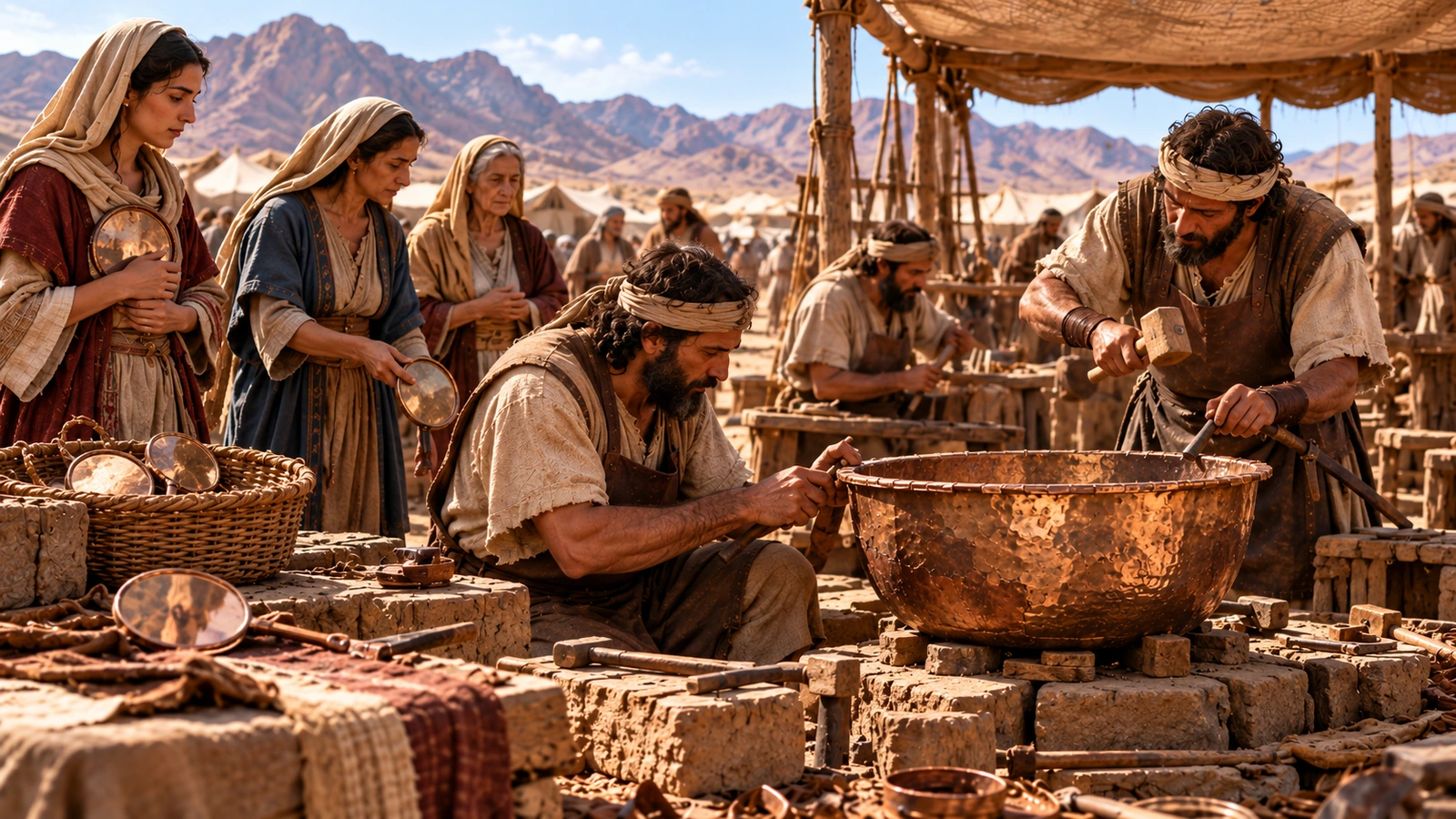
Figure 1. Hebrew laborers work under Egyptian oppression while the surrounding Israelite population continues to expand, illustrating the paradox of Exodus 1:7–14. Source: AI-generated image created for Beyond The Known.
Exodus opens by naming that same family after Joseph’s generation disappears.
The first chapter does not begin with miracles. It begins with population growth.
Then a new king treats that growth as a national threat.
His policies become harsher after each failure. Forced labor cannot stop the increase.
A secret order against newborn boys also fails. Finally, Pharaoh commands death through the Nile.
Why does the population keep expanding while state pressure intensifies?
Exodus never gives a biological explanation. Its language points somewhere more significant.
Exodus Refuses to Begin a New Story
The Hebrew opening is:
וְאֵלֶּה שְׁמוֹת — wəʾēlleh šəmôṯ
“And these are the names.”
Those words immediately reconnect Exodus with Jacob’s household in Genesis.
Carol Meyers notes that Shemot, the Hebrew title, preserves this literary continuity.
Joseph dies with his brothers and their generation. The next verse changes the scale.
Individuals disappear from view. An expanding people takes their place.
A family story is becoming a national story.
That transition was anticipated before Jacob entered Egypt.
Genesis 46:3 says he would become a great nation there, in Egypt.
Exodus 1 begins showing that promise taking visible form.
One Verse Piles Growth Upon Growth
Exodus 1:7 is unusually dense.
Four major verbs describe Jacob’s descendants.
פָּרוּ — pārû means “were fruitful.”
וַיִּשְׁרְצוּ — wayyišrəṣû carries the sense of swarming or teeming.
וַיִּרְבּוּ — wayyirbû means “they multiplied.”
וַיַּעַצְמוּ — wayyaʿaṣmû describes becoming strong or numerous.
Then comes מְאֹד מְאֹד — məʾōḏ məʾōḏ, an emphatic “very, very.”
The narrator is not casually reporting demographic expansion. He overwhelms the sentence with fertility language.
That accumulation becomes the first clue to the chapter’s larger argument.
Exodus 1 Sounds Like Genesis 1
Several words in verse 7 echo creation vocabulary.
Genesis tells living creatures to swarm. Humanity receives commands to multiply and fill the earth.
Exodus applies similar language to Israel in Egypt.
The connection is especially strong around fruitfulness, multiplication, swarming, and filling.
Robert Alter likewise identifies pointed verbal echoes between Exodus 1:7 and creation.
This does not turn Israel into a hidden creation symbol.
Something simpler is happening.
Their expansion is described using language already associated with divine blessing.
The ancestral promises add another layer.
Abraham had been promised numerous descendants. Isaac later received renewed assurances.
Jacob then heard that a great nation would emerge from him in Egypt.
Exodus joins creation language with patriarchal expectation.
Pharaoh Sees the Same Growth Differently
Verse 8 introduces:
מֶלֶךְ־חָדָשׁ — meleḵ-ḥāḏāš
“a new king.”
The narrator adds that this ruler “did not know Joseph.”
Exodus never identifies him by personal name.
Nor does it explain precisely what “did not know” means.
Literal ignorance is possible. Political disregard or nonrecognition has also been proposed.
The narrative gives one secure result.
Joseph’s former position no longer protects his people.
Verse 9 immediately turns demographic expansion into royal anxiety.
The king describes the Israelites as numerous and strong.
His stated concern appears next.
War could come. Israel might join Egypt’s enemies.
They could then escape, rise, or gain advantage.
The final Hebrew clause permits several translations. The uncertainty should remain visible.
Pharaoh Does Not Know He Is Opposing Genesis
This distinction prevents invented psychology.
Nothing says Pharaoh knows Abraham’s promises.
He never announces a campaign against Israel’s God in Exodus 1.
His stated concern is political security.
Readers know something the ruler does not.
Genesis has already attached multiplication to this family.
That creates the chapter’s central irony.
A policy designed to restrict population collides with a family becoming a nation.
Pharaoh understands the demographic problem. He does not understand the larger story.
Forced Labor Becomes the First Response
Egypt appoints שָׂרֵי מִסִּים — śārê missîm over the Israelites.
These officials supervise imposed labor and burdens.
The workers build supply cities called Pithom and Raamses.
Then the language becomes harsher.
Egypt makes their lives bitter through difficult service.
Mortar, bricks, and agricultural work appear directly in the description.
Twice, the narrator uses בְּפָרֶךְ — bəp̄āreḵ.
The term conveys severity or ruthlessness.
Exodus does not romanticize this labor system.
The population is being deliberately exploited.
Oppression Fails Before the Midwives Appear
Verse 12 reports the unexpected result.
Greater affliction accompanies greater multiplication and spreading.
That statement describes narrative irony, not demographic science.
Exodus never explains a biological mechanism behind the expansion.
It does not teach that suffering naturally increases fertility.
The passage says the growth continued despite the oppression.
That distinction matters ethically.
Abuse remains abuse.
Its failure does not transform suffering into something beneficial.
The royal strategy simply cannot achieve its stated purpose.
Go Deeper Into Exodus 1
UNSTOPPED — Seven Days in Exodus 1:1–2:10
Turn the questions in this passage into a seven-day guided study. UNSTOPPED follows the movement from Israel’s growth and forced labor to Pharaoh’s escalating violence, the courage of Shiphrah and Puah, and the preservation of Moses—with observation before commentary, close textual study, reflection prompts, writing space, and historical and theological notes.
Print + Fillable Digital PDFs
• 7 days
• 20–30 minutes per day
They refuse the royal command. Instead, they keep the boys alive.
When summoned, they describe Hebrew women as unusually vigorous during childbirth.
Many readers immediately call their answer a lie.
Exodus never labels the statement false.
Nor does the narrator explain every delivery they attended.
What receives explicit approval is their God-fearing resistance.
God deals well with them.
Then the people multiply again.
Their Names Matter More Than Pharaoh’s
The old Egyptian king once benefited from Joseph.
The new ruler refuses that former relationship.
Yet Exodus preserves no personal name for this monarch.
Shiphrah and Puah are different.
Two women without royal armies receive permanent names in the story.
The observation should not be exaggerated into hidden symbolism.
Still, the literary contrast is difficult to miss.
The powerful ruler issues death commands anonymously.
The women who refuse him remain individually remembered.
Their resistance does not defeat Egypt.
It prevents Pharaoh’s first killing strategy from succeeding.
Multiplication Returns After the Death Order
Verse 20 deliberately returns to earlier vocabulary.
The people multiply and become very strong.
That placement deserves attention.
The chapter began with extraordinary population growth.
Royal policy then tried to restrain it.
After the midwives resist, expansion appears again.
Pharaoh has moved from labor control toward lethal intervention.
Yet the demographic outcome remains beyond his control.
The narrator never says oppression created the increase.
He shows that oppression failed to stop it.
That is a much more defensible claim.
Pharaoh Finally Turns the Nile Into a Weapon
The final decree expands beyond the midwives.
Pharaoh now commands his people to throw newborn sons into the Nile.
Exodus 1 ends without reporting how many children died.
The text does not provide those numbers.
Instead, chapter 2 immediately introduces one endangered Hebrew boy.
That sequence changes the narrative focus.
The Nile should become a place of death.
For one child, it becomes the setting through which he survives.
Pharaoh created the danger.
The next chapter shows one family acting inside it.
The Deeper Discovery
The sharpest irony appears in two nearly matching Hebrew expressions.
Pharaoh says:
פֶּן־יִרְבֶּה — pen-yirbeh
“lest it multiply.”
His policy is designed around preventing that verb.
Two verses later, the narrator answers:
כֵּן יִרְבֶּה — kēn yirbeh
“so it multiplied.”
The feared word returns almost unchanged.
Only the framing has reversed.
Pharaoh says, “lest it multiply.”
The narration answers, “so it multiplied.”
That verbal collision explains the chapter better than a theological slogan.
Exodus does not reveal the population’s biological mechanism.
It reveals the failure of royal control.
Genesis had already connected multiplication with creation and ancestral promises.
Now Egypt’s king tries to restrain that expanding household.
The narrator answers his policy using his own verb.
That is why the chapter presents growth as more than demographics.
It has become a literary confrontation.
Human authority attempts to determine Israel’s future.
The narrative shows that authority reaching its limit.
Continue the Study
Study Exodus 1 for Seven Days, Not Seven Minutes
UNSTOPPED — A Seven-Day Guided Study of Exodus 1:1–2:10 is a guided study workbook for readers who want to examine the passage more carefully rather than stop at a quick devotional takeaway.
Work through names, multiplication, forced labor, Pharaoh’s fear, the courage of Shiphrah and Puah, and the preservation of Moses through structured observation, theological reflection, historical context, and space to record what you discover.
Print + Fillable Digital PDFs
• 7 days
• 20–30 minutes per day