What Was the Sign Given to Cain in Genesis 4:15?
What Genesis 4:15 Actually Says About Cain’s Mysterious Sign—and Why the Text Never Describes What It Looked like
 |
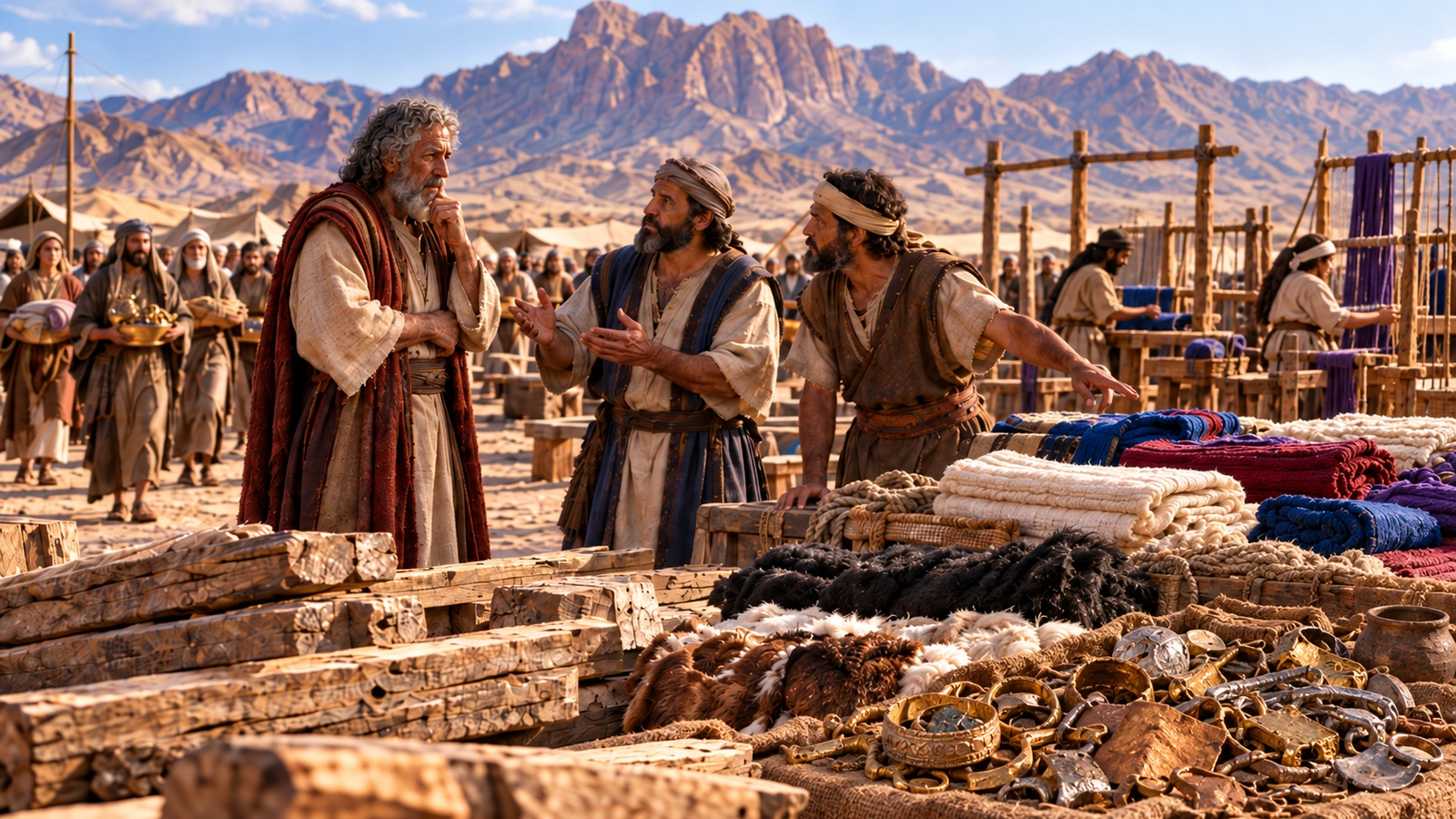
Figure 1. Artistic representation of Cain leaving after receiving the sign described in Genesis 4:15. The biblical text does not describe the sign’s appearance or explicitly identify it as a physical mark on Cain’s body. Source: AI-generated image created for Beyond The Known (2026).
|
The previous episode leaves Abel dead and Cain standing under judgment.
After God warned Cain that sin was crouching at the door, Cain killed his brother—a story examined in Why Did God Accept Abel’s Offering but Reject Cain’s? Genesis 4 now moves from the first murder to an unexpected development: the murderer fears that he himself will be killed.
Cain has been cursed from the ground. His agricultural life has been shattered, and he is condemned to become a restless wanderer. He responds by saying that whoever finds him may kill him.
God does not remove Cain’s judgment.
Instead, he prevents others from killing him.
“But the LORD said to him, ‘Not so; anyone who kills Cain will suffer vengeance seven times over.’ Then the LORD put a mark on Cain so that no one who found him would kill him.”
Genesis 4:15, NIV
This is the origin of one of the Bible’s most famous expressions: the Mark of Cain.
Yet the familiar phrase may encourage readers to imagine more than Genesis actually describes.
Was there a mark on Cain’s skin?
A scar?
A symbol?
A supernatural sign?
Or was the Hebrew expression referring to something broader—a sign, promise, or assurance established for Cain’s protection?
Genesis tells us the sign’s purpose.
It never tells us what it looked like.
What Does Genesis Actually Say About the Mark?
What Is the Hebrew Word Behind “Mark”?
The Hebrew noun in Genesis 4:15 is:
אוֹת — ʾôt
It is commonly translated “sign,” “mark,” or “token.”
The word itself does not require a scar, tattoo, birthmark, or other bodily feature. Elsewhere in the Hebrew Bible, ʾôt can refer to signs that confirm, identify, guarantee, or communicate something.
Genesis later uses the word for the covenant sign associated with Noah, while Exodus uses it repeatedly for signs connected with divine action.
Its semantic range is therefore broader than the English expression “Mark of Cain” may suggest.
But there is an even more important detail.
The Hebrew of Genesis 4:15 reads:
וַיָּשֶׂם יְהוָה לְקַיִן אוֹת
wayyāśem YHWH leqayin ʾôt
The construction can be rendered along the lines of:
“YHWH set or appointed a sign for Cain.”
The Hebrew uses לְקַיִן — leqayin, “for/to Cain.” It does not explicitly say that God inscribed something onto Cain’s skin.
That distinction matters.
English translations commonly express the verse naturally as God putting “a mark on Cain,” but the underlying Hebrew does not settle the question of whether the ʾôt was a bodily feature.
Joel N. Lohr has argued that this wording deserves greater attention and that interpreters should reconsider the assumption that Genesis necessarily describes a physical mark placed on Cain.
More recently, Idan Dershowitz and Na’ama Pat-El have examined the semantic range of אוֹת — ʾôt in detail, arguing that in some biblical contexts the term can carry meanings related to a promise, commitment, pledge, or assurance, rather than simply a visible sign.
Applied to Genesis 4:15, this raises an important possibility:
Perhaps the text is not primarily asking readers to imagine what appeared on Cain’s body.
Perhaps it is describing a divine guarantee established for his protection.
That remains an interpretation rather than an uncontested translation.
But it shows why the Hebrew evidence does not permit us to assume that the Mark of Cain was a tattoo, scar, or visible bodily alteration.
What Is Actually Certain About the Sign?
Although Genesis leaves its appearance undefined, its function is explicit.
Cain has just expressed a fear:
“Whoever finds me will kill me.”
God responds with two connected provisions.
Anyone who kills Cain will face sevenfold vengeance, and God establishes the ʾôt so that whoever encounters Cain will not kill him.
Whatever the sign was, therefore, Genesis introduces it in response to Cain’s vulnerability to retaliatory violence.
This point matters because popular language often turns the “Mark of Cain” into a badge of shame, wickedness, or divine rejection.
That is not its stated function in Genesis 4:15.
The sign appears after Cain has already been judged, and its explicit purpose is to preserve his life.
Was the Mark of Cain Part of His Curse?
This distinction is easy to miss.
God’s curse appears earlier:
“Now you are under a curse and driven from the ground, which opened its mouth to receive your brother’s blood from your hand.”
Genesis 4:11, NIV
The consequences follow: the ground will no longer yield its strength to Cain, and he will become a restless wanderer.
Only after Cain responds to this judgment and fears that someone will kill him does Genesis introduce the sign.
The sequence is therefore important:
murder → judgment → Cain’s fear of death → warning against killing Cain → protective sign.
The ʾôt is not introduced as the curse itself.
Its explicit narrative function is almost the reverse: it prevents Cain’s punishment from becoming an invitation to further murder.
Calling this mercy is a theological interpretation rather than language Genesis itself uses. But the narrative undeniably includes an unexpected act of preservation.
The murderer is punished.
Yet other humans are not authorized to kill him.
That tension between judgment and protection matters far more to the story than knowing what the sign looked like.
The Seven Days In Collection
The sign protected Cain.
But Genesis 4 tells a much larger story.
Follow the complete movement from Cain and Abel’s offerings to sin crouching at the door, blood crying from the ground, judgment, exile, and the mysterious sign given for Cain’s protection.
Explore PRESERVED — US$7.9950 pages · 7 guided sessions · Printable and fillable PDFs
What Might the Mark Have Been?
Was It a Physical Mark on Cain?
A visible bodily sign remains one possible interpretation.
It is easy to understand why readers have imagined one. If people encountering Cain were not supposed to kill him, a recognizable feature could seemingly communicate his protected status.
Across the history of interpretation, readers have proposed numerous possibilities for the mysterious sign.
But none of those descriptions comes from Genesis.
The text does not identify:
- where the sign was located;
- what shape it had;
- what color it was;
- whether it altered Cain’s appearance;
- whether other people recognized it visually.
A physical sign is possible.
Its appearance cannot be recovered from Genesis 4:15.
Could the ʾôt Have Been an Assurance Rather Than a Bodily Mark?
This possibility deserves more attention than it often receives.
Because ʾôt has a wider semantic range and Genesis speaks of God establishing it for Cain, some scholars have questioned whether readers should be searching for a physical object at all.
Joel N. Lohr argues that the sign may have been something established for Cain rather than something literally placed on his body. His proposal challenges the common assumption built into the traditional English expression “Mark of Cain.”
Dershowitz and Pat-El provide a broader linguistic argument.
Their study of אוֹת — ʾôt proposes that the word has an often-overlooked semantic dimension involving a promise, commitment, assurance, or guarantee.
If that semantic possibility applies to Genesis 4:15, God’s action could be understood less as marking Cain’s body and more as establishing a divine assurance concerning his survival.
This should not be presented as though the debate has been settled.
The traditional visible-sign interpretation remains possible.
But the linguistic evidence makes a prior question unavoidable:
Are we certain that Genesis intended readers to imagine a bodily mark at all?
The text does not allow that certainty.
How Could It Protect Cain If No One Could See It?
This is the strongest intuitive objection to a non-physical interpretation.
If the purpose was to prevent other people from killing Cain, wouldn’t they need to recognize the sign?
Perhaps.
That possibility keeps a visible sign entirely plausible.
But Genesis never explains the mechanism.
It does not narrate someone encountering Cain, seeing the ʾôt, recognizing its meaning, and deciding to spare him.
Nor does the passage say that the sign alone provides the protection. God’s declaration that anyone who kills Cain will suffer sevenfold vengeance belongs to the same response.
The narrative tells us what God intends to accomplish:
Cain will not simply become the next victim in an expanding cycle of bloodshed.
How the ʾôt communicated, represented, or guaranteed that protection remains unstated.
Was the Mark of Cain Dark Skin?
No textual evidence supports this interpretation.
Genesis 4:15 never mentions skin color, ethnicity, race, or an inherited physical change.
More importantly, the sign is given to prevent Cain from being killed. It is not introduced as the curse pronounced against him.
Nevertheless, later interpreters sometimes racialized the Mark of Cain, associating it with dark skin and using the story within broader arguments about Black people, slavery, and racial hierarchy.
Nyasha Junior’s study “The Mark of Cain and White Violence” examines the racial history surrounding interpretations of Cain’s mark and exposes how readings far removed from the details of Genesis became attached to the biblical story.
Jeremy Schipper likewise documents how the Mark of Cain and related Genesis traditions entered debates about slavery and racial identity, including the ways Black interpreters responded to and resisted such uses of Scripture.
These histories matter because the racial interpretation is not simply another equally plausible explanation of the Hebrew text.
Genesis provides no textual basis for identifying the ʾôt with Black skin or with any particular ethnic or racial group.
The passage does not describe the sign’s color.
It does not connect it with Cain’s descendants as an inherited racial characteristic.
And it does not identify the sign as the curse itself.
Whatever the mysterious ʾôt was, a racial interpretation must be imported into the passage from later history rather than derived from Genesis 4:15.
Why Does God Protect Cain After Abel’s Murder?
This may be the more important question.
Cain has taken a life.
Yet God does not allow Cain’s murder to inaugurate an unrestricted chain of vengeance.
The sevenfold warning establishes that killing Cain would itself have consequences. The sign then reinforces the preservation of his life.
Genesis does not say that Cain’s crime has become less serious.
Abel’s blood still cries from the ground.
Cain remains under judgment.
He leaves the presence of YHWH and settles east of Eden.
But Cain’s guilt does not give everyone else permission to reproduce his violence.
The first murderer is judged without making murder the solution to murder.
That creates a striking tension within the narrative.
A reader may describe God’s response as mercy, restraint, preservation, or sovereign control over vengeance. Those are theological interpretations.
What the text explicitly gives us is simpler:
God judges Cain and then acts so that Cain will not be killed by those who find him.
The ʾôt belongs to that second action.
Why Doesn’t Genesis Tell Us What the Mark Looked Like?
Perhaps because its appearance is not what the narrative needs us to know.
Genesis can be extremely concrete when physical details matter.
Here it gives none.
Instead, the story tells us why the ʾôt was established.
Cain fears death.
God declares vengeance against anyone who kills him.
God establishes the ʾôt.
Cain lives.
The narrative’s silence should therefore restrain our imagination rather than encourage certainty.
A tattoo may be imagined.
A scar may be imagined.
A supernatural bodily feature may be imagined.
An external sign may be proposed.
A divine assurance may be proposed.
But once any of these possibilities is presented as what Genesis explicitly says happened, interpretation has moved beyond the evidence.
The mystery is genuine because the text preserves it.
Continue Your Study
Go beyond the question of the mark. Study the whole chapter.
PRESERVED turns Genesis 4:1–16 into a structured seven-day journey through murder, judgment, vengeance, exile, and the unexpected preservation of Cain’s life.
US$7.99 · Secure checkout through Payhip · Digital download
The Deeper Discovery
What was the Mark of Cain?
Genesis does not tell us what it looked like—and the Hebrew does not require us to assume that it was a physical mark on Cain’s body.
The passage gives us something more definite than appearance:
purpose.
Cain has murdered Abel and been judged. Yet when he fears becoming the victim of another killing, God prevents violence from proceeding without limit.
The ʾôt is established so that Cain will not be killed.
That reverses the popular impression of the “Mark of Cain.”
In ordinary speech, the phrase can sound like a stigma of condemnation.
In Genesis 4:15, its explicit function is protection.
Cain is still guilty.
Cain is still judged.
Cain still leaves the presence of YHWH.
But his life is preserved.
And the narrative immediately creates another puzzle.
Cain fears that whoever finds him will kill him. Soon afterward, Genesis tells us that Cain has a wife, and the story continues with the birth of his son and the building of a city.
That raises one of the most famous questions in Genesis:
Where Did Cain’s Wife Come From?
The Mark of Cain leaves us wondering what protected him.
The next verses leave readers wondering who else was already there.
Selected Sources
- Joel N. Lohr, “So YHWH Established a Sign for Cain: Rethinking Genesis 4,15,” Zeitschrift für die Alttestamentliche Wissenschaft 121.1 (2009), pp. 101–103. DOI: 10.1515/ZAW.2009.007
- Idan Dershowitz and Na’ama Pat-El, “The Forgotten Meaning of אוֹת,” Vetus Testamentum 76.1 (2026), pp. 1–43. DOI: 10.1163/15685330-bja10189.
- Nyasha Junior, “The Mark of Cain and White Violence,” Journal of Biblical Literature 139.4 (2020), pp. 661–673. DOI: 10.15699/jbl.1394.2020.2.
- Jeremy Schipper, “‘The Stamp of Their Own Iniquity’: Ottobah Cugoano on the Mark of Cain, Noah’s Curse, and Enslavers,” The Journal of Theological Studies 75.2 (2024), pp. 291–297.
- Gordon J. Wenham, Genesis 1–15. Word Biblical Commentary, Vol. 1. Word Books, 1987.
- Nahum M. Sarna, Genesis: The JPS Torah Commentary. Jewish Publication Society, 1989.
- Claus Westermann, Genesis 1–11: A Commentary. Translated by John J. Scullion. Augsburg Publishing House, 1984.