Who Were the Sons of God in Genesis 6? Angels, Sethites, or Kings?
Angels, Ancient Rulers, the Nephilim—and the Four Verses That Opened a Much Larger Mystery
 |
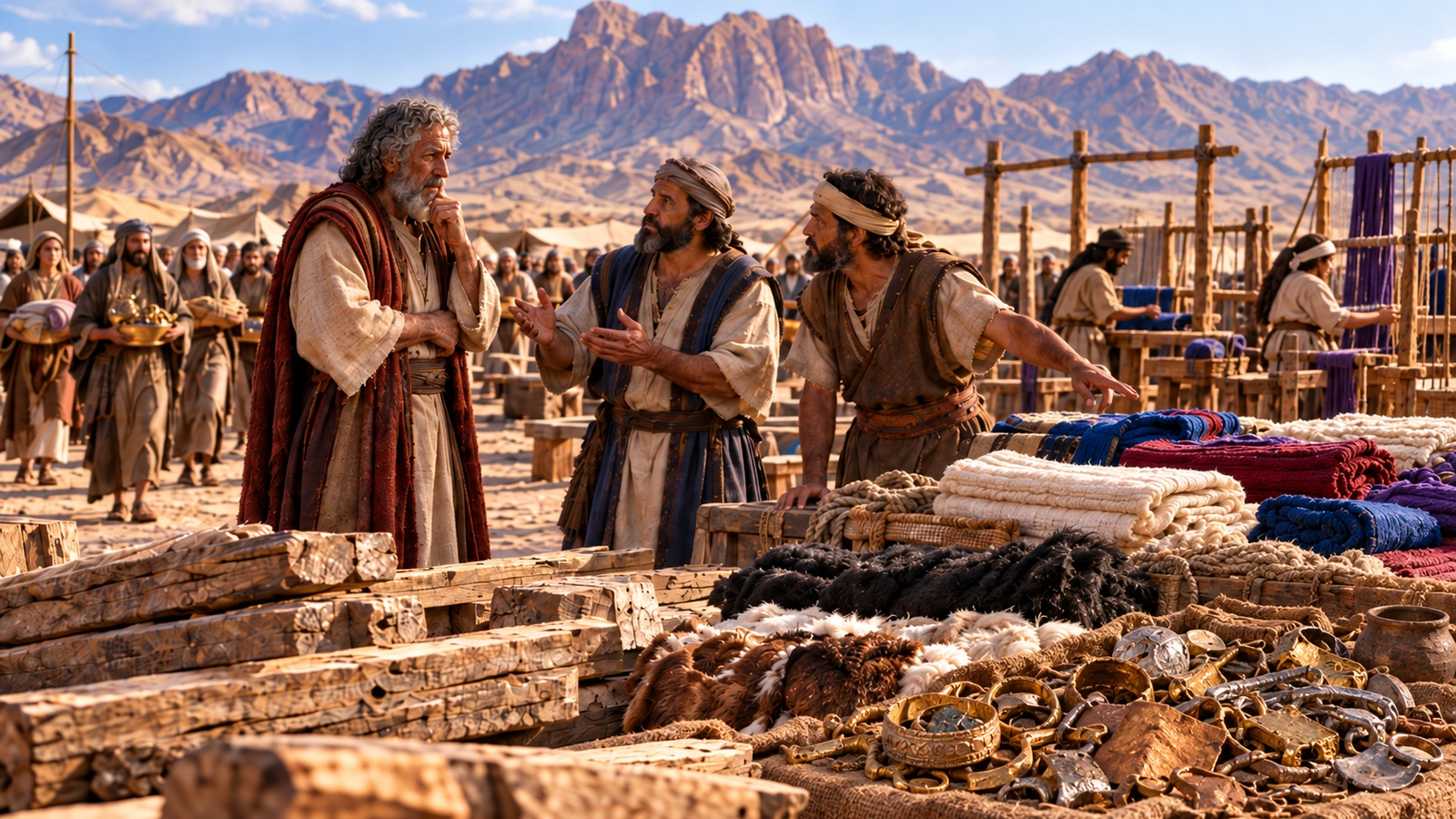
Figure 1. Artistic representation of Genesis 6:1–4 that leaves the identity and appearance of the sons of God and the Nephilim unresolved. The biblical passage does not describe what either group looked like. Source: AI-generated image created for Beyond The Known. |
Genesis 4 introduced Cain’s wife without naming her, a silence examined in Where Did Cain’s Wife Come From? Genesis 5 then follows Adam’s family through Seth until the birth of Noah. When humanity begins to multiply, the narrative introduces another group without explaining who they are.
They are called “the sons of God.”
Of the three major interpretations, the view that they were heavenly or divine beings has the strongest direct support from the expression’s use elsewhere in the Hebrew Bible. The same or closely related language appears in Job for members of the heavenly court. Yet Genesis never calls these beings “fallen angels,” never describes a rebellion in heaven, and never explains their nature.
The Sethite and royal interpretations remain important because they attempt to read the passage within Genesis’s genealogies and ancient social world. Each illuminates part of the story, but each also requires the phrase “sons of God” to mean something Genesis 6 does not state directly.
The text gives us evidence. It does not give us an uncontested identification.
What Does Genesis 6:1–4 Actually Say?
The Story Begins with Human Multiplication
Genesis 6 opens not with angels or giants, but with ordinary human growth. People multiply across the land, and daughters are born to them. The narrative then reports:
“The sons of God saw that the daughters of man were attractive. And they took as their wives any they chose.”
Genesis 6:2, ESV
God responds by declaring a limit connected with human mortality: “his days shall be 120 years” (Genesis 6:3). Scholars debate whether this refers to a shortened human lifespan or a period remaining before the Flood. For the present question, the essential point is simpler: the unions are followed by a divine response that reasserts the distinction between divine spirit and mortal flesh.
Verse 4 then introduces the Nephilim:
“The Nephilim were on the earth in those days—and also afterward—when the sons of God went to the daughters of humans and had children by them. They were the heroes of old, men of renown.”
Genesis 6:4, NIV
The passage establishes a sequence: humanity multiplies, the sons of God take women, children are born, and figures remembered as ancient heroes or mighty men appear in the same period. What it does not provide is a glossary explaining how every group relates to the others.
What Does “Sons of God” Mean in Hebrew?
The expression is:
בְּנֵי־הָאֱלֹהִים — bənê-hāʾĕlōhîm
It is commonly translated “sons of God,” although “divine beings” can express the category implied by the Hebrew idiom. The word “sons” need not describe biological descent. In expressions of this kind, it can identify members of a class or group.
The closest biblical parallels appear in Job 1:6 and 2:1, where the “sons of God” present themselves before the Lord in a heavenly assembly. Job 38:7 uses a closely related form for beings who rejoice when the foundations of the earth are laid. Related expressions also occur in Psalms 29:1 and 89:6.
These parallels make a heavenly-being interpretation linguistically strong. They do not, however, settle every later theological question. The Hebrew word for messenger or angel, malʾāḵ, does not appear in Genesis 6:1–4. Nor does the phrase itself say that these beings had already fallen, rebelled, or become demons.
Calling them “fallen angels” therefore combines a plausible interpretation of “sons of God” with details supplied by later tradition.
Are the Sons of God and the Nephilim the Same Group?
Genesis does not identify them as the same group. It gives them different names and different roles.
The sons of God are the figures who see the human women and take them. The Nephilim are said to be present on the earth “in those days—and also afterward.” Children are born from the unions, and the verse concludes by referring to gibbōrîm, “mighty men,” “warriors,” or “heroes,” who were “men of renown.”
Many interpreters identify the children, the Nephilim, and the mighty men as the same figures. That reading became highly influential, but the syntax does not make every identification explicit. Verse 4 may instead indicate that the Nephilim were already present during the period when the unions occurred.
This distinction matters. Establishing the probable identity of the sons of God does not automatically tell us who the Nephilim were, whether they were the offspring of the unions, or why later tradition remembered them as giants. Those questions require a separate investigation of the name Nephilim, Genesis 6:4, Numbers 13:33, ancient translations, and later Jewish interpretation.
Angels, Sethites, or Kings?
Interpretation 1 — Heavenly or Divine Beings
This is one of the oldest interpretations and, for many scholars, the reading that best fits the Hebrew expression. Its main evidence is straightforward: elsewhere in the Hebrew Bible, “sons of God” or closely related phrases describe heavenly beings, not a human genealogy.
The contrast in Genesis 6 also appears deliberate. Human beings multiply and human daughters are born; then the sons of God cross into that human sphere. The unions blur a boundary between the divine and mortal worlds, followed by God’s reminder that humanity is flesh and will not live without limit.
Ancient Near Eastern traditions also knew stories about divine beings, human women, and heroic figures from the distant past. Such parallels do not prove that Genesis copied a particular myth, but they show that an ancient audience could understand the language without first converting the sons of God into ordinary human men.
The main difficulty for this view is not linguistic but conceptual. Genesis does not explain how beings belonging to a heavenly assembly could enter physical unions with human women. Later interpreters supplied different mechanisms, but the passage itself reports the boundary crossing without describing how it occurred.
Interpretation 2 — The Descendants of Seth
The Sethite interpretation reads the passage through the genealogies immediately preceding it. Genesis 4 traces Cain’s line, while Genesis 5 traces Seth’s. On this view, the sons of God are the supposedly faithful descendants of Seth, and the daughters of humanity are women from Cain’s corrupt line.
This reading became influential in later Christian interpretation because it keeps the entire episode within human history. The sin is intermarriage, moral compromise, and the collapse of a faithful family line before the Flood.
Its difficulty is that Genesis never calls Seth’s descendants “sons of God” and never identifies the women as Cain’s daughters. Genesis 6:1 describes daughters being born to humanity generally, not to one named genealogy. The preceding chapters also do not declare every Sethite righteous or every woman in Cain’s line corrupt.
The genealogical context makes the Sethite interpretation understandable. The wording of Genesis 6 does not make it the most natural lexical reading.
Interpretation 3 — Kings or Tyrannical Rulers
The royal interpretation identifies the sons of God as rulers who claimed divine status or belonged to dynasties described with divine language. Kings in the ancient Near East could be presented as sons or representatives of gods, and legendary rulers were often associated with the distant age before a great flood.
This view draws special attention to the statement that they “took” any women they chose. The language can suggest rulers exercising unchecked power, accumulating wives, and treating women as objects of royal desire. The mighty men and men of renown then become warrior-kings, dynastic heroes, or members of an oppressive elite.
The interpretation fits the themes of power and violence that surround the Flood. It also connects with Lamech’s earlier accumulation of wives and boast of vengeance.
Its central weakness is textual: Genesis never calls these figures kings. The royal reading depends more heavily on ancient cultural parallels than the heavenly-being reading depends on the biblical use of “sons of God.” It remains a serious scholarly proposal, but not an explicit identification.
Where Does the Book of Enoch Enter the Story?
Genesis tells the entire episode in four compressed verses. The ancient Jewish work known as 1 Enoch transforms those verses into a much larger account.
In the section commonly called the Book of the Watchers, 1 Enoch identifies the heavenly figures as Watchers who descend, bind themselves by an oath, take human women, and produce gigantic offspring. The story adds names, motives, forbidden teachings, punishment, and an explanation for the origin of evil spirits.
Those details are not found in Genesis 6. 1 Enoch is therefore evidence for an early and influential interpretation of Genesis, but it should not be quoted as though it were the missing portion of the biblical paragraph.
The connection is nevertheless too important to dismiss. Jude 6 speaks of angels who abandoned their proper dwelling, while 2 Peter 2:4–5 places the punishment of sinful angels immediately before the Flood. These New Testament passages are often read within the same Enochic interpretive world, though neither passage explicitly identifies its angels as the sons of God in Genesis 6.
This leaves a larger question that deserves its own investigation:
Does the Book of Enoch preserve the background Genesis assumes—or does it create a new story from what Genesis leaves unexplained?
Which Interpretation Best Fits Genesis 6?
If the question is limited to the wording of Genesis 6 and its closest Hebrew Bible parallels, heavenly beings are the strongest interpretation of the sons of God. The expression’s use in Job, the contrast with human women, and the ancient reception of the passage all support that conclusion.
A lexical conclusion about the sons of God cannot answer every question about the Nephilim. Their relationship to the children, their physical appearance, and the meaning of “also afterward” must still be examined from verse 4 rather than assumed from the identity of the fathers.
The Sethite interpretation fits a theological reading of the preceding genealogies but lacks direct support for calling Seth’s line “sons of God.” The royal interpretation illuminates the passage’s language of taking, power, fame, and violence, but it requires Genesis’s divine title to function as political language for rulers.
The most careful conclusion is therefore narrower than the most popular versions of the story: the sons of God were probably understood as heavenly beings, but Genesis leaves their precise nature, their offense, and their relationship to the Nephilim only partially explained.
The Deeper Discovery
The most striking feature of Genesis 6 may not be the Nephilim at all.
Genesis says that the sons of God saw that the women were desirable and took whomever they chose. That sequence recalls Genesis 3:6, where the woman sees that the forbidden tree is good and takes its fruit. Once again, sight becomes desire, and desire becomes an act that crosses a boundary.
The wording also intensifies the pattern. The sons of God do not take one woman within a relationship described by the narrative. They take “any they chose.” Whether the figures are read as heavenly beings, rulers, or Sethites, the action is presented as acquisition without restraint.
The popular question asks what the Nephilim looked like. The narrative directs attention toward something more consequential: a world in which boundaries collapse, power answers only to desire, and fame grows alongside violence.
Which interpretation do you think best accounts for the wording of Genesis 6: heavenly beings, descendants of Seth, or ancient rulers? Share which piece of textual evidence you find strongest.
Yet Genesis 6:4 leaves one group in the shadows. The passage names the Nephilim without defining the name, describing their appearance, or stating unambiguously how they were related to the children of the sons of God.
Before the narrative moves fully into the corruption that precedes the Flood, that unresolved name demands its own investigation:
Giants, Fallen Angels, and One of the Bible’s Most Controversial Mysteries
Selected Sources
Clines, David J. A. “The Significance of the ‘Sons of God’ Episode (Genesis 6:1–4) in the Context of the ‘Primeval History’ (Genesis 1–11).” Journal for the Study of the Old Testament 4.13 (1979): 33–46. DOI: 10.1177/030908927900401304.
Doedens, Jaap. The Sons of God in Genesis 6:1–4: Analysis and History of Exegesis. Oudtestamentische Studiën 76. Brill, 2019.
Hendel, Ronald S. “Of Demigods and the Deluge: Toward an Interpretation of Genesis 6:1–4.” Journal of Biblical Literature 106.1 (1987): 13–26. DOI: 10.2307/3260551.
Kline, Meredith G. “Divine Kingship and Genesis 6:1–4.” Westminster Theological Journal 24.2 (1962): 187–204.
Wenham, Gordon J. Genesis 1–15. Word Biblical Commentary 1. Word Books, 1987.
Wright, Archie T. The Origin of Evil Spirits: The Reception of Genesis 6:1–4 in Early Jewish Literature. 2nd rev. ed. Wissenschaftliche Untersuchungen zum Neuen Testament 2/198. Mohr Siebeck, 2013.