Why Did God Tell Abram to Look at the Land After Lot Left?
Why the Promise Is Renewed Only After the Separation
 |
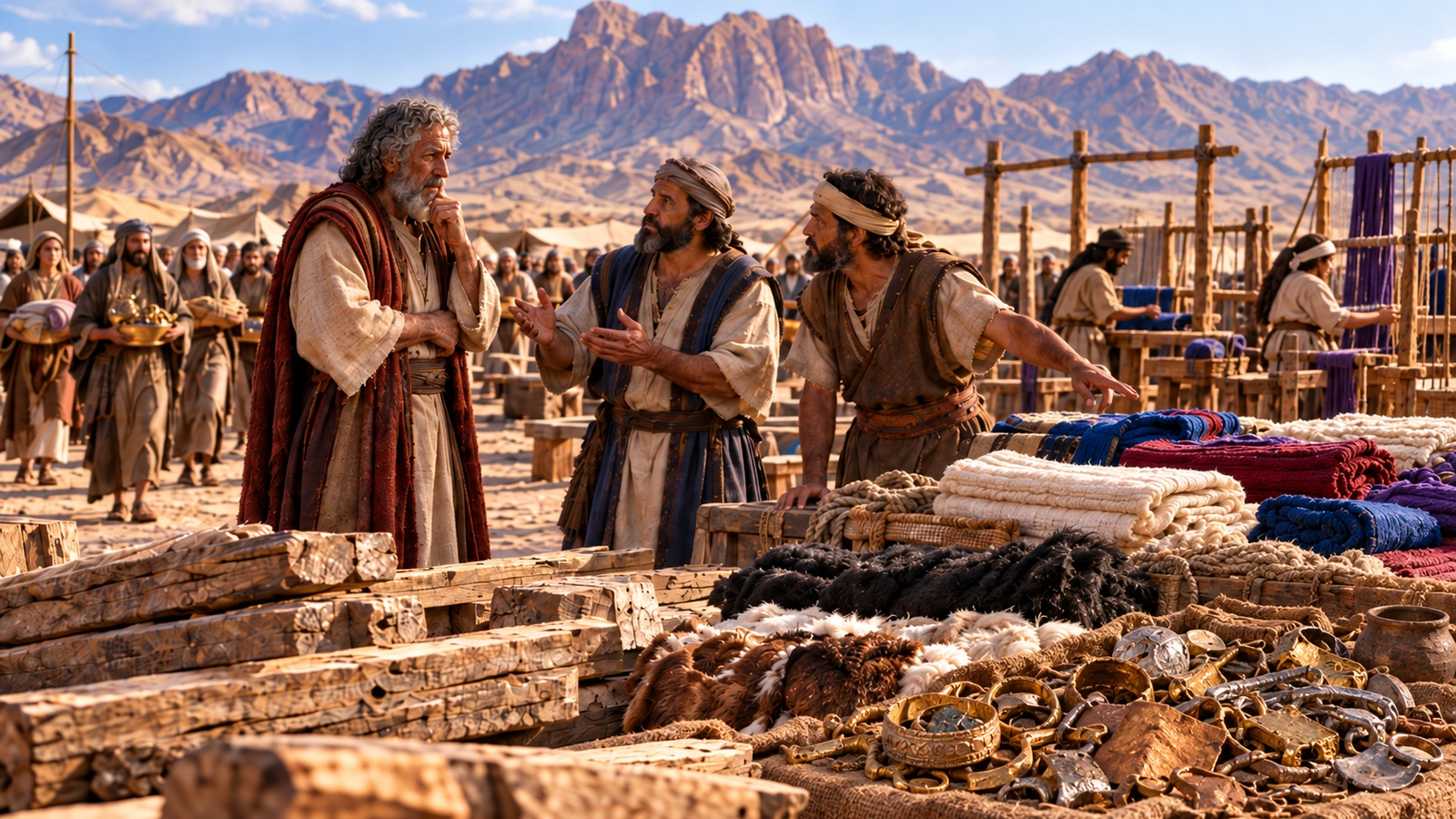
Figure 1. Artistic reconstruction of Abram looking across the land after Lot’s departure in Genesis 13:14–17. The scene emphasizes the narrative contrast between Lot’s choice and God’s renewed promise to Abram. |
The scattered humanity examined in The Tower of Babel: Was It Really About Language? sought a name and a permanent center. Genesis then narrows its focus to one family: God calls Abram to leave his land and kindred, promising to make his name great and to bless the nations through him.
By Genesis 13, that journey has created a new crisis. Abram and his nephew Lot have become too prosperous to remain together, so Abram allows Lot to choose where he will settle. Lot selects the fertile Jordan Valley and departs.
Only then does God speak:
“After Lot had parted from him, the LORD said to Abram, ‘Look around from where you are, to the north and south, to the east and west.’”
Genesis 13:14, NIV
Why does the renewed promise come at this precise moment? The chapter never states God’s motive directly. What it does make explicit is the timing: Lot looks, chooses, and separates; afterward, God tells Abram to look and promises him the land.
That sequence suggests the central answer. Lot’s choice has not reduced Abram’s inheritance, because the future of the promise was never going to be determined by which man secured the better-looking territory. It depends on what God chooses to give.
The article uses “Abraham” in the title because that is the name by which readers most readily know him. In Genesis 13, however, the narrative still calls him Abram; his name is not changed until Genesis 17.
What Happens Before God Speaks?
Prosperity Creates a Crisis
Genesis 13 begins with Abram returning from Egypt to the region between Bethel and Ai. There he calls on the name of the LORD at the altar he had previously built.
The return matters. Genesis 12 had ended with Abram’s household leaving Egypt after a dangerous episode involving Sarai and Pharaoh. Genesis 13 brings him back to the land of promise, but his renewed wealth immediately creates a practical problem.
Abram has livestock, silver, and gold. Lot also has flocks, herds, and tents. Their possessions are so extensive that “the land could not support them while they stayed together” (Genesis 13:6).
The conflict is therefore not introduced as a dispute between Abram and Lot themselves. It begins between their herders. The narrator also notes that Canaanites and Perizzites were living in the land, reminding readers that the available grazing territory was neither empty nor unlimited.
Abram proposes separation before the quarrel grows:
“Is not the whole land before you? Let’s part company. If you go to the left, I’ll go to the right; if you go to the right, I’ll go to the left.”
Genesis 13:9, NIV
The offer is generous, but Genesis does not turn it into a rule about property rights or ancient seniority. The point given in the story is more immediate: Abram seeks peace within the family and lets Lot take the first choice.
Lot Looks and Chooses
Lot responds by surveying the land:
“Lot looked around and saw that the whole plain of the Jordan toward Zoar was well watered.”
Genesis 13:10, NIV
The description makes the region’s attraction understandable. It is well watered “like the garden of the LORD” and “like the land of Egypt.” For a man whose wealth depended heavily on livestock, the Jordan plain appeared to offer abundance and security.
Genesis does not explicitly condemn Lot for noticing fertile land. Nor does it say that agricultural judgment is inherently faithless. The narrative’s warning comes through details that Lot’s visual assessment cannot reveal.
The comparison to Eden and Egypt is followed by a temporal reminder: this was before the LORD destroyed Sodom and Gomorrah. Then, after Lot moves toward Sodom, the narrator adds that the people of the city were exceedingly wicked.
Nothing has yet happened to Lot there. The judgment of Sodom remains several chapters away. Nevertheless, readers now know that the most attractive landscape in the scene contains a danger that visible fertility alone cannot disclose.
Lot chooses the entire Jordan plain and travels east. Genesis 13:12 then draws a geographical contrast: Abram lives in the land of Canaan, while Lot lives among the cities of the plain and pitches his tents near Sodom.
The separation is complete. At that exact narrative point, God addresses Abram.
What Changes After Lot Leaves?
The Timing Is Explicit; the Reason Is Not
Genesis marks the moment with unusual precision. The Hebrew phrase אַחֲרֵי הִפָּרֶד־לוֹט מֵעִמּוֹ — ʾaḥărê hippāred-Lôṭ mēʿimmô means “after Lot had separated from him.” It establishes when God spoke, but it does not include a clause explaining why God waited until then.
That distinction matters. It would be too strong to claim that Genesis explicitly says God rewarded Abram for generosity, tested whether he would surrender his rights, or withheld the promise until his faith reached a particular level. Those are possible theological readings of the sequence, not statements made by the narrator.
What the text allows us to observe is firmer. Abram has relinquished the opportunity to secure the most visibly desirable region for himself. Lot’s departure could therefore appear to narrow Abram’s prospects. God’s speech answers that situation by declaring that the promise remains intact.
Two Acts of Looking
The clearest literary connection is created by a repeated action.
In verse 10, Lot “lifted up his eyes” and saw the Jordan plain. In verse 14, God tells Abram to “lift up your eyes” and look in every direction. English translations vary slightly, but the parallel is visible in the Hebrew wording.
The two acts are similar without being identical.
Lot looks on his own initiative, evaluates a particular region, and chooses it. Abram looks because God commands him to do so. He is not asked to compare territories or select what remains; God identifies the extent of the gift.
The contrast should not be simplified into “Lot used sight while Abram used faith.” Abram also sees land, and the narrative does not portray human vision as evil. The more precise distinction concerns who determines the future.
Lot uses what he sees to make a choice. Abram is shown what God promises to give.
There is also a difference in scale. Lot sees one well-watered plain. Abram is told to look north, south, east, and west. The direction Lot has taken is not excluded from Abram’s horizon. God’s promise extends beyond the portion that appeared to have been lost.
The Promise Is Renewed, Not Introduced
Genesis 13 is not the first time God promises land to Abram. In Genesis 12:7, after Abram arrives in Canaan, God says, “To your offspring I will give this land.”
The later speech renews and expands that earlier declaration:
Abram is told to look in every direction.
All the land he sees is promised to him and his offspring.
The promise is expressed with enduring language.
His offspring will be as numerous as the dust of the earth.
He is commanded to walk through the length and breadth of the land.
The timing therefore does not mean that Abram earned a previously nonexistent promise by letting Lot choose first. The promise preceded the conflict. Genesis 13 reaffirms it when the separation might have made its fulfillment appear less certain.
Some scholars understand Abram’s walk through the land as a symbolic act of taking possession. Nahum Sarna, for example, compares it with acts by which rulers could express a claim over territory. The text itself does not explain the custom, but the movement clearly makes Abram engage with the land God has just promised.
Even then, possession is not complete. God says, “I will give it.” Abram travels through the land as a recipient of promise, not as a king who has already conquered it.
What Does Lot’s Separation Mean?
Was Lot Being Removed as Abram’s Heir?
Because Abram is childless and Lot is his nephew, some interpreters have proposed that Lot may have been viewed as a possible heir. On this reading, the separation prepares for the promise to be attached more clearly to Abram’s own future offspring.
The proposal fits an important tension in the larger Abraham narrative: how can the promise continue when Abram and Sarai have no child? Genesis 15 will bring that question into the open.
Yet caution is necessary. Genesis never identifies Lot as Abram’s heir. When Abram later voices his concern about remaining childless, he refers to Eliezer of Damascus, not Lot. Treating Lot’s possible heirship as a certainty would make the narrative say more than it does.
It is safer to say that Lot’s departure removes one prominent relative from Abram’s household. God then repeats that the land belongs to Abram and his offspring, while the identity of those offspring remains unresolved.
Did the Separation Complete Abram’s Earlier Call?
Another scholarly interpretation connects Genesis 13 with God’s call in Genesis 12:1. Abram had been told to leave his country, his kindred, and his father’s household. Yet Lot, a member of his extended family, accompanied him.
Dan Rickett argues that Genesis 13 should be read as a further realization of that original call: Abram becomes settled in Canaan only as the separation from his former family structure is completed. This interpretation gives Lot’s departure a larger role than simply solving a dispute over pasture.
It remains a scholarly reading rather than an explicit explanation from the text. Genesis never records God rebuking Abram for bringing Lot, and it does not say, “Now that Lot is gone, Abram has finally obeyed.” Other scholars have placed more emphasis on Lot as a possible heir or on the moral contrast between the two men.
Still, the connection between chapters 12 and 13 is difficult to overlook. Abram is called away from land and kin. After his separation from Lot, God speaks again about the new land and the future family that will replace what he has left behind.
Was Abram Rewarded for Letting Lot Choose?
Jewish and Christian interpreters have often treated Abram as an example of humility, peacemaking, or trust. The narrative supports the observation that he gives up the first choice in order to end conflict.
What it does not state is a simple transaction: Abram behaves generously, so God rewards him with more land. That reading overlooks the fact that God had already promised the land in Genesis 12.
The renewed speech functions less like payment for good behavior and more like reassurance. Lot’s decision has changed the arrangement between the two households, but it has not changed God’s commitment.
This is why the order matters. Had God repeated the promise before Lot chose, readers might understand it only as advance information. By placing the speech after Lot departs, the narrative demonstrates that Abram’s inheritance cannot be reduced by another person’s apparent advantage.
The Deeper Discovery
The question initially appears to be about timing: Why did God tell Abram to look only after Lot had left?
Genesis gives no direct statement of divine motive. It gives something else—the carefully arranged sequence through which the meaning becomes visible.
Lot looks at a fertile region and chooses it. Abram remains in Canaan without choosing a competing territory. Then God tells him to look in every direction and renews a promise already made.
The deeper contrast is therefore not simply between good land and bad land, or even between selfishness and generosity. It is between a future secured by selection and a future received by promise.
Lot’s choice is real. The land he selects is genuinely well watered. But his decision cannot cancel, shrink, or transfer what God has pledged to Abram.
Genesis 13 also leaves a major problem unresolved. Abram has been promised land and offspring as numerous as the dust, yet he still has no child. After Abram rescues Lot and refuses the king of Sodom’s wealth in Genesis 14, that unanswered tension comes to the surface.
God responds by formalizing the promise through a disturbing covenant ceremony involving divided animals. But when darkness falls, Abram does not walk between the pieces.
Only God does.
That creates the next question in the story:
Why Did Only God Pass Between the Sacrifices?
Selected Sources
Alexander, T. Desmond. From Paradise to the Promised Land: An Introduction to the Pentateuch. 4th ed. Baker Academic, 2022.
Arnold, Bill T. Genesis. New Cambridge Bible Commentary. Cambridge University Press, 2008. DOI: 10.1017/CBO9780511807404.
Hamilton, Victor P. The Book of Genesis: Chapters 1–17. New International Commentary on the Old Testament. Eerdmans, 1990.
Helyer, Larry R. “The Separation of Abram and Lot: Its Significance in the Patriarchal Narratives.” Journal for the Study of the Old Testament 8.26 (1983), pp. 77–88. DOI: 10.1177/030908928300802604.
Mathews, Kenneth A. Genesis 11:27–50:26. New American Commentary 1B. Broadman & Holman, 2005.
Rickett, Dan. “Rethinking the Place and Purpose of Genesis 13.” Journal for the Study of the Old Testament 36.1 (2011), pp. 31–53. DOI: 10.1177/0309089211419774.
Sarna, Nahum M. Genesis. JPS Torah Commentary. Jewish Publication Society, 1989.
Wenham, Gordon J. Genesis 1–15. Word Biblical Commentary 1. Word Books, 1987.