Why Does God Call Himself Merciful Yet Refuse to Leave the Guilty Unpunished?
Exodus 34 Explained: The Divine Name, Mercy and Justice, Generational Judgment, Covenant Renewal, and Moses’ Radiant Face

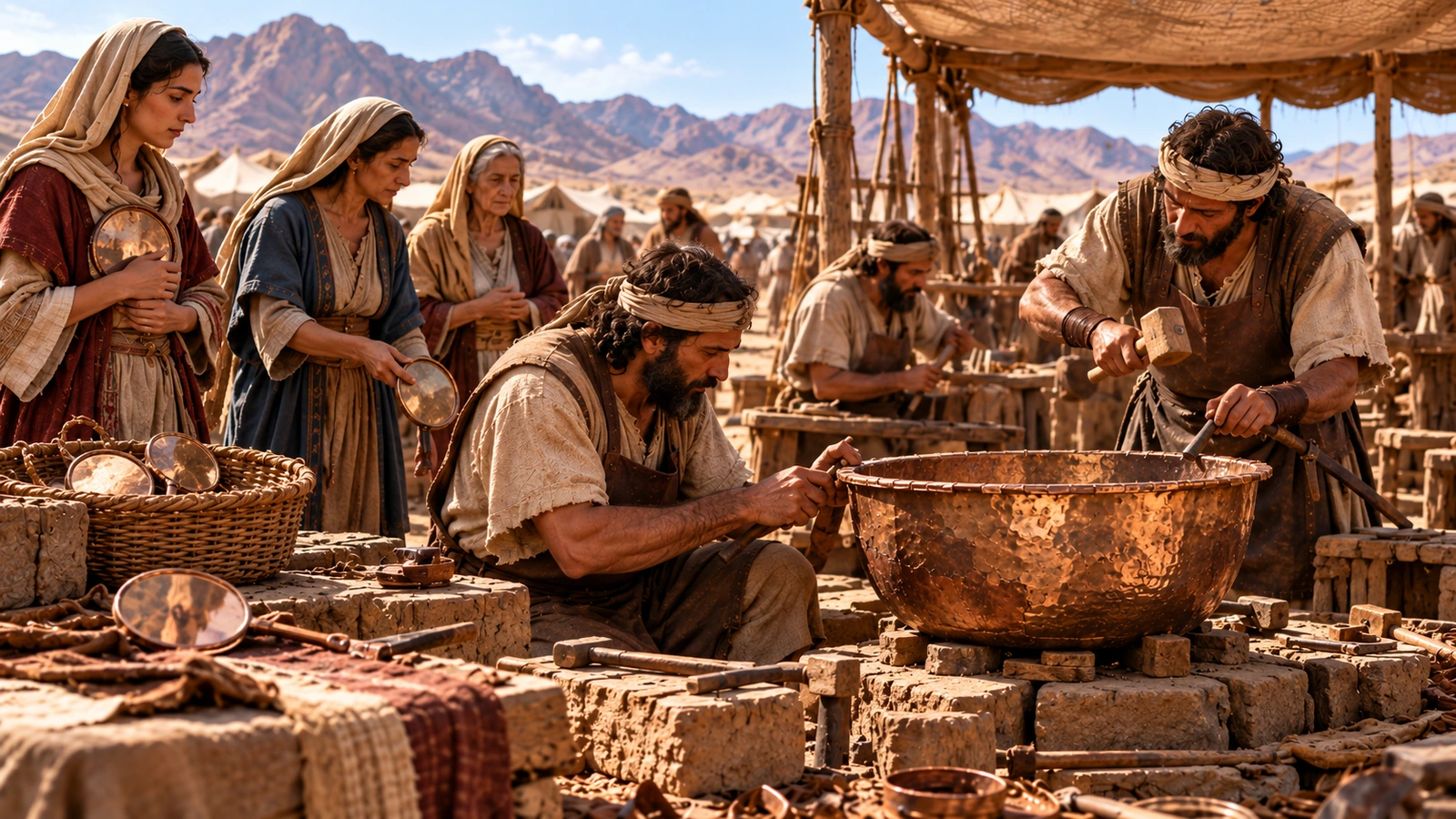
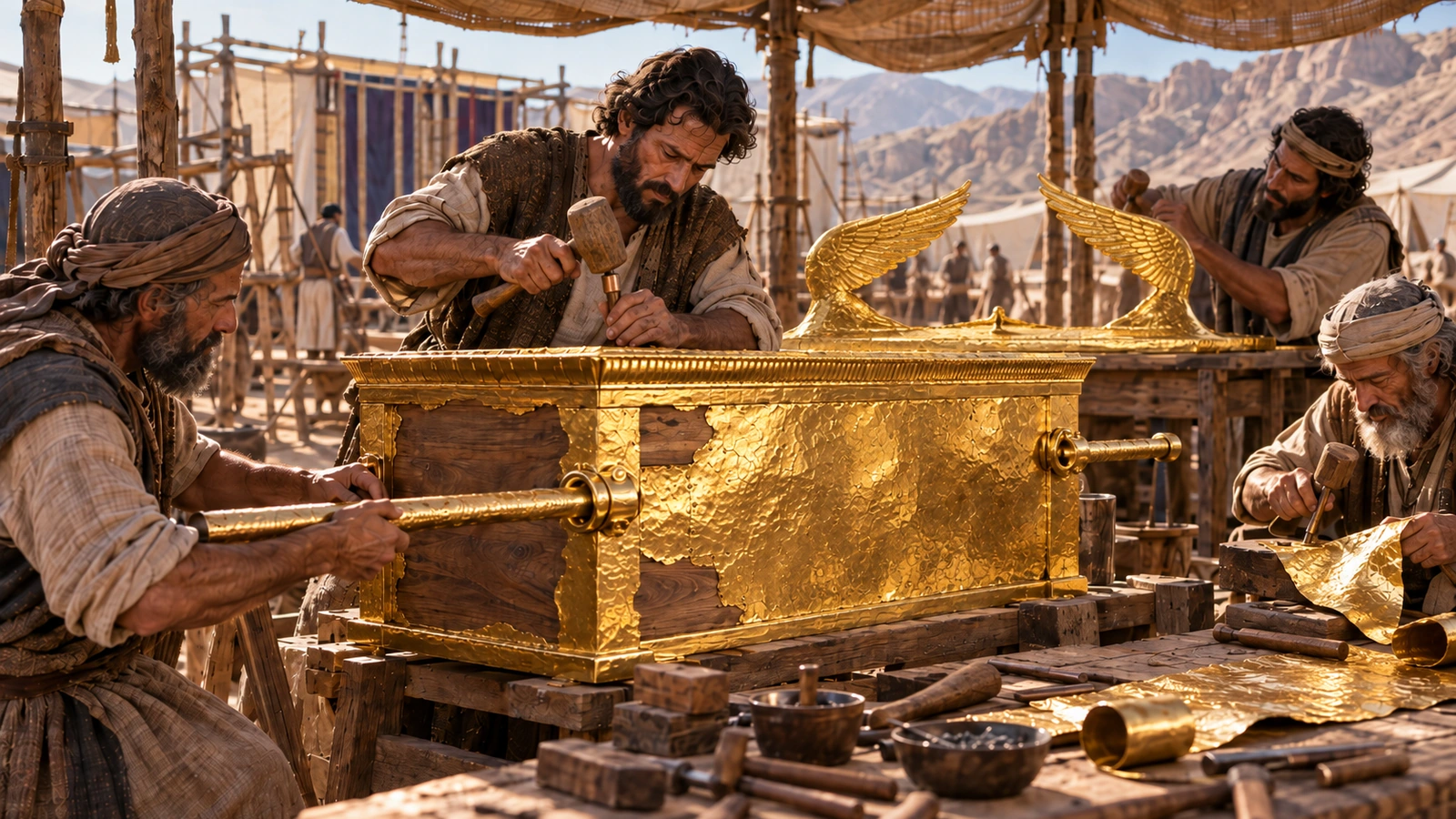
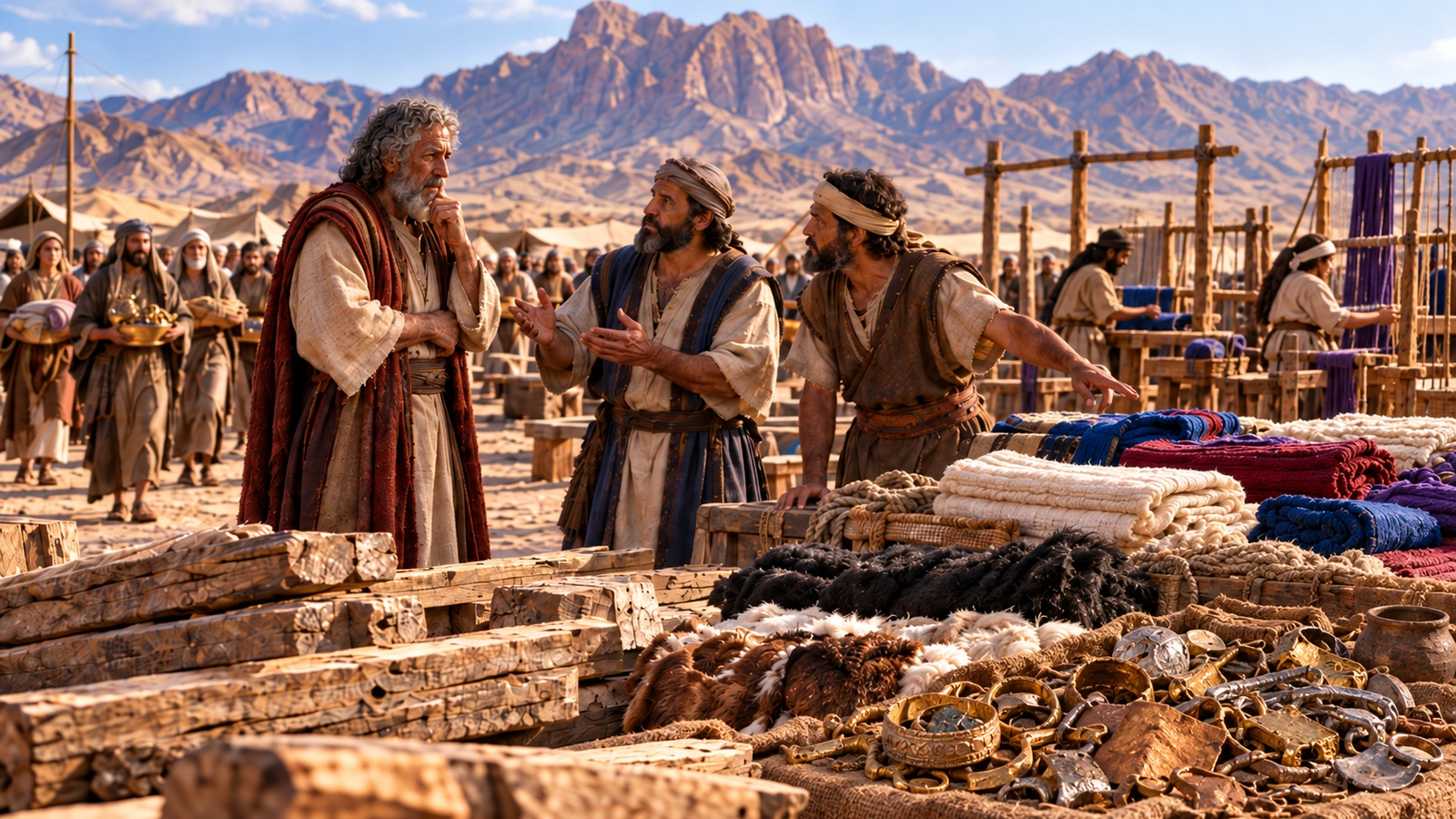
Source: AI-generated image created for Beyond The Known.
Moses asked to see YHWH’s glory.
The answer comes as a proclamation rather than a larger spectacle. When YHWH passes before him, he declares his name and describes his own character:
“The LORD, the LORD, a God merciful and gracious, slow to anger, and abounding in steadfast love and faithfulness…”
The declaration continues with forgiveness—then turns sharply:
“…forgiving iniquity and transgression and sin, but who will by no means clear the guilty…”
That is the tension at the center of Exodus 34.
How can the same God forgive iniquity, rebellion, and sin while refusing simply to clear guilt? And what does it mean that he “visits” the iniquity of parents on later generations?
The question is not introduced as an abstract puzzle about divine attributes. It arises immediately after the golden calf, when Israel has already broken covenant and Moses has pleaded for the nation’s survival.
The previous study, Why Did God Refuse to Go with Israel After the Golden Calf?, ended with Moses sheltered in the cleft of the rock while YHWH prepared to pass before him.
Exodus 34 gives the answer Moses was waiting for. Yet the most important part of that answer is not what Moses sees.
It is what YHWH says.
The Second Tablets Preserve the Memory of the First
The chapter opens with replacement tablets.
YHWH tells Moses to cut two stones like the first ones and says that the words written on the tablets Moses shattered will be written again. Moses rises early, carries the new stones up Sinai, and ascends alone.
The scene restores what was broken without pretending that the golden calf has been forgotten.
The second tablets exist because the first were broken.
Israel’s covenant failure has not made relationship with YHWH impossible, but restoration does not require pretending the rupture never happened. That distinction prepares the reader for the proclamation in verses 6–7.
Forgiveness will not mean that rebellion was unreal.
It will mean that rebellion does not have to be the end of the covenant.
Moses Asked for Glory; YHWH Proclaims His Name
In Exodus 33:18, Moses asked:
“Please show me your glory.”
YHWH answered by promising to make his goodness pass before Moses and to proclaim the name YHWH.
Exodus 34:5–7 fulfills that promise. YHWH descends in the cloud, stands with Moses, and proclaims the divine name.
The narrative ties glory to what Moses sees, but also to YHWH’s goodness, name, and character.
Israel has committed idolatry almost immediately after entering covenant. Destruction has been threatened, Moses has interceded, and YHWH’s presence among the people has become uncertain.
Now, in the middle of that crisis, YHWH says who he is.
“Compassionate and Gracious”
The proclamation begins:
רַחוּם וְחַנּוּן — raḥûm weḥannûn — compassionate and gracious
These words do not appear without preparation.
In Exodus 33:19, YHWH had already told Moses that he would be gracious and show compassion. In Exodus 34, those actions become part of the description of YHWH himself.
The shift is significant.
Exodus 33 speaks about what YHWH will do. Exodus 34 presents grace and compassion as belonging to his character.
Divine mercy is still not something Israel can demand. Moses is dealing with a nation that has already violated covenant.
Grace is not owed.
Yet it is not arbitrary sentiment either. It belongs to the God whose name is being proclaimed.
“Slow to Anger”
YHWH is also:
אֶרֶךְ אַפַּיִם — ʾerekh ʾappayim — slow to anger
The idiom is vivid. ʾAppayim is related to the language of the nose or nostrils, which can be associated with anger in biblical Hebrew. The expression communicates patience: YHWH is not quick to unleash wrath.
The golden-calf narrative gives the phrase weight.
YHWH’s anger was not imaginary. Judgment fell, and the possibility of Israel’s destruction was explicitly raised. Yet the people still exist, Moses is again on Sinai, and the covenant is being renewed.
Patience in Exodus 34 is therefore not indifference to evil.
It is restraint in the presence of real provocation.
“Abounding in Steadfast Love and Faithfulness”
The next phrase is:
רַב־חֶסֶד וֶאֱמֶת — rab-ḥesed weʾemet — abounding in steadfast love and faithfulness
חֶסֶד — ḥesed can carry the sense of loyal love, kindness, or committed covenantal devotion.
אֱמֶת — ʾemet can refer to truth, reliability, or faithfulness.
Here the pair emphasizes the dependability of YHWH’s committed love.
The description comes at the point where Israel’s own loyalty has collapsed. The people have shown how quickly covenant allegiance can fail, so their future now depends on the character of the God with whom the covenant was made.
What Does “Keeping Steadfast Love for Thousands” Mean?
Verse 7 continues with YHWH “keeping steadfast love for thousands.”
The Hebrew phrase is:
חֶסֶד לָאֲלָפִים — ḥesed lāʾălāpîm
Some translations expand this to “a thousand generations.” The word “generations” is not stated in the Hebrew of Exodus 34:7, though the rendering is understandable in light of related covenant language, especially Exodus 20:5–6.
The contrast inside the proclamation is more important than forcing an exact numerical scheme.
Steadfast love extends to “thousands.”
Judgment is described in relation to the third and fourth generations.
Both belong to the declaration, but they are not given the same rhetorical horizon.
YHWH Forgives Iniquity, Rebellion, and Sin
The proclamation then gathers three terms:
עָוֹן — ʿāwōn — iniquity / guilt
פֶּשַׁע — pešaʿ — rebellion / transgression
חַטָּאָה — ḥaṭṭāʾâ — sin
It is possible to distinguish nuances among them, but the verse does not invite a rigid three-part taxonomy of wrongdoing. Their accumulation is more important.
YHWH forgives human guilt described from several angles.
After Exodus 32, the statement carries unusual force. Israel’s offense was not a minor ritual mistake or an accidental lapse. The people made and worshiped the calf while the covenant mediator was still on Sinai.
If forgiveness can be announced here, the claim is substantial.
Then the sentence refuses to stop where a modern reader might prefer.
“He Will by No Means Clear”
The Hebrew reads:
וְנַקֵּה לֹא יְנַקֶּה — wenaqqēh lōʾ yenaqqeh
English versions often render the clause:
“yet he will by no means clear the guilty”
or:
“he does not leave the guilty unpunished.”
There is a useful detail behind those translations. The Hebrew clause does not contain a separate noun meaning “the guilty.” The verb נקה — nāqâ can carry the sense of being clear, free, acquitted, or exempt from punishment, depending on context. The construction here is emphatic.
YHWH does not simply clear.
English translations supply “the guilty” because that is the obvious object in context, but the Hebrew syntax makes the verbal force especially sharp.
The God who forgives does not treat culpability as though nothing happened.
Forgiveness Is Not the Same as Declaring Innocence
The apparent contradiction begins to clear once those two actions are distinguished.
Exodus 34 does not say that forgiveness means guilt never existed. Nor does it explain forgiveness as a declaration that wrongdoing was actually harmless.
Israel remains the people who made the golden calf.
Moses does not climb Sinai arguing that the incident was misunderstood. When he responds to YHWH’s proclamation, he calls Israel stiff-necked and asks for pardon.
The request assumes culpability.
At the same time, guilt does not end the relationship. New tablets are prepared. YHWH agrees to go with Israel. Covenant obligations are renewed.
The chapter therefore holds together two claims that are often separated too quickly: guilt is real, and forgiveness is real.
Israel is restored without being declared innocent of the rebellion that made restoration necessary.
Does Forgiveness Mean Punishment Must Still Follow?
Exodus 34:7 does not give a complete theory of how every act of forgiveness relates to every act of judgment.
The verse does not say that every forgiven person must later receive a matching punishment. It also does not explicitly divide humanity into two groups within the sentence—one forgiven and another condemned.
What it does say is that YHWH forgives and that YHWH does not simply clear guilt.
The narrative helps us see why both claims matter.
If forgiveness were absent, Israel’s covenant story could have ended with the calf.
If guilt were morally irrelevant, then the broken tablets, judgment, intercession, warnings, and renewed covenant would make little sense.
Exodus does not resolve the tension by sacrificing either side.
What Does It Mean That God “Visits” Iniquity on Later Generations?
The most difficult clause follows:
פֹּקֵד עֲוֹן אָבוֹת עַל־בָּנִים — pōqēd ʿăwōn ʾāḇōt ʿal-bānîm
YHWH describes himself as “visiting the iniquity of the fathers upon the children.”
The verb פקד — pāqad has a wide semantic range. It can refer to attending to, appointing, mustering, visiting, or intervening, with the context determining whether the action is beneficial or judicial.
Here a judicial sense is difficult to avoid.
A common modern explanation says the passage merely means that children experience the natural social consequences of their parents’ choices. Intergenerational consequences are certainly real, but that explanation is too weak to exhaust the wording of Exodus 34:7.
Thomas J. Egger’s lexical study of this formula argues that the expression refers to active divine visitation in judgment, not only to impersonal effects moving through a family.
The lexical point does not settle every ethical question raised by the verse, but it prevents us from solving the difficulty by making the Hebrew safer than it is.
Does God Punish Innocent Children for Their Parents’ Sins?
Exodus 34:7 undeniably connects parental iniquity with later generations.
It does not, however, provide a full account of how responsibility operates in every case. The verse does not narrate a specific innocent child being punished for a parent’s individual act, and it does not offer a systematic doctrine of inherited culpability.
The wider Pentateuch complicates the picture.
Exodus 20:5 uses similar language and speaks of judgment extending to the third and fourth generation “of those who hate me.” Interpreters debate how that qualifier should be understood and exactly whom it describes.
Exodus 34:7 does not repeat the phrase, so it should not simply be inserted here as though the two verses were identical.
Deuteronomy 24:16 later establishes a principle for Israelite courts: children are not to be executed for the sins of their parents, nor parents for the sins of their children. Each person is accountable for his or her own sin.
Ezekiel 18 goes further in a prophetic setting, rejecting the idea that a righteous son is condemned merely because his father acted wickedly.
These passages do not make Exodus 34:7 disappear. They show that the Hebrew Bible itself continues to wrestle with responsibility across generations.
Historical-critical scholars differ over how that development should be reconstructed. Bernard Levinson, for example, reads Ezekiel as significantly reworking older traditions of transgenerational punishment. Other interpreters emphasize greater continuity and distinguish between corporate consequences, divine judgment, and legal responsibility.
The disagreement should not be hidden, because the biblical texts themselves require careful differentiation.
Why the Third and Fourth Generations?
Exodus 34 never explains why the formula names the third and fourth generations.
Any precise explanation would therefore go beyond the text.
What the verse does provide is a striking asymmetry.
Steadfast love is kept “for thousands.”
The visitation of iniquity reaches the third and fourth generations.
Mercy and judgment are both present, but they are not described on the same scale.
The proclamation refuses to erase justice, while giving far greater verbal space to compassion, patience, loyal love, faithfulness, and forgiveness.
Moses Hears the Revelation and Immediately Uses It
Moses’ response is one of the most important parts of the chapter.
He bows to the ground and worships. Then he asks YHWH to go among Israel despite the people’s stubbornness:
“Pardon our iniquity and our sin, and take us for your inheritance.”
The vocabulary deliberately echoes what Moses has just heard.
YHWH has proclaimed himself one who forgives ʿāwōn—iniquity.
Moses asks him to forgive “our ʿāwōn and our sin.”
He does not appeal to Israel’s innocence. He appeals to YHWH’s revealed character.
The divine self-proclamation is therefore not a theological statement inserted into the narrative for later readers to analyze in isolation. It immediately becomes the basis of intercession.
Moses hears who YHWH is and prays accordingly.
Covenant Renewal Does Not Weaken Covenant Loyalty
YHWH responds by announcing a covenant and repeating obligations that govern Israel’s life in the land.
The placement is significant.
The nation is being restored after idolatry, yet restoration is followed by warnings against rival worship, foreign cult sites, molten gods, and covenant arrangements that could draw Israel toward other deities.
YHWH even declares that his name is “Jealous.”
In this context, jealousy is not petty envy. It is the demand for exclusive covenant loyalty.
The golden calf had violated precisely that exclusive allegiance.
Mercy restores the relationship; it does not redefine idolatry as acceptable.
Why Are Worship Commands Repeated Here?
Exodus 34:12–26 includes commands about rival cults, molten gods, Unleavened Bread, firstborn animals, Sabbath, annual festivals, sacrifices, firstfruits, and the prohibition against boiling a young goat in its mother’s milk.
Much of this material parallels laws given earlier in Exodus.
Historical-critical scholarship has long debated the composition of the section and often refers to it as a “Ritual Decalogue” or “Cultic Decalogue.” Attempts to isolate exactly ten commands, however, do not produce one universally agreed arrangement.
For the final form of the narrative, the larger function is easier to see.
Israel is not restored to a covenant stripped of obligations.
After the calf, renewed relationship again requires ordered worship and exclusive allegiance to YHWH.
Who Wrote the Second Tablets?
The chapter raises a textual question that is easy to miss.
In verse 1, YHWH tells Moses that he will write on the new tablets the words that were on the first pair.
In verse 27, Moses is told:
“Write these words…”
Then verse 28 says that “he wrote on the tablets the words of the covenant, the Ten Words.”
Because Hebrew can leave the subject of a verb implicit, readers have debated who performs the writing in verse 28.
The wider Pentateuch helps. Deuteronomy 10:4 explicitly says that YHWH wrote on the second tablets what had been written on the first.
For that reason, Exodus 34:28 should not be used by itself to claim confidently that Moses personally inscribed the Decalogue on the stone tablets. The chapter distinguishes the covenant material Moses is commanded to record from the divine writing promised for the tablets.
Forty Days on Sinai—Again
Moses remains with YHWH for forty days and forty nights, without bread or water.
The duration recalls his earlier stay on the mountain. The story has returned to a setting Israel’s rebellion nearly made impossible.
Moses is again before YHWH.
Tablets are again present.
Covenant words are again given.
But the situation is not simply reset to the moment before the calf. Israel now knows something it did not know in the same way before the crisis: the God of Sinai can judge covenant rebellion severely, and this same God describes himself as compassionate, gracious, patient, faithful, and forgiving.
The restored covenant carries that knowledge forward.
Why Does Moses’ Face Shine?
When Moses comes down from Sinai with the tablets, his face has changed.
Exodus says that the skin of his face קָרַן — qāran because he had been speaking with YHWH.
The verb is commonly understood as “to shine” or “to radiate.” Its relationship to the noun qeren, “horn,” contributed to the famous tradition of portraying Moses with horns in Western art, but the narrative context concerns a visible radiance that frightens Aaron and the Israelites.
The text does not say that Moses becomes divine.
It does show that prolonged encounter with YHWH leaves a visible mark on the mediator.
Moses goes up carrying the replacement tablets, a sign of covenant rupture, and comes down with the renewed covenant while his own face bears evidence of the encounter.
Why Does Moses Wear a Veil?
After speaking to Israel, Moses covers his face. When he goes in before YHWH, he removes the covering. When he comes out to communicate what he has been commanded, the Israelites again see the radiance.
The passage does not explicitly explain the veil’s full symbolic meaning.
Its pattern is clearer than its symbolism: Moses is uncovered before YHWH and during the communication of the divine command, then covered again afterward.
Scholars have proposed different explanations, including interpretations tied to Moses’ mediatorial role and historical-critical proposals concerning the composition of the passage.
The final narrative leaves us with a simpler observation.
Israel cannot ascend Sinai with Moses, but when he returns, his face testifies that the encounter was real.
The Deeper Discovery
The most revealing pattern in Exodus 34 begins one chapter earlier.
In Exodus 33:19, after Moses asks to see YHWH’s glory, YHWH promises:
“I will be gracious to whom I will be gracious, and will show mercy on whom I will show mercy.”
The two key roots are:
חנן — ḥ-n-n — grace / favor
רחם — r-ḥ-m — compassion / mercy
Then, in Exodus 34:6, YHWH passes before Moses and proclaims himself:
רַחוּם וְחַנּוּן — raḥûm weḥannûn — compassionate and gracious
What YHWH promised to show in Exodus 33 becomes part of the character he proclaims in Exodus 34.
The pattern continues.
YHWH says that he forgives:
עָוֹן וָפֶשַׁע וְחַטָּאָה — iniquity, rebellion, and sin
Two verses later Moses asks:
וְסָלַחְתָּ לַעֲוֹנֵנוּ וּלְחַטָּאתֵנוּ — forgive our iniquity and our sin
Moses takes the vocabulary of divine self-revelation and turns it into prayer.
The echo shows what revelation does within the story.
YHWH declares his character; Moses hears it; then Moses asks YHWH to deal with Israel in a way consistent with what has just been revealed.
The divine name becomes the ground of intercession.
This pattern also helps explain why Exodus 34:6–7 echoes so widely in later biblical literature: Moses himself responds to the proclamation as words on which intercession can rest.
Mercy Does Not Make Justice Disappear
Exodus 34 does not force a choice between a merciful God and a just God.
Its answer is more demanding.
YHWH’s mercy makes covenant renewal possible after real rebellion. His refusal simply to clear guilt means that forgiveness cannot be confused with moral indifference.
Israel is not restored because the calf did not matter.
Israel is restored even though it did.
The chapter can therefore move from pardon to covenant obligation without contradiction. The same God who forgives Israel also warns against returning to the worship that shattered the covenant.
Before the tabernacle is finally built, the people have learned what kind of God will dwell among them: one whose mercy does not trivialize evil and whose justice does not make restoration impossible.
FAQ
What does Exodus 34:6–7 reveal about God?
It describes YHWH as compassionate, gracious, slow to anger, abundant in steadfast love and faithfulness, and forgiving of iniquity, rebellion, and sin. The same proclamation insists that guilt is not simply cleared and that wrongdoing can bring judgment across generations.
How can God forgive sin and still refuse to clear guilt?
Exodus 34 does not equate forgiveness with declaring that no guilt existed. Israel receives covenant renewal after the golden calf, even though the rebellion remains morally serious. The chapter therefore presents pardon and accountability together.
Does Exodus 34:7 say that God punishes children for their parents’ sins?
The verse says that YHWH “visits” parental iniquity upon children and later generations. The language is genuinely difficult and should not be reduced automatically to natural social consequences. Other passages, especially Deuteronomy 24:16 and Ezekiel 18, emphasize individual responsibility and contribute to a broader biblical discussion about intergenerational judgment.
What does “slow to anger” mean in Hebrew?
The expression is ʾerekh ʾappayim, an idiom that literally uses language associated with being “long” of nostrils. In context it describes patience or slowness to anger.
What does ḥesed mean in Exodus 34?
Ḥesed can refer to steadfast love, loyal kindness, or covenant commitment. In Exodus 34 it contributes to the portrayal of YHWH as reliably committed even after Israel has violated the covenant.
Why did Moses need new stone tablets?
The first tablets were shattered during the golden-calf crisis. The new tablets restore continuity with the covenant that Israel had violated while also preserving the memory of that rupture.
Who wrote the Ten Commandments on the second tablets?
Exodus 34 contains an ambiguous subject in verses 27–28, but Exodus 34:1 says YHWH will write the words that were on the first tablets, and Deuteronomy 10:4 explicitly attributes the writing of the second tablets to YHWH.
Why did Moses’ face shine?
Exodus 34:29 directly connects the radiance with Moses’ speaking with YHWH. The changed face marks the encounter and distinguishes Moses as the mediator returning from Sinai.
What Comes Next?
Exodus 34 ends with the covenant restored and Moses back among the people.
The sanctuary project can finally move forward.
Yet when Moses gathers Israel in Exodus 35, he does not begin with gold, wood, curtains, or sacred furniture.
He begins with the Sabbath.
Why does rest come before the construction of the dwelling place of God?
Why Does Moses Repeat the Sabbath Command Before Israel Builds the Tabernacle?
Selected Sources
- Brevard S. Childs, The Book of Exodus: A Critical, Theological Commentary. Old Testament Library. Westminster Press, 1974.
- Thomas B. Dozeman, Exodus. Eerdmans Critical Commentary. Eerdmans, 2009.
- Terence E. Fretheim, Exodus. Interpretation: A Bible Commentary for Teaching and Preaching. John Knox Press, 1991.
- Thomas J. Egger, “Visiting Iniquity of Fathers Against Sons” in Exodus. PhD diss., Concordia Seminary, 2019.
- Joshua M. Philpot, “Exodus 34:29–35 and Moses’ Shining Face.” Bulletin for Biblical Research 23, no. 1 (2013): 1–11.
- William H. C. Propp, Exodus 19–40: A New Translation with Introduction and Commentary. Anchor Bible 2A. Doubleday, 2006.
- Nahum M. Sarna, Exodus. JPS Torah Commentary. Jewish Publication Society, 1991.
- Austin Surls, Making Sense of the Divine Name in the Book of Exodus: From Etymology to Literary Onomastics. Bulletin for Biblical Research Supplement 17. Eisenbrauns, 2017.