Why Does God Repeat His Promise After Israel Refuses to Listen?
Exodus 6 Explained: Crushed Spirit, Seven “I Will” Promises, YHWH, and Covenant Memory
 |
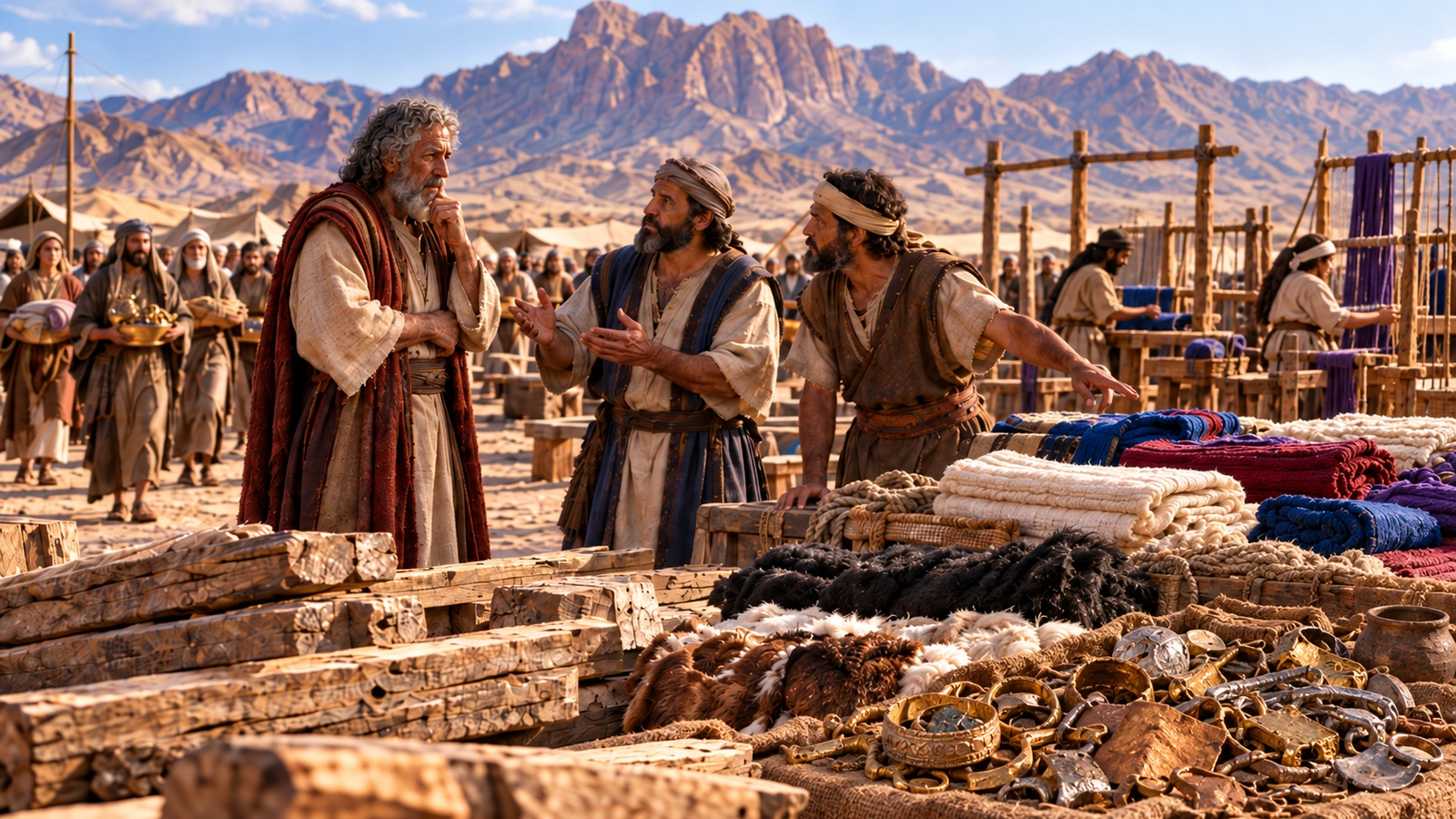
Figure 1. Moses delivers God’s renewed promise to exhausted Israelite workers, who remain overwhelmed by harsh labor and unable to receive his message in Exodus 6:6–9. |
Why Did God Let Things Get Worse After Moses Obeyed Him? ended with apparent disaster.
Moses obeyed, Pharaoh retaliated, and Israel’s burden became heavier.
Exodus 6 opens before those conditions improve.
The slaves remain under Egyptian control.
Their brickmaking crisis has not disappeared.
Moses has just accused God of failing to deliver them.
Then YHWH answers:
“Now you shall see what I will do to Pharaoh.”
Yet the chapter soon creates another problem.
God announces liberation through an extraordinary series of promises.
Moses carries those words to Israel.
They do not listen.
Why repeat a promise to people who cannot receive it?
The answer begins with an important correction.
Exodus does not portray their response as simple rebellion.
“Now You Shall See” Answers Moses Without Explaining Everything
Exodus 5 ends with Moses demanding an explanation.
Why did God send him?
Why has Pharaoh harmed the people?
Why has rescue not happened?
Chapter 6 begins with:
עַתָּה תִרְאֶה — ʿattāh ṯirʾeh
“Now you shall see.”
The response points forward.
God does not reveal every reason behind the worsening oppression.
Instead, Moses is told that Pharaoh’s present control will not remain final.
The emphasis moves from explanation toward action.
That distinction matters.
Exodus 6 does not solve suffering through a philosophical argument.
It announces what YHWH intends to do next.
Pharaoh’s Question Still Hangs Over the Story
One chapter earlier, Egypt’s ruler asked:
מִי יהוה — mî YHWH
“Who is YHWH?”
His challenge concerned authority.
Why should Pharaoh obey this deity’s voice?
Exodus 6 answers with a repeated declaration:
אֲנִי יהוה — ʾănî YHWH
“I am YHWH.”
The phrase appears before the promises begin.
It returns after the land promise closes.
Identity frames the entire speech.
Pharaoh has questioned who YHWH is.
The coming events will answer through history.
Exodus 6:3 Creates a Real Problem
God then says he appeared to Abraham, Isaac, and Jacob as:
אֵל שַׁדָּי — ʾĒl Šaddāy
“El Shaddai.”
Next comes the difficult statement:
וּשְׁמִי יהוה לֹא נוֹדַעְתִּי לָהֶם — ûšəmî YHWH lōʾ nôḏaʿtî lāhem
“By my name YHWH I was not made known to them.”
Yet Genesis repeatedly uses YHWH.
Several ancestral characters even speak the name.
That creates a genuine tension within the Pentateuch’s final form.
It should not be hidden.
Did the Patriarchs Know the Name YHWH?
Two major approaches have developed.
Traditional interpreters often distinguish knowing the name from experiencing its fuller significance.
On that reading, the ancestors knew YHWH verbally.
Moses’ generation will know what that identity means through deliverance.
Source-critical scholarship offers another explanation.
Many scholars assign Exodus 6:2–8 to Priestly material.
Within that literary strand, YHWH’s name is first disclosed to Moses.
Other Pentateuchal traditions use the name much earlier.
The biblical text does not pause to reconcile these approaches.
Beyond The Known should not manufacture consensus where none exists.
One detail, however, will become especially important later.
The Hebrew root for “know” returns inside the same speech.
The Promise Is Older Than Pharaoh
Verse 4 moves from the divine name to the patriarchal covenant.
God recalls the land given in promise to Abraham’s family.
Egyptian bondage therefore does not begin the story.
Neither Moses nor Pharaoh created the conflict’s deepest framework.
The promise existed generations earlier.
Verse 5 then returns to the present crisis.
God has heard Israel’s groaning.
He has remembered:
בְּרִיתִי — bərîṯî
“my covenant.”
Remembering here does not imply forgotten information.
The narrative already used similar language in Exodus 2.
Covenant remembrance signals movement toward promised action.
Then Come Seven First-Person Commitments
The old article counted six promises.
The Hebrew contains seven major first-person declarations across Exodus 6:6–8.
They form a remarkable sequence:
וְהוֹצֵאתִי — wəhôṣēʾṯî
“I will bring you out.”
וְהִצַּלְתִּי — wəhiṣṣaltî
“I will deliver you.”
וְגָאַלְתִּי — wəgāʾaltî
“I will redeem you.”
וְלָקַחְתִּי — wəlāqaḥtî
“I will take you.”
וְהָיִיתִי — wəhāyîṯî
“I will be your God.”
וְהֵבֵאתִי — wəhēḇēʾṯî
“I will bring you into the land.”
וְנָתַתִּי — wənāṯattî
“I will give it to you.”
The progression is visible directly in the Hebrew text.
Deliverance Is Larger Than Leaving Egypt
The first movements concern slavery.
Israel will be brought out.
Bondage will end.
Redemption follows.
Yet the speech does not stop at emancipation.
YHWH will take Israel as his people.
He will become their God.
Then the destination returns.
Canaan remains part of the announcement.
Freedom from Pharaoh is only one stage.
The speech moves from release, to belonging, to inheritance.
That structure connects Exodus directly with Genesis.
“I Will Redeem You” Uses Family Language
One verb deserves special attention:
גָּאַל — gāʾal
“redeem.”
Elsewhere in biblical law and narrative, the root can describe a relative acting for family interests.
A gōʾēl may recover property or protect kinship claims.
Exodus 6 applies the verb to YHWH.
The passage does not say every later legal meaning operates here.
Its basic rescue language remains powerful.
Israel is not merely escaping an employer.
The people are being claimed by the God who calls them his own.
That makes verse 7 especially important.
The Goal Includes Knowing YHWH
God says:
וִידַעְתֶּם כִּי אֲנִי יהוה אֱלֹהֵיכֶם — wîḏaʿtem kî ʾănî YHWH ʾĕlōhêḵem
“You shall know that I am YHWH your God.”
Deliverance produces knowledge.
That is more specific than saying the plagues merely display power.
Israel will learn who YHWH is through what he does.
Pharaoh asked the same question differently.
“Who is YHWH?”
The narrative is now preparing two audiences.
Israel will know through liberation.
Egypt will later encounter the same divine identity through judgment.
The “Outstretched Arm” Speaks the Language of Power
Exodus 6:6 describes redemption occurring:
בִּזְרוֹעַ נְטוּיָה — bizrôaʿ nəṭûyāh
“with an outstretched arm.”
This is bodily metaphor.
It communicates effective strength, not divine anatomy.
Ancient Egyptian royal inscriptions provide a useful comparison.
Later texts from Ramesses III repeatedly praise Pharaoh as possessing a “strong arm.”
Such language presents royal force through bodily imagery.
The comparison does not date Exodus 6.
It does not prove literary borrowing.
It shows that arm-language naturally expressed sovereign power in Egypt’s royal world.
Exodus assigns decisive strength elsewhere.
Pharaoh sits on Egypt’s throne.
YHWH announces the arm that will determine the outcome.
Then Israel Cannot Listen
After this extraordinary speech, Moses addresses the people.
The expected response never comes.
Verse 9 says:
וְלֹא שָׁמְעוּ אֶל־מֹשֶׁה — wəlōʾ šāməʿû ʾel-Mōšeh
“They did not listen to Moses.”
That sounds like rejection until the reason follows.
The narrator immediately gives two causes.
מִקֹּצֶר רוּחַ — miqqōṣer rûaḥ
and
וּמֵעֲבֹדָה קָשָׁה — ûmēʿăḇōḏāh qāšāh.
Literally, the first expression involves “shortness of spirit.”
The second means “hard” or “harsh labor.”
Modern translations capture the first phrase through expressions like crushed or broken spirit.
The Headline Needs One Important Qualification
“Why does God repeat his promise after Israel refuses to listen?” works as search language.
The Hebrew narrative is more careful.
Verse 9 does not describe a calm theological refusal.
Oppression has constricted the people’s capacity to hear.
Their labor is explicitly named as part of the explanation.
This is not a small distinction.
Pharaoh also refuses to listen.
Yet Exodus gives radically different contexts for the two responses.
One comes from sovereign resistance.
The other emerges under crushing labor.
They should not be treated as morally identical.
Suffering Has Changed What the People Can Hear
At the end of Exodus 4, Israel believed.
The people heard that YHWH had seen their affliction.
They bowed in worship.
Then Moses confronted Pharaoh.
Conditions deteriorated.
By Exodus 6, another announcement of rescue reaches exhausted workers.
Their circumstances now contradict everything they have heard.
The narrator does not accuse them of inventing their suffering.
Their exhaustion is part of the explanation.
This makes the repetition of God’s promises more striking.
The Promise Is Repeated Before Their Response Improves
YHWH does not wait for optimism.
He does not demand emotional recovery before restating the covenant.
The speech comes while slavery continues.
Israel’s inability to absorb it does not alter the announced plan.
That does not mean human response is irrelevant everywhere in Exodus.
The chapter makes a narrower claim.
These particular promises are presented as divine commitments.
Their grammatical subject is repeatedly God himself.
Israel’s current emotional capacity is not made their condition.
Moses Immediately Faces the Same Listening Problem
God next tells Moses to return to Pharaoh.
His response is logical:
Israel did not listen.
Why would Egypt’s king listen?
Then Moses adds:
וַאֲנִי עֲרַל שְׂפָתָיִם — waʾănî ʿăral śəp̄āṯāyim
“I am uncircumcised of lips.”
The expression is unusual.
It does not literally describe circumcision.
The metaphor presents Moses’ lips as somehow obstructed, unsuitable, or ineffective.
Its precise nuance remains debated.
Exodus gives no medical diagnosis.
Moses’ concern is clear enough.
He doubts that his speech can carry the mission successfully.
God Does Not Resolve the Mission by Improving Moses’ Confidence
The narrative does not report a new surge of self-belief.
Instead, the command continues.
Moses and Aaron remain responsible for approaching Israel and Pharaoh.
That pattern matches the earlier promise speech.
Human effectiveness is not presented as the controlling factor.
The people cannot hear.
The messenger questions his speech.
The king has already refused.
Yet the command remains.
Exodus has intentionally surrounded the promised deliverance with human impossibility.
Why Does a Genealogy Suddenly Interrupt the Story?
Exodus 6:14 then appears to change subjects.
Reuben’s descendants are listed.
Simeon follows.
Then Levi receives extended attention.
The genealogy eventually narrows toward Aaron and Moses.
At first, this can look like an editorial interruption.
Yet its placement performs visible literary work.
The two leaders are located inside Israel’s family structure.
They have not appeared from nowhere.
Their mission belongs to the same descendants promised in Genesis.
The Genealogy Gives Aaron Special Attention
Another detail is easily missed.
The genealogy spends substantial space on Aaron’s line.
His marriage is named.
His sons appear.
Eleazar’s marriage and Phinehas follow.
That emphasis anticipates Aaron’s later priestly importance.
Moses remains the dominant narrative figure.
The family record gives Aaron’s house a durable institutional future.
Source-critical scholars commonly associate this section with Priestly material.
That observation also fits the genealogy’s interest in lineage and Aaronic descent.
The final form still uses the section narratively.
It identifies the men who will confront Pharaoh.
Then Exodus Repeats Their Names in Reverse
After the genealogy comes:
“These are Aaron and Moses.”
Soon afterward:
“These are Moses and Aaron.”
The reversal is small but noticeable.
Both men belong to the mission.
Neither is a detached heroic stranger.
They stand inside Israel’s genealogy while being commissioned against Egypt’s ruler.
The family list therefore slows the action before confrontation resumes.
Its pause is not empty.
It anchors liberation inside ancestry.
Exodus 6 Does Not Say Belief Creates the Promise
A popular reading can become too broad here.
The chapter does not teach that faith never matters.
Nor does it offer a universal formula about emotional struggle.
Its claim is more specific.
Israel’s failure to listen does not cause YHWH to cancel these declarations.
The covenant preceded their present despair.
The announced action remains after verse 9.
That is why repetition matters.
The speech is not attempting to generate reality through positive thinking.
It declares what the speaker says he will do.
The Deeper Discovery
One Hebrew root quietly connects the chapter’s hardest theological question.
Verse 3 says:
לֹא נוֹדַעְתִּי לָהֶם — lōʾ nôḏaʿtî lāhem
“I was not made known to them.”
The root is:
ידע — y-d-ʿ
“know.”
Four verses later, God tells Israel:
וִידַעְתֶּם — wîḏaʿtem
“you shall know.”
It is the same root.
That connection changes the debate around Exodus 6:3.
Whatever precise solution one adopts concerning the patriarchs, verse 7 gives the chapter’s forward movement.
A form of knowledge lies ahead.
Israel will know YHWH as the God bringing them from Egyptian bondage.
The divine name is therefore connected with historical action inside the chapter itself.
Verse 3 looks backward toward the ancestors.
Verse 7 looks forward toward the slaves.
Between them stand the promises.
This does not eliminate the tension with Genesis.
It reveals what Exodus 6 emphasizes.
YHWH will become known through redemption.
Pharaoh’s earlier question now looks even more important.
“Who is YHWH?”
Israel has not yet experienced the full answer.
Neither has Egypt.
The next chapters will make knowledge one of their recurring themes.
FAQ About Exodus 6
Why did Israel not listen to Moses?
Exodus 6:9 attributes their response to qōṣer rûaḥ and harsh labor.
The text does not present their reaction as simple defiance.
What does “shortness of spirit” mean?
קֹצֶר רוּחַ — qōṣer rûaḥ literally suggests constricted or shortened spirit.
In context, severe bondage has left Israel unable to receive Moses’ message.
How many “I will” promises appear in Exodus 6:6–8?
Seven major first-person declarations appear in the Hebrew sequence.
They move from release through relationship and finally toward the promised land.
Did Abraham know God’s name YHWH?
Genesis repeatedly uses YHWH before Moses.
Exodus 6:3 creates a genuine interpretive tension with those passages.
Traditional and source-critical readings explain that tension differently.
What does “uncircumcised lips” mean?
The phrase describes Moses’ perceived speech limitation through metaphor.
Exodus does not identify a physical condition behind the expression.
Why does Exodus 6 include a genealogy?
It locates Moses and Aaron within Israel’s ancestry.
The section also gives extended attention to Aaron’s family line.
Israel cannot yet absorb the promise.
Moses still doubts whether Pharaoh will hear him.
The Egyptian king has already challenged YHWH’s authority.
Yet the chapter ends with the mission intact.
Next, Moses and Aaron will enter Pharaoh’s court again.
This time, a staff becomes a creature before the king.
Pharaoh sees the sign.
Egyptian specialists reproduce something similar.
Still, the ruler does not yield.
The next question becomes unavoidable:
Why Did Pharaoh Refuse to Listen Even After Seeing God’s Power?
Selected Sources
Nahum M. Sarna, Exodus, JPS Torah Commentary.
William H. C. Propp, Exodus 1–18, Anchor Bible.
Brevard S. Childs, The Book of Exodus: A Critical, Theological Commentary.
Carol Meyers, Exodus, New Cambridge Bible Commentary.
Victor P. Hamilton, Exodus: An Exegetical Commentary.
Zev Farber, “Documentary Hypothesis: The Revelation of YHWH’s Name Continues to Enlighten,” TheTorah.com.
William F. Edgerton and John A. Wilson, Historical Records of Ramses III: The Texts in Medinet Habu Volumes I and II.