Why Does Leviticus 3 Reserve the Fat for the LORD?
The well-being offering could become a shared meal, yet its richest portions belonged to the altar. Leviticus 3 explains where that boundary was drawn.
Source: AI-generated image created for Beyond The Known.
Leviticus 3 introduces an offering that could end in a meal. Curiously, the chapter never describes the meal itself. Its attention stays with the animal at the entrance to the Tent of Meeting: a hand placed on its head, blood dashed against the altar, and particular organs removed for burning. Then, after sixteen verses of sanctuary procedure, the instructions extend to every place where Israel lives.
The final words prohibit eating fat and blood. They invite a question more precise than whether Israelites were allowed to enjoy meat: what made certain parts of a shared sacrifice unavailable to the people who brought it?
In Why Does Leviticus 2 Require Grain, Oil, and Frankincense?, we examined how the grain offering was divided between the altar and the priesthood. Leviticus 3 presents another distribution, one that also leaves meat for the worshiper. But first the law defines what must be surrendered.
What Was the Well-Being Offering?
The Hebrew name is zevaḥ šĕlāmîm (זֶבַח שְׁלָמִים). The first word refers to a slaughter sacrifice; the second belongs to the same word family as šālôm, associated with peace, wholeness, and well-being. Translators have consequently used “peace offering,” “fellowship offering,” and “well-being sacrifice.” Each highlights something useful, though none exhausts the category.
“Peace offering” may sound as though the person bringing it has just reconciled with God after an offense. Leviticus 3 does not describe such a quarrel or prescribe a confession. “Fellowship offering” points toward the meal regulated later in the book, while “well-being” leaves room for several occasions on which this sacrifice could be presented.
One distinction is especially important. Some editions of the Bible head this chapter “Sacrifice of Thanksgiving.” Thanksgiving, however, was one kind of šĕlāmîm, not the name of every such ceremony. Leviticus 7:11–16 distinguishes an offering of thanks (tôdāh) from those associated with a vow or a voluntary gift. The wider biblical record also places well-being sacrifices in times of distress, including Judges 20:26.
The rite could therefore accompany gratitude, an obligation undertaken in a vow, or an appeal for help. Its meaning cannot be reduced to a celebratory banquet. Roy E. Gane’s analysis of Israelite sacrifice emphasizes precisely this range of uses, together with the meal’s significance for the people who participated.
Which Animals Could Be Presented?
The chapter is arranged around three possibilities: an animal from the herd (3:1–5), a sheep (3:6–11), or a goat (3:12–16). Each must be without defect, and both males and females are permitted. That differs from the male cattle and flock animals required for the burnt offering in Leviticus 1.
This change is explicit, although the reason for it is not explained. It gives the worshiper a broader choice of eligible animals without authorizing a theory about the social standing or private motives of whoever brings one.
Birds, permitted for the burnt offering, do not appear here. The law gives no alternative procedure for a dove or pigeon in this category. It concentrates instead on larger domestic animals from which particular fatty portions can be removed and the remaining meat distributed under the later regulations.
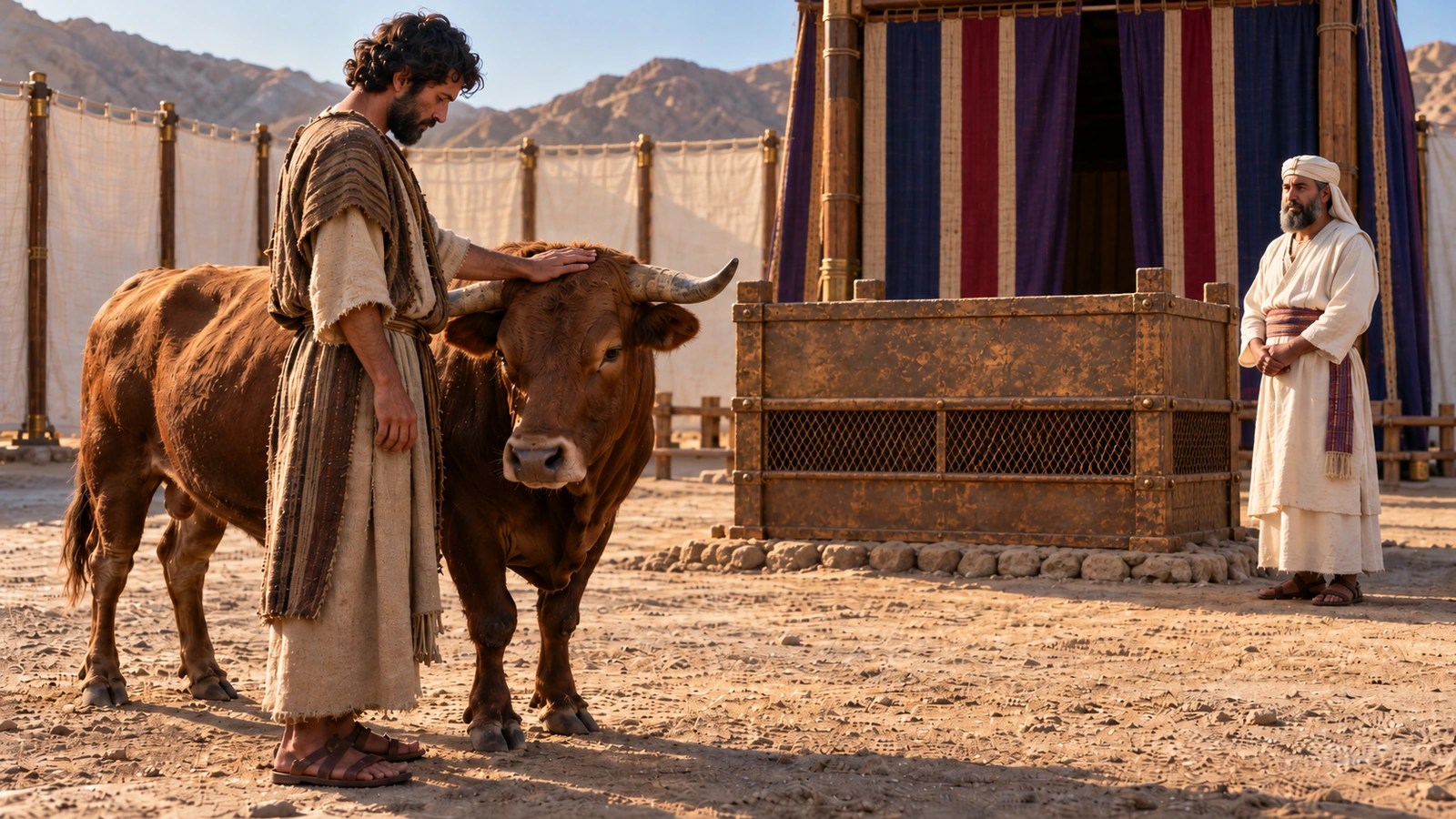
Across the three cases the essential sequence holds: the person brings the animal before the LORD, places a hand upon its head, and slaughters it. Aaron’s sons then dash the blood against the altar. The procedures diverge mainly when the law identifies what is to be burned.
The Hand, the Blood, and the Entrance
The hand-laying gesture, familiar from Leviticus 1, associates the offerer with the animal presented. Some interpretations give it representative or substitutionary meaning. What the chapter itself reports is the action; it does not describe a transfer of sins, an accompanying confession, or an act of absolution.
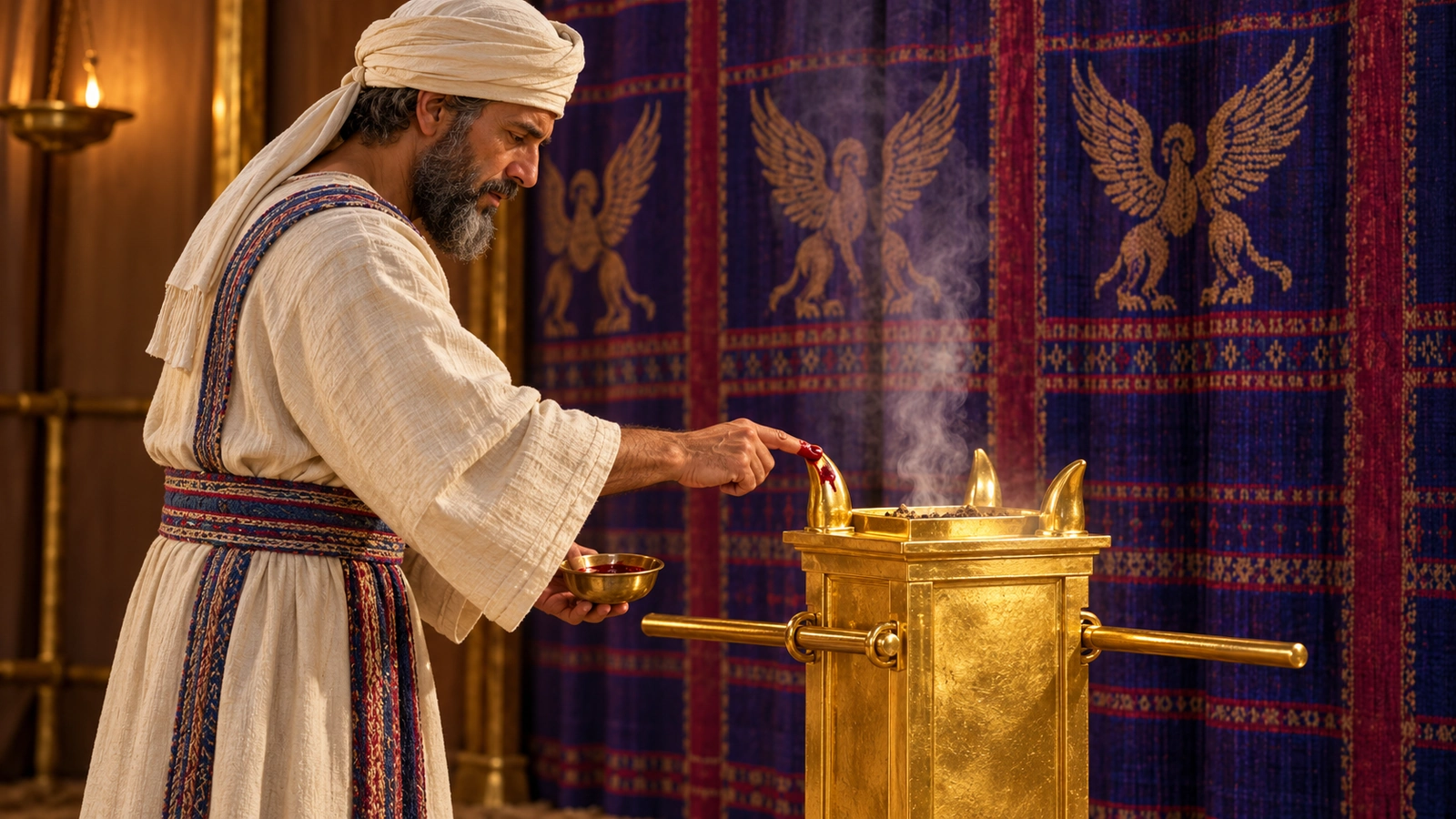
The division of labor is clearer. In the Hebrew sequence, the worshiper ordinarily performs the slaughter, while the priests handle the blood. Its application is expressed with the verb zāraq (זָרַק), meaning to dash or throw. The priestly action differs from blood rites later performed on altar horns or within the sanctuary.
There is also a small variation in the wording of the location. The cattle offering is slaughtered at the entrance of the Tent of Meeting (3:2); the sheep and goat are slaughtered before it (3:8, 13). Jonathan Grossman has argued that this verbal contrast participates in a wider literary association between cattle and the divine dwelling. His proposal draws attention to a real difference in phrasing. It does not require us to picture separate ritual compounds for the three animals.
Blood, meanwhile, belongs to each procedure even though Leviticus 3 never calls the šĕlāmîm a purification offering. A later passage, Leviticus 17:11, relates the use of blood at the altar to the life of the creature and to atonement. That broader explanation deepens the ritual context without turning the well-being sacrifice into the offering prescribed for a specific unintentional sin in Leviticus 4.
Why These Particular Fatty Parts?
The most demanding lines for a modern reader are anatomical. For cattle, the worshiper removes the fat covering and surrounding the entrails, the two kidneys with their associated fat, and a portion attached to the liver (3:3–4). Much of the same list governs sheep and goats.
The key Hebrew noun is ḥēlev (חֵלֶב), used here for the fat assigned to the altar. The instructions concentrate on separable internal fatty tissue rather than issuing a rule about every streak of fat within muscle. Even the term for the liver portion, yōteret, is technically difficult. English translations differ between “long lobe,” “appendage,” and related descriptions; the exact anatomical identification remains debated.
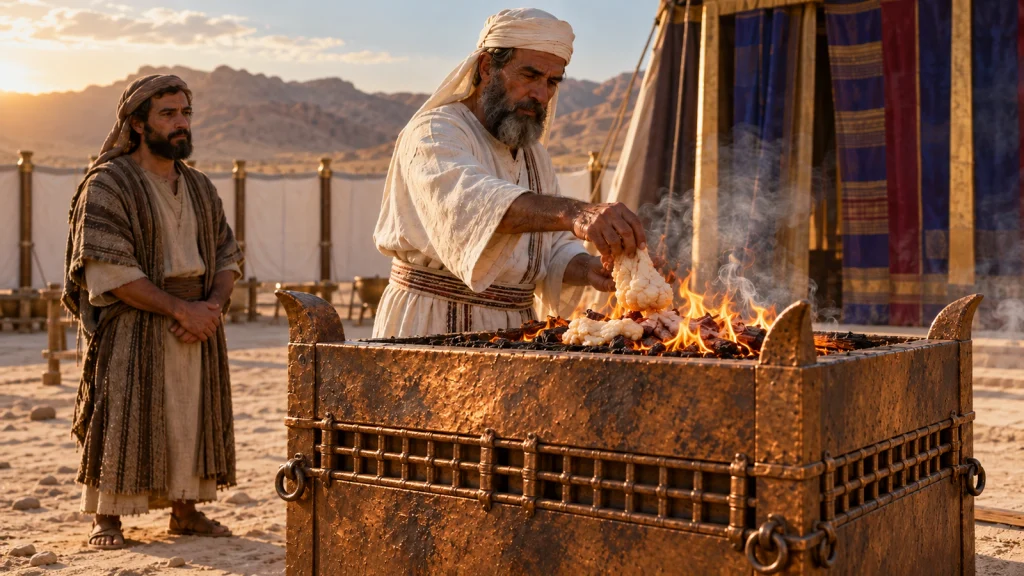
The point of naming these parts is practical and ritual. They are to be removed from the animal and placed on the fire. A reader might infer that especially rich portions were reserved as an expression of honor to God, since fat could be associated with abundance. But the chapter provides a rule about allocation rather than a stated explanation of divine preference.
Treating the kidneys as symbols of hidden emotions or the fat as a metaphor for pride would shift the discussion away from the ceremony actually described. Such applications can be explored separately; they cannot replace the instructions in Leviticus.
Why Is the Sheep’s Tail Different?
Only the sheep procedure adds the whole fat tail, cut away close to the backbone (3:9). The Hebrew term ʾalyāh (אַלְיָה) refers to a feature recognizable in fat-tailed sheep, which store substantial fatty tissue in the tail region. That explains why this instruction is absent from the corresponding goat and cattle lists.
The animals are not a modern invention projected into the ancient world. A seventh-century BCE Assyrian relief from Nineveh depicts fat-tailed sheep led in procession. Irene Bald Romano, Kelly Ann Moss, and Gina Watkinson document the fragment and its history in a peer-reviewed archaeological study. The relief supplies a useful illustration of regional animal husbandry centuries before the Common Era; it cannot establish the breed used in an individual Israelite ceremony or verify an event narrated in the Pentateuch.
The difference between the sheep and the goat is therefore intelligible without assigning a secret spiritual meaning to the tail. Leviticus gives species-specific instructions within a repeated sacrificial framework.
Why Call the Offering God’s Food?
At the end of the sheep procedure, the priest burns the designated parts as a “food offering” to the LORD (3:11). Similar language appears with the goat in verse 16. The Hebrew leḥem, normally “bread” or “food,” is being used within the vocabulary of sacrifice, although nothing resembling a loaf is placed on the altar.
Food offered to a deity was a familiar category in the ancient Near East. In Israel’s texts, however, the idiom should not be mistaken for a claim that the LORD needs animal meat to survive. Psalm 50:12–13 explicitly rejects that assumption. The smoke rising from the altar communicates the presentation of a gift, while the formula “pleasing aroma” describes its favorable reception in ritual terms.
A detail in verse 5 deserves more attention than it usually receives: the fat from the cattle sacrifice is burned on the burnt offering already resting on the burning wood. The law does not present the three offerings from the opening chapters as rituals occurring in completely separate worlds. They could meet at the same altar, their materials handled according to distinct rules.
That detail also recalls why the altar stood in the courtyard in the first place. Why Was the Bronze Altar Placed Outside the Tabernacle? examines its place in the sanctuary’s arrangement. Leviticus 3 adds a view of the work performed there: while the animal’s remaining meat has another destination, these selected parts pass into the fire.
Who Ate the Rest of the Sacrifice?
Leviticus 3 tells us what belongs on the altar but stops short of explaining the meal. The missing instructions appear in Leviticus 7:11–36. There the priesthood receives its designated portions, including the breast and right thigh under their respective provisions, while the person bringing the sacrifice can eat other meat according to rules of ritual purity and timing.
The duration differs by occasion. Meat from a thanksgiving offering must be eaten on the day of sacrifice; the rules for a vow or voluntary offering allow consumption into the following day (7:15–18). The meal could include additional participants. It was a structured occasion of eating before the LORD, not simply a private dinner following slaughter.
This arrangement marks the šĕlāmîm off from the two previous chapters. The burnt offering’s flesh is consumed on the altar, while the grain offering leaves a “most holy” remainder for the priests. Here a worshiper can eat from an animal already presented in sacrifice. The presence of a shared meal, however, does not erase the assigned portions of the officiating priests or the claim made on the altar’s behalf.
That claim becomes the subject of the chapter’s last two verses.
Does “All the Fat” Mean Every Kind of Fat?
“All the fat belongs to the LORD” (3:16) sounds comprehensive, and verse 17 immediately prohibits consuming fat or blood. Reading those sentences against the anatomical lists, however, keeps them from becoming a rule about every substance that would appear as fat on a modern nutrition label.
Leviticus 7:23–25 specifies the fat of cattle, sheep, and goats and continues to regulate fat even when an animal has died naturally or been torn by predators. The focus is the ḥēlev associated with animals eligible for altar sacrifice, particularly the identifiable portions described in chapter 3. The USCCB’s explanatory notes distinguish this prohibited visceral fat from fat interspersed through ordinary flesh.
Later Jewish interpretation develops these distinctions in greater anatomical and legal detail. Such interpretation has its own historical setting; it can clarify how the command has been understood without claiming that Leviticus 3 already supplies every rule worked out by later commentators.
Blood has a related but not identical rationale. Its prohibition appears elsewhere in the Torah and is expressly connected with life in Leviticus 17:10–14. Fat is repeatedly designated as the LORD’s altar portion. The chapter joins the prohibitions in a single closing command, while the larger book gives different explanations for each.
“Throughout your generations, in all your dwellings” is equally significant. The legal instruction is addressed to Israel as an enduring obligation. Later Jewish observance and Christian discussions of dietary law are distinct questions that cannot be settled by taking verse 17 out of its literary and covenantal context.
The Deeper Discovery
From the Altar’s Fire to the Israelite Table
The striking turn in Leviticus 3 occurs after the goat offering. For sixteen verses, the scene belongs to the sanctuary: animals are brought forward, priests handle blood, and the fat is burned. In verse 17 the perspective shifts to wherever the Israelites live.
Why end a set of altar instructions with a rule about eating away from the altar?
The earlier procedures supply the answer. The šĕlāmîm is one of the sacrifices from which people may later eat. A portion of the animal therefore moves beyond the sacred courtyard into human consumption. The fat and blood do not accompany it as ordinary food. The final prohibition protects a distinction established during the ritual, even when the meal is no longer in view.
The wording creates a movement from presentation to lasting practice. In the first case, the altar receives internal fat laid over an existing burnt offering. In the sheep and goat cases, the exact materials are again identified. The concluding declaration—“all the fat belongs to the LORD”—gathers the three procedures into one rule, then carries its consequence beyond the sanctuary.
There is an understated tension in the chapter’s design. Compared with the burnt offering, the well-being sacrifice allows a wider choice of male or female animals. It also permits the offerer to share in the meat. Yet greater participation does not mean unrestricted ownership. The most important boundary concerns what remains God’s portion after the rest becomes available to people.
The discovery is found in that change of scale: a sacrifice associated with fellowship concludes by regulating what Israel must not eat. The final verse is not an unrelated dietary appendix. It extends the claim of the altar into the life of the community.
What Did This Sacrifice Mean for Israel?
The well-being offering held together two aspects of worship that can seem opposed to modern readers. Its meat could be shared, but sharing depended upon an ordered division. The person presenting the animal participated in a sacred meal while acknowledging that certain portions did not belong to the human table.
The name šĕlāmîm suggests a connection with well-being, and its documented occasions include thanks and vows. We should not, however, imagine that every person who brought one felt cheerful or that the ritual invariably marked reconciliation after wrongdoing. What matters for the interpretation of this chapter is its combination of priestly procedure, divine allocation, and permitted eating.
The sequence also prepares the reader for the next kind of sacrifice. James W. Watts observes that Leviticus 1–3 organize their instructions largely around the materials used, while chapters 4–5 focus more directly on kinds of wrongdoing and their consequences. That is a scholarly reading of the book’s organization, supported by the changing pattern of the laws.
Leviticus 3 has answered its central question without assigning imaginary meanings to internal organs: the fat is reserved because the legislation explicitly treats it as the LORD’s portion, separated from the meat that could later be shared. Its precise anatomical requirements and final prohibition keep that distinction intact.
FAQ
Is the peace offering the same as a thanksgiving offering?
Not exactly. The Hebrew šĕlāmîm names a wider category of well-being sacrifices. Leviticus 7 distinguishes thanksgiving from offerings associated with vows and voluntary gifts.
Could women bring a well-being offering?
Leviticus 3 does not restrict the offerer’s sex. Its explicit male-or-female distinction concerns the animal: either sex is acceptable when the victim is without defect.
Why did the sheep’s fat tail belong on the altar?
Leviticus 3:9 includes it among the prescribed portions. Fat-tailed sheep are known from ancient Near Eastern evidence, making the instruction anatomically intelligible without requiring an invented symbolic explanation.
Did the Israelites eat meat from this sacrifice?
Yes. Leviticus 7:11–36 regulates the portions available to priests and worshipers and sets limits on the timing and ritual conditions of consumption.
Was all animal fat forbidden?
The prohibition concerns the sacrificial category of fat discussed in Leviticus 3 and clarified in 7:23–25, not every trace of fat in muscle. Blood has its own, wider biblical prohibition.
Why were blood and fat both prohibited?
The fat portions are assigned to the LORD at the altar. Blood is associated with life and sacrificial atonement in Leviticus 17:10–14. The two restrictions stand together, but the text gives them different emphases.
Does calling sacrifice God’s “food” mean God needed nourishment?
No. It belongs to the ritual language of presenting a gift through fire. Psalm 50:12–13 explicitly rejects the idea that God depends upon animals for food.
What Comes Next?
The first three chapters explain how burnt, grain, and well-being offerings were presented. None begins with a specified act of wrongdoing. Leviticus 4 changes the discussion by addressing unintentional sin—and its instructions differ according to whether the offender is the anointed priest, the congregation, a leader, or an ordinary Israelite.
The blood procedures change as well. Why should the identity of the person who sinned affect what happens at the altar and, in some cases, within the sanctuary?
Why Does Leviticus 4 Require Different Sacrifices for Unintentional Sin?
Selected Sources
- NET Bible: Leviticus 3, with Translators’ Notes. New English Translation.
- Leviticus 3, with Explanatory Notes. United States Conference of Catholic Bishops, New American Bible, Revised Edition.
- Roy E. Gane. “Sacrifice and the Old Testament.” St Andrews Encyclopaedia of Theology. University of St Andrews, August 17, 2022.
- Jonathan Grossman. “Sacrificing Bulls in the Divine Presence.” TheTorah.com, 2025.
- James W. Watts. “Leviticus’ Rhetorical Presentation of the Sin and Guilt Offerings.” TheTorah.com, March 13, 2019.
- Irene Bald Romano, Kelly Ann Moss, and Gina Watkinson. “Biography of a Neo-Assyrian Relief Fragment from Nineveh.” Bulletin of the American Society of Overseas Research 392 (2024): 83–110. Archaeological depiction of fat-tailed sheep; publisher abstract consulted.