Why Does Exodus 22 Protect Foreigners, Widows, and Orphans?
Exodus 22 Explained: Restitution, the Resident Alien, Widows and Orphans, Debt, Interest, and the God Who Hears
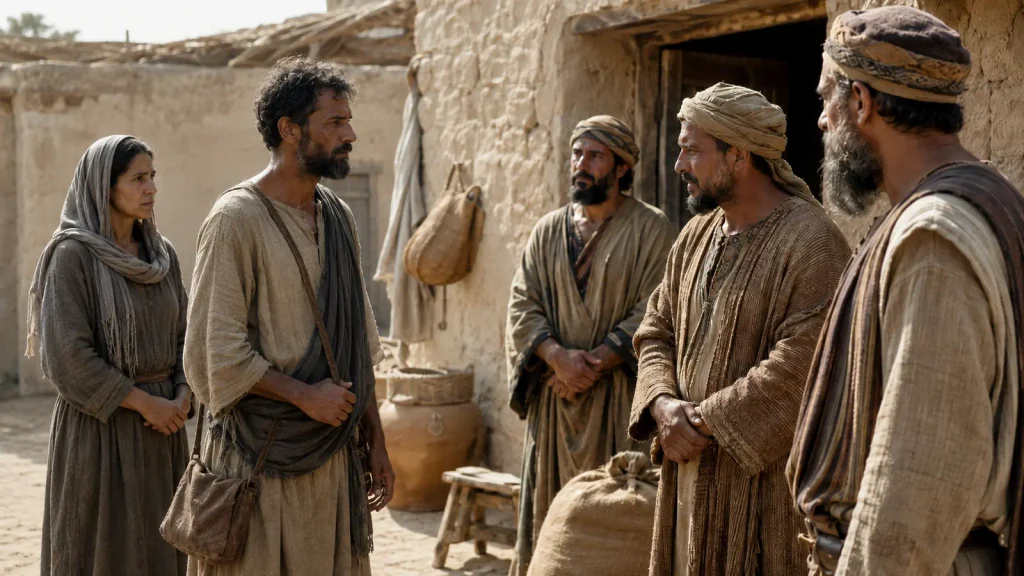
Source: AI-generated image created for Beyond The Known.
Exodus 22 begins with stolen livestock and damaged property.
It eventually reaches something far more personal: what Israel must do when another person’s survival depends on someone with greater social or economic power.
In Why Does the Book of the Covenant Begin with Hebrew Slavery?, Exodus 21 confronted a newly liberated people with servitude inside their own society. Exodus 22 widens the question.
Israel can now own property, lend money, accept collateral, bring disputes before judges, and exercise authority over outsiders living among them.
What will former slaves do with power once they possess it?
The answer becomes clearest in three figures who receive explicit protection:
the resident alien,
the widow,
and the orphan.
Why Does Exodus 22 Spend So Much Time on Property First?
The chapter’s opening cases deal with theft, damaged fields, spreading fire, entrusted goods, borrowed animals, and disputed ownership.
A repeated concern is restitution.
Forms of the Hebrew root:
שלם — š-l-m
appear in the legal language of repayment and making loss good.
The principle is concrete.
When another person’s property is damaged or stolen, the loss cannot simply be ignored.
Yet these cases also establish something important for what follows: Exodus 22 takes property seriously without treating property rights as unlimited.
That distinction becomes visible when the chapter reaches poor borrowers.
Before that transition, even the burglary law resists a simplistic equation between property and life.
A householder who kills a burglar during a nighttime intrusion is treated differently from one who kills under the conditions described after sunrise.
The passage does not explain the distinction in modern legal categories.
It does show that circumstances matter.
The law is not an unrestricted license to kill someone for stealing.
Who Is the “Foreigner” in Exodus 22?
The central command begins with:
וְגֵר לֹא־תוֹנֶה וְלֹא תִלְחָצֶנּוּ — wĕgēr lō-tôneh wĕlō tilḥāṣennû
“You shall not wrong a gēr, nor oppress him.”
The noun:
גֵּר — gēr
is commonly translated “stranger,” “sojourner,” “foreigner,” or “resident alien.”
None maps perfectly onto a modern immigration category.
A gēr is not simply anyone born outside Israel. Nor should the term be equated automatically with a tourist, refugee, undocumented migrant, permanent resident, or naturalized citizen.
Its meaning belongs to an ancient social world.
The gēr lives among a population without the same native kinship, ancestral land claims, and established household networks available to many members of that community.
Those differences could leave such a person exposed to exploitation.
Christiana van Houten’s study of the gēr also shows that the category develops across different biblical legal collections. The term should not be assumed to carry an identical institutional status everywhere in the Pentateuch.
Why Does Israel’s Experience in Egypt Matter?
Exodus supplies its own reason for protecting the gēr:
כִּי־גֵרִים הֱיִיתֶם בְּאֶרֶץ מִצְרָיִם — kî-gērîm hĕyîṯem bĕʾereṣ miṣrayim
“for you were gērîm in the land of Egypt.”
The appeal is to memory.
Israel once lived on another people’s land.
That statement should not be collapsed immediately into slavery. The ancestors first entered Egypt as resident outsiders; the Exodus narrative later describes their condition deteriorating into forced labor and oppression.
The motivation in Exodus 22 therefore begins with outsider status.
Israel has experienced life under a social order controlled by others.
Now the direction of power has changed.
The people who once lived as gērîm must decide how a gēr will be treated among them.
Why Are Widows and Orphans Named Next?
The command immediately expands:
כָּל־אַלְמָנָה וְיָתוֹם לֹא תְעַנּוּן — kol-ʾalmānâ wĕyātôm lō tĕʿannûn
“You shall not afflict any widow or orphan.”
The nouns are:
אַלְמָנָה — ʾalmānâ
“widow”
and
יָתוֹם — yātôm
“orphan” or “fatherless child.”
The text does not say that every widow was destitute or that every fatherless child occupied the same economic position.
Their vulnerability arose from social structure.
In households where inheritance, land, legal representation, and economic security were strongly organized through kinship, the loss of a husband or father could weaken ordinary mechanisms of protection.
The gēr, widow, and orphan are not one social class.
Their shared feature is exposure to people with more leverage.
Was Care for Widows and Orphans Unique to Israel?
No.
Ancient Near Eastern legal and wisdom traditions also present protection of widows, orphans, the poor, and other weak members of society as a mark of justice.
Royal ideology could praise a king for preventing the powerful from exploiting those with less status.
F. Charles Fensham’s classic comparative study documents this wider concern across ancient Near Eastern legal and wisdom literature.
That background prevents an exaggerated claim that Israel invented concern for vulnerable people.
It also reveals a significant feature of Exodus.
The command is not merely praise for an ideal king.
It is addressed to the covenant community itself.
And when ordinary protection fails, YHWH declares that he will hear the victim.
What Happens If the Widow or Orphan Cries Out?
The warning becomes unusually intense:
כִּי אִם־צָעֹק יִצְעַק אֵלַי שָׁמֹעַ אֶשְׁמַע צַעֲקָתוֹ
“If he indeed cries out to me, I will surely hear his cry.”
Two constructions intensify the verbs:
צָעֹק יִצְעַק — ṣāʿōq yiṣʿaq
“he surely cries out”
and:
שָׁמֹעַ אֶשְׁמַע — šāmōaʿ ʾešmaʿ
“I will surely hear.”
The grammar heightens certainty.
A socially vulnerable person may lack the means to compel a stronger household to listen.
YHWH does not lack access to the complaint.
The response is severe.
If the vulnerable are abused, divine anger burns, and the perpetrators are threatened with death by the sword:
their wives will become widows,
their children will become orphans.
This is not a general prediction about every act of injustice.
It is the stated sanction attached to this command.
The punishment mirrors the condition that the offender was willing to exploit.
Why Does the Law Turn Immediately to Poor Borrowers?
The next case shifts from social status to economic leverage.
YHWH says:
אִם־כֶּסֶף תַּלְוֶה אֶת־עַמִּי אֶת־הֶעָנִי עִמָּךְ
“If you lend money to my people, to the poor among you…”
The borrower is:
הֶעָנִי — heʿānî
the poor or afflicted person.
The prohibition follows:
לֹא־תְשִׂימוּן עָלָיו נֶשֶׁךְ — lō-tĕśîmûn ʿālāw nešeḵ
“You shall not impose nešeḵ upon him.”
נֶשֶׁךְ — nešeḵ refers here to interest charged on the loan.
The setting matters.
Exodus 22 is not constructing a theory of modern commercial banking, investment, mortgages, or inflation.
Its immediate concern is a poor person borrowing from someone with greater resources.
Need has created an imbalance.
The creditor is forbidden to exploit it.
Why Must the Creditor Return a Cloak at Sunset?
A creditor may take a garment as collateral.
But only temporarily.
The command requires its return before sunset because the garment may be the debtor’s only covering.
Then YHWH asks:
“In what will he sleep?”
The question brings the law down to the level of a human body at night.
The debt remains.
The creditor’s legitimate claim has not disappeared.
Yet collateral cannot be enforced in a way that deprives a poor person of basic protection from the cold.
That places a concrete boundary around economic power.
A legal claim does not erase bodily need.
The paragraph ends:
כִּי־חַנּוּן אָנִי — kî-ḥannûn ʾānî
“for I am gracious.”
חַנּוּן — ḥannûn describes YHWH as gracious or compassionate.
Here social legislation is tied directly to divine character.
Does Exodus 22 Place Human Need Above Property?
The contrast is more precise than that.
Exodus 22 vigorously protects property.
Thieves repay.
Those who damage crops make restitution.
Losses involving entrusted or borrowed animals receive detailed attention.
Property is not dismissed.
What changes is the scope of the owner’s claim.
The poor man’s garment can function as security, but not through the night when he needs it for warmth.
A lender may possess capital, but poverty cannot become an opportunity for the kind of interest prohibited here.
Ownership remains meaningful.
It does not become absolute.
Why Are Religious and Social Laws Mixed Together?
Modern readers often expect separate sections for criminal law, property law, religion, family law, and social welfare.
Exodus 22 does not follow those divisions.
Between its economic cases and its commands concerning the vulnerable appear prohibitions involving sorcery, bestiality, and sacrifice to another deity.
Later the text returns to rulers, offerings, firstborn animals, and holiness.
The arrangement can feel abrupt because modern categories are being imposed on an ancient collection.
In the final form of the Covenant Code, worship and social conduct occupy the same covenantal sphere.
How Israel sacrifices cannot be separated neatly from how Israel lends.
Holiness cannot be isolated from the treatment of someone without social protection.
The text does not explain every compositional transition.
It does refuse to divide allegiance to YHWH from ordinary exercises of power.
Did These Laws Develop in More Than One Literary Stage?
Scholars disagree sharply.
David P. Wright argues that the Covenant Code engages the Laws of Hammurabi directly and extensively. In his reconstruction, its casuistic and apodictic materials creatively rework Mesopotamian legal literature during the Neo-Assyrian period.
John Van Seters proposes a different history. He challenges the traditional view that the Covenant Code is simply the oldest biblical law collection later revised by Deuteronomy and the Holiness Code, arguing that parts of it depend on those later legal traditions.
These are historical-critical reconstructions.
Neither is narrated by Exodus itself.
They should therefore remain distinct from a final-form reading, which asks what the legal collection accomplishes in the narrative as preserved.
At that level, the sequence is unmistakable.
The God who delivered Israel from Egyptian domination now limits how Israel may exercise power over others.
So Why Does Exodus 22 Protect Foreigners, Widows, and Orphans?
Because the chapter repeatedly addresses relationships in which one party can exploit another.
The gēr lives without the same native roots.
A widow or fatherless child may lose important household protections.
The poor borrower needs resources controlled by a creditor.
Different vulnerabilities receive different arguments.
The gēr is protected through Israel’s memory:
you were gērîm in Egypt.
The widow and orphan receive a warning:
their cry will be heard.
The poor debtor encounters a limit grounded in YHWH’s character:
“I am gracious.”
Exodus 22 does not erase differences in wealth, status, or social position.
It places restraints on what the stronger party may do with those differences.
Israel’s memory of oppression is supposed to affect the way Israel handles power.
The Deeper Discovery
The strongest literary connection lies in a Hebrew root that has already appeared in the Exodus story.
Exodus 22 tells Israel concerning the gēr:
וְלֹא תִלְחָצֶנּוּ — wĕlō tilḥāṣennû
“you shall not oppress him.”
The verb comes from:
לחץ — l-ḥ-ṣ
“to press” or “oppress.”
Earlier, Exodus 3:9 used the same root when YHWH described Egypt’s treatment of Israel:
הַלַּחַץ אֲשֶׁר מִצְרַיִם לֹחֲצִים אֹתָם
“the oppression with which the Egyptians oppress them.”
The lexical echo sharpens the command.
Egypt once pressed Israel.
Israel must not press the gēr.
A second pattern follows.
In Exodus 3, the oppressed Israelites cry out, and YHWH hears them.
In Exodus 22, vulnerable people cry out, and YHWH again promises to hear.
The sequence is familiar:
oppression,
cry,
divine hearing,
intervention.
But the roles can now reverse.
Israel is no longer automatically the victim.
An Israelite can occupy the position once occupied by the Egyptian oppressor.
That is what makes the command more than an appeal to empathy.
The Exodus has become a standard of judgment.
The story of liberation teaches Israel not only what YHWH once did for them, but what he may do when they reproduce the oppression from which they were rescued.
The former oppressed are capable of becoming the oppressor.
Exodus 22 places the vocabulary of Egypt directly in the path of that possibility.
FAQ
What does gēr mean in Exodus 22?
גֵּר — gēr describes a resident outsider or sojourner. The category belongs to ancient kinship and land structures and should not be equated automatically with one modern immigration status.
Why does Israel’s experience in Egypt matter to the law?
The text explicitly says Israel was once gērîm in Egypt. Former outsider status becomes the reason Israel must not exploit outsiders living under its own social power.
Were every widow and orphan in ancient Israel poor?
No. The text does not say that. Their legal vulnerability could arise from the loss of household protection, inheritance access, economic support, or male kin representation.
Was protecting widows and orphans unique to Israel?
No. Similar concern for vulnerable people appears in ancient Near Eastern legal and royal traditions. Exodus places that concern inside covenant commands and portrays YHWH as hearing their cry.
Does Exodus 22 ban every form of interest?
The immediate command concerns lending to a poor member of the community. It should not be turned without argument into a complete policy for every later form of commercial finance.
Why must the poor person’s cloak be returned before sunset?
Because it may be his only nighttime covering. The creditor’s claim is limited by the debtor’s immediate physical need.
Why do some Bibles number these verses differently?
Hebrew/Jewish and many Christian traditions divide the transition between Exodus 21 and 22 differently. As a result, the laws concerning the gēr, widow, orphan, and poor borrower can appear one verse earlier in Hebrew numbering.
Exodus 22 shows what covenant law does when power is unequal.
Exodus 23 makes the problem harder.
There Israel is warned against following a crowd into injustice, accepting a bribe, or distorting a legal case.
Then the law introduces someone who does not naturally invite compassion.
An enemy’s animal wanders away.
An enemy’s donkey collapses under its load.
Israel must decide whether hostility cancels responsibility.
It does not.
Why Does Exodus 23 Command Israel to Help Its Enemy?
Selected Sources
- William H. C. Propp, Exodus 19–40: A New Translation with Introduction and Commentary. Anchor Bible 2A. Doubleday, 2006.
- Carol Meyers, Exodus. New Cambridge Bible Commentary. Cambridge University Press, 2005.
- David P. Wright, Inventing God’s Law: How the Covenant Code of the Bible Used and Revised the Laws of Hammurabi. Oxford University Press, 2009.
- John Van Seters, A Law Book for the Diaspora: Revision in the Study of the Covenant Code. Oxford University Press, 2003.
- Christiana van Houten, The Alien in Israelite Law: A Study of the Changing Legal Status of Strangers in Ancient Israel. JSOT Supplement Series 107. Sheffield Academic Press, 1991.
- F. Charles Fensham, “Widow, Orphan, and the Poor in Ancient Near Eastern Legal and Wisdom Literature.” Journal of Near Eastern Studies 21.2 (1962): 129–139.
- Martha T. Roth, Law Collections from Mesopotamia and Asia Minor. 2nd ed. Scholars Press, 1997.