Why Does Leviticus 11 Distinguish Clean and Unclean Animals?
Leviticus 11 explains Israel’s dietary boundaries, the ritual consequences of contact with animal carcasses, and the relationship between everyday life and the holiness of God.
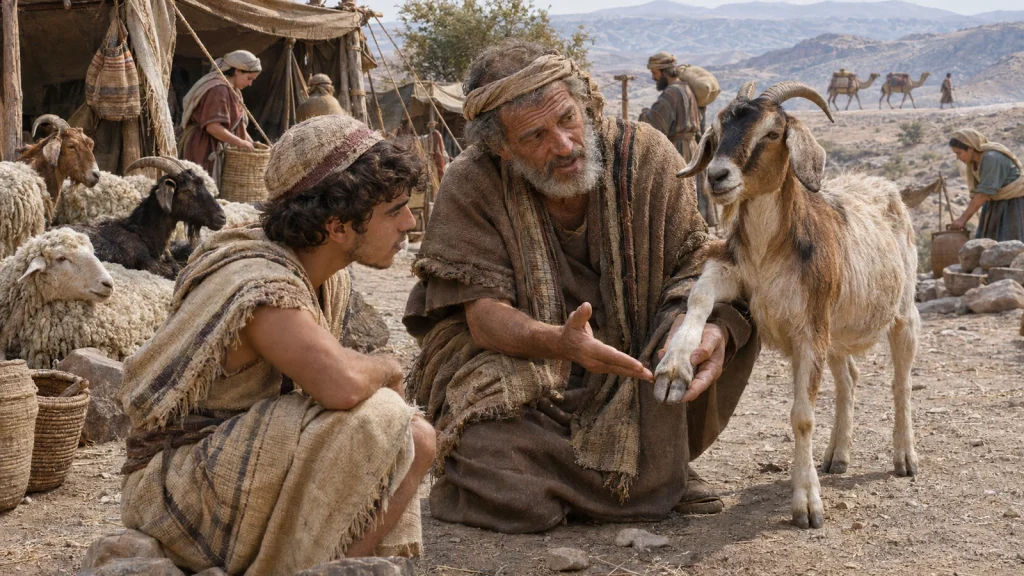
Source: AI-generated historical reconstruction created for Beyond The Known.
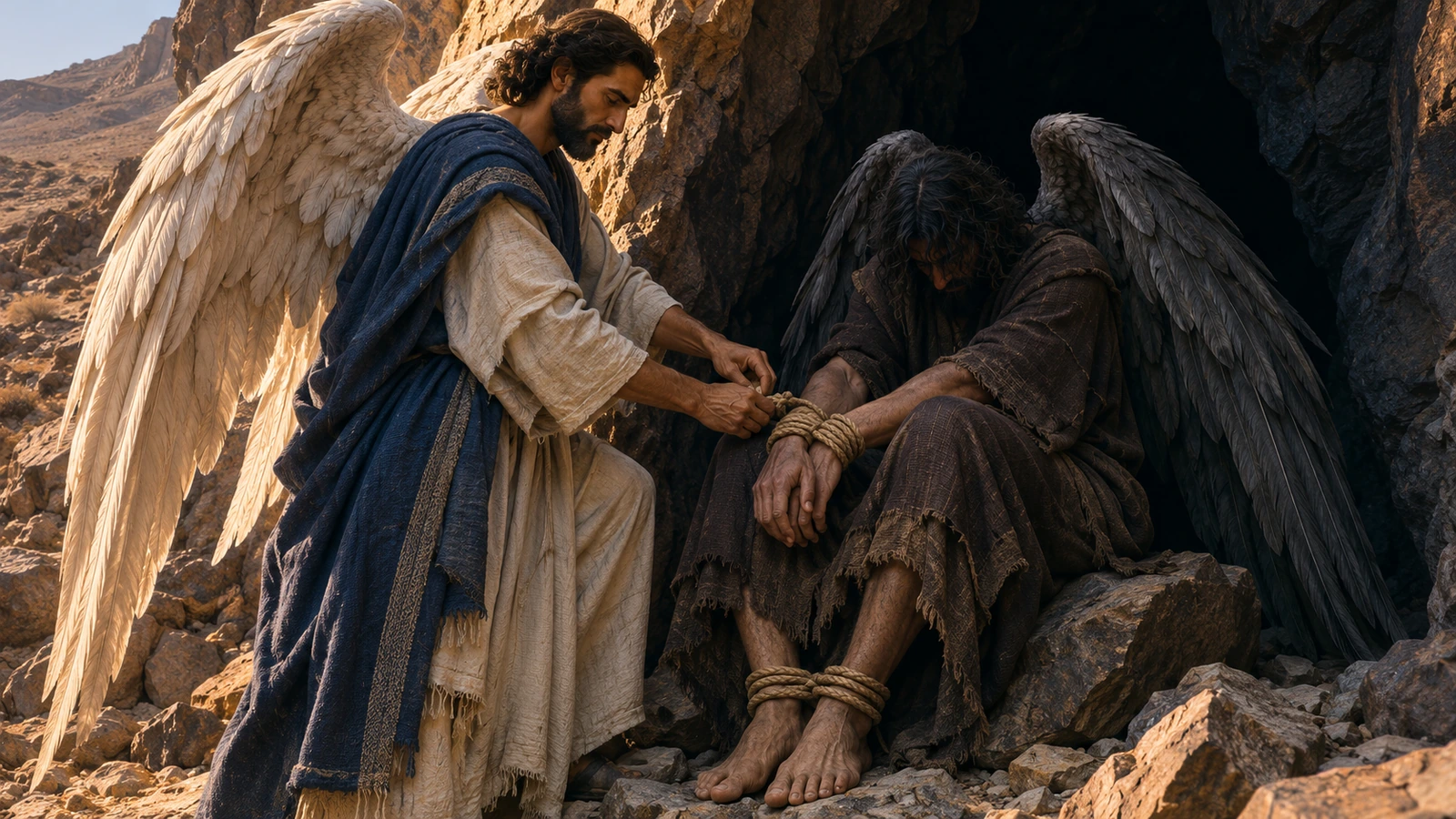
The deaths of Nadab and Abihu had exposed a terrifying reality at the Tabernacle: approaching the LORD was not a matter of personal preference. Immediately afterward, Aaron and his surviving sons received instructions that would define their priestly responsibility. They were to distinguish between the holy and the common, between the clean and the unclean, and teach God’s statutes to the people (Leviticus 10:10–11). The next chapter turns from the sanctuary to the animals surrounding Israel’s daily life.
Some could be eaten; others were forbidden. Certain creatures made a person ritually impure when their carcasses were touched. Even household vessels, stored food, water, and agricultural seeds came under carefully defined rules. Why would the God who had just established Israel’s priesthood concern himself with such ordinary matters? The answer emerges most clearly near the end of the instructions: “Be holy, for I am holy” (Leviticus 11:44). Dietary boundaries belonged to a larger vision of covenant life, in which the people redeemed from Egypt were expected to recognize the order God had established.
Yet this raises further questions. Were the forbidden animals considered dangerous, morally objectionable, or unsuitable for some other reason? Did ritual impurity mean that someone had sinned? And how do these requirements relate to the preceding events at the Tabernacle? To understand Leviticus 11, we must first recognize that its categories serve different purposes. The animals excluded from Israel’s diet, the conditions that caused temporary impurity, and the call to holiness are closely connected, but they are not interchangeable.
From the Sanctuary to the Dinner Table (11:1–2)
The LORD addresses both Moses and Aaron at the beginning of the chapter. Aaron’s inclusion is significant. In the aftermath of his sons’ deaths, the priesthood had been charged with teaching Israel how to recognize sacred and ritual boundaries. Now that instruction begins with something encountered far more frequently than a sacrifice: food. The opening command concerns animals living on the land. Subsequent sections consider aquatic creatures, birds, insects, and small animals that move along the ground. Together, these instructions establish what Israel may eat and how particular forms of contact with dead creatures affect ritual purity.
Such concerns were not confined to priests. Ordinary households needed to understand which foods were permitted, what happened when an animal died, and how contaminated objects were to be handled. The connection to worship becomes clearer when the LORD identifies himself as the God who brought Israel out of Egypt (11:45). These commands were given to a redeemed people whose relationship with him extended beyond the sanctuary. What appeared on an Israelite table was therefore not entirely separate from the nation’s covenant identity.
Which Land Animals Could Israel Eat? (11:3–8)
For land mammals, Leviticus establishes a two-part test. An animal must possess a fully divided hoof and chew the cud. Both characteristics are required; satisfying only one is insufficient. The law then provides four examples of excluded animals. The camel is described as chewing the cud without possessing the required hoof. The shaphan, generally identified as the rock hyrax, and the hare are likewise excluded because they lack the necessary hoof structure.
The pig presents the reverse situation. Its hoof is divided, but it does not chew the cud. Rather than giving a different theological explanation for each animal, the passage consistently applies the prescribed classification.
What Does the Hebrew Mean by “Chewing the Cud”?
The expression commonly translated “chews the cud” comes from the Hebrew ma’aleh gerah (מַעֲלֵה גֵרָה), describing an animal that brings up the cud. A difficulty arises when readers apply modern zoological definitions directly to this terminology. Hares and hyraxes are not ruminants in the contemporary biological sense. Their feeding and chewing behaviors also differ from those of cattle, sheep, and other familiar ruminants. The biblical description belongs to an ancient system of recognizing animals through observable characteristics. It should not automatically be treated as a technical statement about digestive anatomy.
The identification of the shaphan offers another example of the challenges involved in translating ancient animal names. English versions have variously used “coney,” “rock badger,” and “hyrax.” The rock hyrax is the widely accepted identification, though the differences in translation can confuse modern readers. Recognizing this historical distance allows the passage to be interpreted on its own terms without forcing its categories into a modern scientific framework.
Why Was Pork Forbidden?
The reason given in Leviticus 11:7 is specific: the pig has a divided hoof but does not chew the cud. Nothing in the verse identifies pork as inherently poisonous or suggests that consuming it would necessarily cause disease. Nor does the passage describe pigs as morally wicked animals. Hygienic and symbolic explanations have appeared throughout the history of interpretation, but they should not be confused with the reason explicitly supplied by the law.
Within Israel’s dietary classification, the pig failed to meet both conditions necessary for consumption. That was sufficient to exclude it from the permitted foods.
Fish, Birds, and the Exception for Locusts (11:9–23)
The next section establishes a different standard for aquatic creatures. Animals living in seas and rivers were permitted if they possessed both fins and scales. Those lacking either characteristic could not be eaten. The rule applied to freshwater and saltwater environments alike. The decisive consideration was the creature’s prescribed physical features, not where it happened to live. Birds, however, were treated differently.
Why Are Certain Birds Listed Individually?
Instead of giving one general anatomical rule, Leviticus 11:13–19 names flying creatures that Israel must avoid. The list includes several birds of prey, scavenging birds, other winged creatures, and the bat. Identifying every Hebrew name precisely remains difficult. Several terms appear rarely in the Hebrew Bible, and English translations disagree over which modern species they represent. The uncertainty is particularly important when discussing individual birds. Although the list offers recognizable examples, modern identifications should not be presented as equally secure.
The bat raises a related issue. Modern biology classifies bats as mammals, while this passage includes them in its grouping of flying creatures. The biblical arrangement reflects an ancient descriptive classification rather than the taxonomic system used by contemporary zoology. Leviticus is not attempting to provide an account of evolutionary relationships. Its immediate concern is which creatures Israel may consume.
Were All Insects Forbidden?
No.
After prohibiting most winged, swarming creatures that move along the ground, verses 21–22 permit certain insects equipped with legs adapted for jumping. The examples include several kinds of locusts. This exception matters because it shows that an entire broad group was not necessarily rejected without qualification. Specific creatures could meet the requirements for consumption even when others with superficially similar characteristics did not. The law demanded attention to particular features rather than a generalized dislike of small or unfamiliar animals.
What Made Contact with an Animal Carcass Impure? (11:24–40)
The discussion now moves beyond what people were allowed to eat. A second concern emerges: the ritual condition produced by touching or carrying an animal’s dead body. The Hebrew adjective tame’ (טָמֵא), usually rendered “unclean” or “ritually impure,” describes a state that could affect a person’s participation in the sacred order. It does not always imply moral wrongdoing. Someone who handled certain carcasses could become impure until evening. In cases involving the carrying of a dead animal, washing garments was also required.
These instructions describe a temporary condition with an established means of resolution. The distinction is crucial. An animal could be prohibited as food without every encounter with the living creature carrying the same consequences as contact with its remains.
Could a Permitted Animal Still Cause Impurity?
Yes. Leviticus 11:39–40 addresses an animal belonging to a species normally allowed for food. If that animal died, contact with its carcass could nevertheless render a person impure until evening. Handling or eating from the dead animal also involved prescribed washing requirements. This reveals something important about the legal system. A creature’s dietary classification did not determine every possible ritual consequence associated with it. The animal’s condition mattered as well.
A living sheep could belong to a permitted species, yet its carcass could still become a source of impurity. Food eligibility and ritual status operated through related but separate rules. The categories were therefore more sophisticated than a division between inherently good and inherently bad animals.
Why Could Dead Creatures Contaminate Household Objects? (11:29–38)
Few parts of Leviticus 11 are as detailed as the instructions concerning small creatures that move along the ground. When certain animals died, their carcasses could transmit ritual impurity to objects they touched. Wooden utensils, clothing, leather, and sackcloth could be placed in water and remain impure until evening. Earthenware vessels received different treatment: a contaminated clay container had to be broken. The requirements extended to ovens, food, water supplies, and seeds intended for planting.
At first, the attention given to such objects may seem disproportionate. Yet these provisions show how thoroughly ritual concerns entered the domestic environment. A family’s kitchen and storage area were not outside the practical reach of Israel’s purity regulations.
Why Were Clay Vessels Treated Differently?
Leviticus 11:33 requires an earthenware vessel to be broken when one of the specified carcasses falls inside it. The law does not extend that exact requirement to every material. Objects made from wood, cloth, or leather could undergo a prescribed process involving water and time. An affected clay vessel, by contrast, was not restored through the same procedure. The passage specifies the legal difference without explaining its underlying material or symbolic rationale.
Interpreters have explored whether the distinction reflects the properties of porous earthenware, established ritual conventions, or broader conceptions of impurity. Such proposals remain explanations of the rule rather than reasons explicitly stated by the verse.
Why Did a Spring Remain Clean?
One particularly revealing exception appears in verse 36. If a dead creature fell into a spring or a cistern used to collect water, the water source remained clean, although the person who handled the carcass became impure. Dry seed intended for planting was also treated differently from seed that had already been wetted (11:37–38). These qualifications prevent a simplistic reading in which anything that comes near a dead animal automatically receives the same ritual status.
The law differentiates between materials, circumstances, and kinds of contact. Its provisions are precise, but their precision should not be mistaken for a modern theory of microbiology. Leviticus does not identify pathogens, food poisoning, or germ transmission as the theological basis for these requirements. The issue presented is the maintenance of ritual categories. Through ordinary domestic activities, Israelites encountered rules that required them to recognize when something was clean, when it had become impure, and what response was necessary.
Why Does God Connect Food with Holiness? (11:41–45)
After describing permitted foods and the consequences of contact with carcasses, the instructions return to creatures that move close to the ground. The people are forbidden to eat them or make themselves impure through them. Then comes the theological center of the chapter: “For I am the LORD your God. Consecrate yourselves therefore, and be holy, for I am holy” (Leviticus 11:44). The command is repeated in the following verse, accompanied by a reminder of the exodus.
God had brought Israel out of Egypt to be their God. The call to holiness followed from that relationship. The Hebrew root q-d-sh (קדש), associated with holiness and consecration, conveys the idea of being set apart in relation to the sacred. Here, holiness is not merely an abstract attribute admired from a distance. It has implications for how the people live. The dietary laws made ordinary acts of consumption part of their covenant obligations.
This does not require us to imagine that every forbidden creature represents a corresponding human vice. Scripture supplies no complete symbolic key that assigns a particular sin to each excluded animal. The explicit rationale is the identity of the One who commands. Israel was called to live as a people belonging to the LORD, and even daily meals could express that allegiance.
The Deeper Discovery
The Connection Between Leviticus 10:10 and 11:47
The most important interpretive clue may be found by reading the beginning of the previous chapter alongside the end of this one. Following the deaths of Nadab and Abihu, the LORD tells Aaron that the priests must distinguish between the holy and the common, and between the unclean and the clean (Leviticus 10:10). Leviticus 11 closes with a remarkably similar statement. Its laws are given so that a distinction may be made between the unclean and the clean, and between creatures that may be eaten and those that may not (11:47).
Both statements employ the Hebrew verb badal (בדל), meaning to separate or distinguish. The verbal connection is more than an interesting repetition. In Leviticus 10, discernment is expressed as a priestly responsibility. Aaron and his descendants must recognize the boundaries established by God and teach them to the community. The following instructions carry that responsibility into ordinary life. The priests are not merely guardians of sacred rituals performed inside the Tabernacle. They also have a teaching role that shapes Israel’s conduct beyond its courts.
What begins as a charge to the priesthood becomes instruction for the entire nation. The movement from Leviticus 10 to Leviticus 11 is therefore meaningful: after a tragedy involving unauthorized priestly action, the narrative turns toward teaching the community how to recognize the boundaries relevant to its own life. This does not mean that eating a forbidden animal was equivalent to the offense of Nadab and Abihu. The texts describe different circumstances and do not assign identical consequences to them. Their shared concern is the necessity of recognizing what God has set apart.
Does the Language Echo Genesis 1?
The same Hebrew root, badal, appears in the creation account. In Genesis 1, God separates light from darkness and establishes an ordered world through a series of distinctions. That shared vocabulary has encouraged scholars to examine relationships between creation, classification, and the purity laws. The comparison is suggestive. Genesis portrays a world ordered through divine acts of separation. Leviticus 11 organizes living creatures into categories that govern Israel’s covenant conduct.
Yet the linguistic connection should not be overstated. A shared verb does not establish that every dietary prohibition contains a concealed reference to the creation narrative, nor does it reveal a symbolic meaning for every animal. The strongest evidence remains the explicit literary connection between Leviticus 10:10 and 11:47. The broader creation parallel offers a possible theological horizon, not a definitive explanation of the entire system.
Why Ritual Impurity Cannot Simply Mean Sin
The rules concerning dead animals add another dimension to this discovery. A person could become impure through an ordinary encounter with a carcass, even when the animal belonged to a species otherwise permitted for consumption. The resulting condition was temporary and could be resolved through the procedures provided. This would make little sense if every instance of ritual impurity represented deliberate rebellion against God. Leviticus also uses language often translated “detestable” for certain prohibited creatures. Such terminology marks their status within the legal system; it should not automatically be transformed into a claim that the animals possess moral intentions or are themselves guilty of wrongdoing.
These observations reveal the danger of collapsing the chapter’s vocabulary into one generalized idea of spiritual contamination. Dietary prohibition, temporary impurity, and moral guilt must be distinguished. That precision is consistent with the chapter’s own purpose. Israel was being taught how to recognize categories without confusing them. Holiness required informed discernment rather than indiscriminate rejection of everything labeled unclean.
Were the Dietary Laws About Health, Symbolism, or Separation?
The question of why particular animals were prohibited has generated substantial scholarly discussion. Health-based explanations have often appealed to the dangers associated with certain foods. Other interpreters have emphasized symbolic order, animal behavior, or the distinct identity of Israel among surrounding peoples. These approaches are not equally supported in every instance. The chapter itself provides anatomical criteria for some creatures, specific lists for others, and a theological explanation grounded in God’s holiness.
It does not offer a complete account of why each individual species belongs to its assigned category. Mary Douglas’s influential work on Leviticus approaches purity through patterns of classification, symbolic meaning, and the larger religious structure of the book. This perspective moves beyond the assumption that the regulations were merely ancient attempts at protecting physical health. Naphtali Meshel’s research likewise examines the organization of animal categories and the relationships among the classifications used in Leviticus 11.
Such scholarship is valuable because the passage contains several overlapping systems rather than one uniform checklist. Nevertheless, the existence of a coherent classification does not prove that scholars have recovered every reason behind its individual prohibitions. The biblical emphasis is clearer than many proposed reconstructions: the people whom God delivered from Egypt were commanded to honor the boundaries he had established. The laws expressed covenant identity within a world understood to be governed by the LORD.
Do the Dietary Laws of Leviticus 11 Apply to Christians Today?
For ancient Israel, these instructions were not optional customs. They formed part of the Torah’s requirements concerning permitted foods and ritual purity. The question of their continuing application belongs to a later stage of biblical interpretation. Within Judaism, dietary observance remains an important religious practice, although the developed system of kashrut includes further interpretation and legal traditions beyond the prescriptions of this chapter. Christian discussions have often centered on several New Testament passages.
In Mark 7:18–19, Jesus addresses questions surrounding food, defilement, and the human heart. The interpretation and translation of the passage’s concluding statement concerning foods have been debated, and its immediate context should not be ignored. Acts 10 describes Peter’s vision of animals he initially refuses to eat because he regards them as common or unclean. The narrative then connects that vision with Peter’s encounter with Gentiles. Peter himself explains that God has shown him not to call any person common or unclean (Acts 10:28).
The vision therefore cannot be interpreted responsibly without considering its explicit application to human relationships. Acts 15 addresses requirements placed upon Gentile believers, while Romans 14 discusses disputes involving food, conscience, and communal fellowship. Taken together, these passages have led most Christian traditions to conclude that Gentile Christians are not bound to observe the full dietary system of Leviticus 11. Other Christian communities understand the continuing significance of these requirements differently.
The debate deserves careful treatment, but it should not displace the original purpose of the laws. Before asking how the New Testament relates to Leviticus 11, readers must understand what the chapter meant for the people who first received its instructions. It taught Israel to acknowledge the holiness of God through concrete practices embedded in daily life.
Frequently Asked Questions
What does “unclean” mean in Leviticus 11?
The language identifies animals excluded from Israel’s diet and describes particular states of ritual impurity caused by contact with carcasses. Such impurity did not automatically indicate that a person had committed a moral sin.
Why are the hare and the hyrax described as chewing the cud?
The passage uses ancient descriptive terminology rather than the technical categories of modern zoology. Neither animal is a true ruminant in the contemporary biological sense. The Hebrew shaphan is generally identified as the rock hyrax.
Why does Leviticus classify bats with birds?
The bat appears among the listed flying creatures. This reflects the arrangement of the biblical classification, which differs from modern taxonomy. Several other Hebrew animal names in the list also remain difficult to identify with certainty.
Could someone become unclean by touching a dead animal?
Yes. Contact with certain carcasses could produce temporary ritual impurity. Depending on the circumstances, a person might be required to wash their clothing and remain impure until evening.
Were Israelites permitted to eat locusts?
Certain kinds, yes. Leviticus 11:21–22 makes an exception for specified hopping insects, demonstrating that the chapter did not prohibit every insect without qualification.
Were forbidden animals considered unhealthy?
The chapter does not identify disease prevention as the reason for its dietary restrictions. Although some interpreters have proposed hygienic explanations, the stated theological foundation is Israel’s holiness and relationship with the LORD.
What is the connection between Leviticus 10 and Leviticus 11?
Leviticus 10:10 commands the priests to distinguish between the clean and the unclean. Leviticus 11:47 concludes by emphasizing the same responsibility in relation to animals and food. The shared Hebrew vocabulary links priestly instruction with the daily conduct of the community.
What Comes Next?
Leviticus 11 extends the concern for ritual purity beyond the Tabernacle, showing how food, contact with death, and household activities belonged to Israel’s sacred obligations. The next chapter introduces a different setting: childbirth. Leviticus 12 prescribes periods of purification following the birth of a child, with different durations for sons and daughters. It also describes offerings made when the prescribed period ends. The transition raises a difficult question. If childbirth brings new life into the community, why is it associated with ritual impurity?
Understanding that distinction will require the same care applied to the animal laws: recognizing that impurity in Leviticus does not necessarily imply sin, shame, or moral failure. Next Study: Why Does Leviticus 12 Require Purification After Childbirth? Continue exploring the series in Leviticus Studies. To understand the events immediately preceding these instructions, read Why Did Nadab and Abihu Die After Offering Unauthorized Fire?.
Selected Sources
- Hebrew Bible. Leviticus 11. Hebrew text and translations available through Sefaria. Consulted for the chapter’s language, classifications, and literary structure.
- NET Bible. Leviticus 11, with Translators’ Notes. New English Translation, Bible.org. Relevant to Hebrew animal terminology and translation difficulties.
- Douglas, Mary. Leviticus as Literature. Oxford University Press, 2001. Particularly the discussions of land animals and other living creatures. Referenced through the publisher’s available bibliographic descriptions and chapter abstracts.
- Meshel, Naphtali S. “Food for Thought: Systems of Categorization in Leviticus 11.” Harvard Theological Review 101, no. 2 (2008): 203–229. Consulted through its published abstract and bibliographic information.
- Maccoby, Hyam. “Animals and Purity.” In Ritual and Morality: The Ritual Purity System and Its Place in Judaism, 67–80. Cambridge University Press, 1999. Referenced through the published chapter description for its treatment of dietary categories and impurity associated with animal carcasses.
- Johnson, Martin, and Philip Jenson. “An Attempt to Identify the Birds of Leviticus 11.13–19 Using Onomatopoeia.” Journal for the Study of the Old Testament 48, no. 2. First published online December 2, 2023. Consulted through its published abstract concerning the identification of Hebrew bird names.
- Lee, Peter Y. “Leviticus.” The Gospel Coalition Bible Commentary. Relevant to the relationship between the priestly instruction in Leviticus 10 and the purity laws of chapters 11–16.