Why Did Leviticus Begin with Sacrifice?
After God’s glory fills the tabernacle, the focus shifts to burnt offerings, priestly duties, and what it meant for a sacrifice to be accepted.
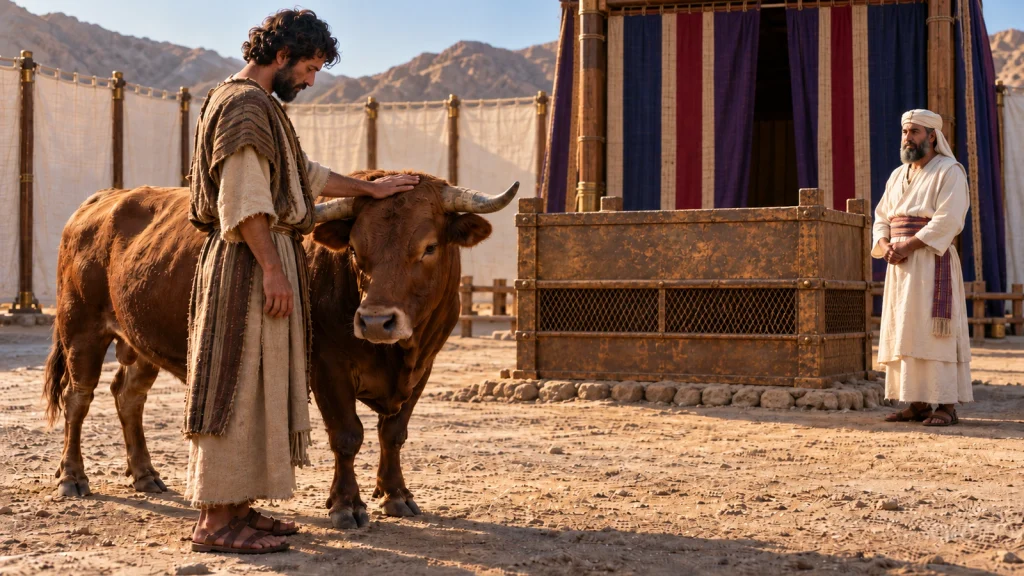
Source: AI-generated image created for Beyond The Known.
Exodus closes with the glory of the LORD filling the completed tabernacle. Moses, who supervised its construction and set its furnishings in place, cannot enter the Tent of Meeting. The opening of Leviticus resumes that scene with a small but consequential change: God speaks to him from inside.
The first instructions concern neither another journey nor the arrangement of sacred furniture. They concern animals brought to an altar, the handling of blood, and the burning of offerings. Why would a book that follows Israel’s extraordinary encounter with divine glory begin with such exacting procedures?
Our previous study, Why Couldn’t Moses Enter the Tabernacle After God’s Glory Filled It?, examined the barrier created when the cloud settled over the sanctuary (Exodus 40:34–35). Leviticus takes up the question left at its threshold: how is Israel to worship now that the LORD dwells in the camp?
A Voice from the Tent
The book begins, in the NET Bible’s wording, “Then the Lord called to Moses and spoke to him from the Meeting Tent” (Leviticus 1:1).
Its first Hebrew word, vayyiqrāʾ (וַיִּקְרָא), means “and he called” and gives the book its traditional Hebrew name, Vayikra. The verb is ordinary; its placement is not. Exodus has just described the cloud preventing Moses from entering the tent. Now the voice comes from within that occupied space. Nothing in Leviticus 1:1 requires us to imagine that Moses has crossed the threshold.
Revelation had previously come to him on Sinai, where he received directions for building the tabernacle. Here the building stands, its furnishings are installed, and the LORD addresses his mediator from the new center of Israel’s camp. The sequence links the two books without erasing the difficulty at the end of Exodus: divine presence has become local to Israel’s sanctuary, but entry is not simply available on human terms.
The commands that follow begin to describe one form of approach. They do so from God’s side of the encounter, as instructions given to Moses for the people.
Why Start with the Burnt Offering?
Leviticus 1:2 introduces a person bringing a qorbān (קָרְבָּן), an offering presented to the LORD. The noun is related to the Hebrew root q-r-b, used in contexts of coming near or presenting something. Here it names the gift, not a promise that a sacrifice automatically grants intimate access to God.
Sacrifice itself is not new. Noah offers burnt offerings in Genesis 8:20; Exodus 24:5 mentions them at the covenant ceremony; and Exodus 40:29 records a burnt offering at the newly erected altar. Leviticus supplies something different: a sustained account of how an Israelite is to present this particular kind of sacrifice at the established sanctuary.
The arrangement is also instructional. Chapters 1–3 introduce burnt, grain, and well-being offerings before Leviticus turns to other sacrificial categories. The laws first establish the principal forms of presentation, then develop the more specialized procedures that follow.
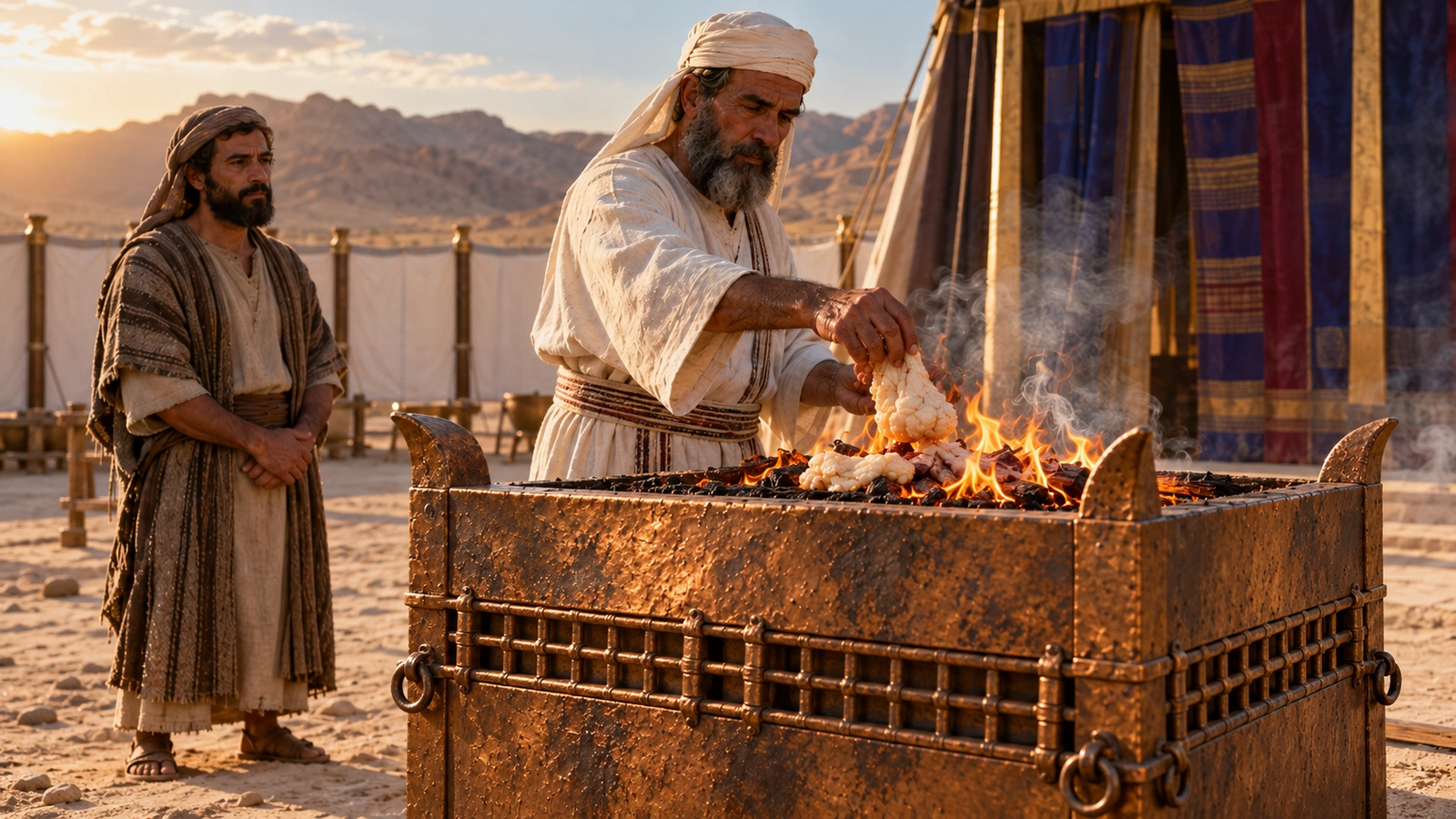
The Hebrew designation for the burnt offering is ʿōlāh (עֹלָה), related to a verb meaning “to go up.” It suits a sacrifice whose flesh is consumed on the altar and rises in smoke. Unlike the well-being offering, from which portions may be eaten, the burnt offering gives its edible parts over to the fire. One qualification is important: Leviticus 7:8 assigns the hide to the officiating priest.
This form of worship could accompany gratitude, a vow, a request for help, or atonement in the wider biblical record. Leviticus 1:4 expressly connects it with atonement, but that feature alone does not make the ʿōlāh identical to the purification offering introduced in chapter 4.
The first chapter sets out three variations of the rite: a bull (verses 3–9), a sheep or goat (verses 10–13), and a turtledove or young pigeon (verses 14–17). Differences in their preparation make the shared designation especially worth examining.
The Bull: Acceptance, the Hand, and Atonement
The initial case requires a male from the herd without defect, brought to the entrance of the Tent of Meeting (1:3). Its sound condition is a stated requirement; ideas about moral perfection that later readers associate with an unblemished animal are not supplied as an explanation here.
Before the slaughter, the person presenting it lays a hand upon its head. The Hebrew verb sāmak (סָמַךְ) can describe leaning or placing weight upon something. In this setting the gesture associates the worshiper with the animal being offered. Verse 4 adds that it will be accepted to make atonement on the person’s behalf.
Precisely what the hand-laying communicates has been debated. Identification with the gift is a strong reading, and some interpreters understand the animal as representing its owner. A more developed claim—that the gesture itself transfers the worshiper’s sins to the victim—goes beyond the explicit wording of this passage.
The contrast with Leviticus 16:21 is instructive. On the Day of Atonement, Aaron lays both hands upon a live goat and confesses Israel’s wrongdoings over it. That separate ceremony explicitly describes actions absent from Leviticus 1. We should not silently import them into the burnt offering.
What Kind of Atonement Is in View?
The verb kipper (כִּפֶּר), usually rendered “make atonement,” belongs to the vocabulary of dealing with sin and impurity in Israel’s worship. Scholars debate the precise emphasis in individual rites: expiation, purification, and the restoration of an acceptable standing before God cannot always be reduced to a single English equivalent.
Leviticus 1:4 names atonement as an outcome, yet specifies no particular offense, confession, or penalty. The regulation speaks of the whole sacrifice being accepted; it does not isolate the animal’s death as a self-explanatory mechanism. This leaves the scope of the atonement less defined than a modern reader may expect.
The gesture and its stated result are clear enough to matter without assigning to them an elaborate symbolic explanation the passage never supplies.
Who Slaughters the Animal, and Who Handles the Blood?
The division of labor in verses 5–9 is easy to overlook. In the Masoretic Hebrew, the sequence naturally makes the offerer responsible for slaughtering the bull, skinning it, cutting it into pieces, and washing the entrails and legs. Aaron’s descendants handle the blood and arrange the material on the altar. The final burning is performed by a priest.
There is a genuine textual wrinkle. At verse 5, the Greek Septuagint has a plural verb where the Hebrew has a singular one, allowing the slaughter to be understood as a priestly action. Related differences occur in verse 6. Both witnesses distinguish the priestly handling of the altar from the broader preparation of the victim, but they should not be flattened into one identical account.
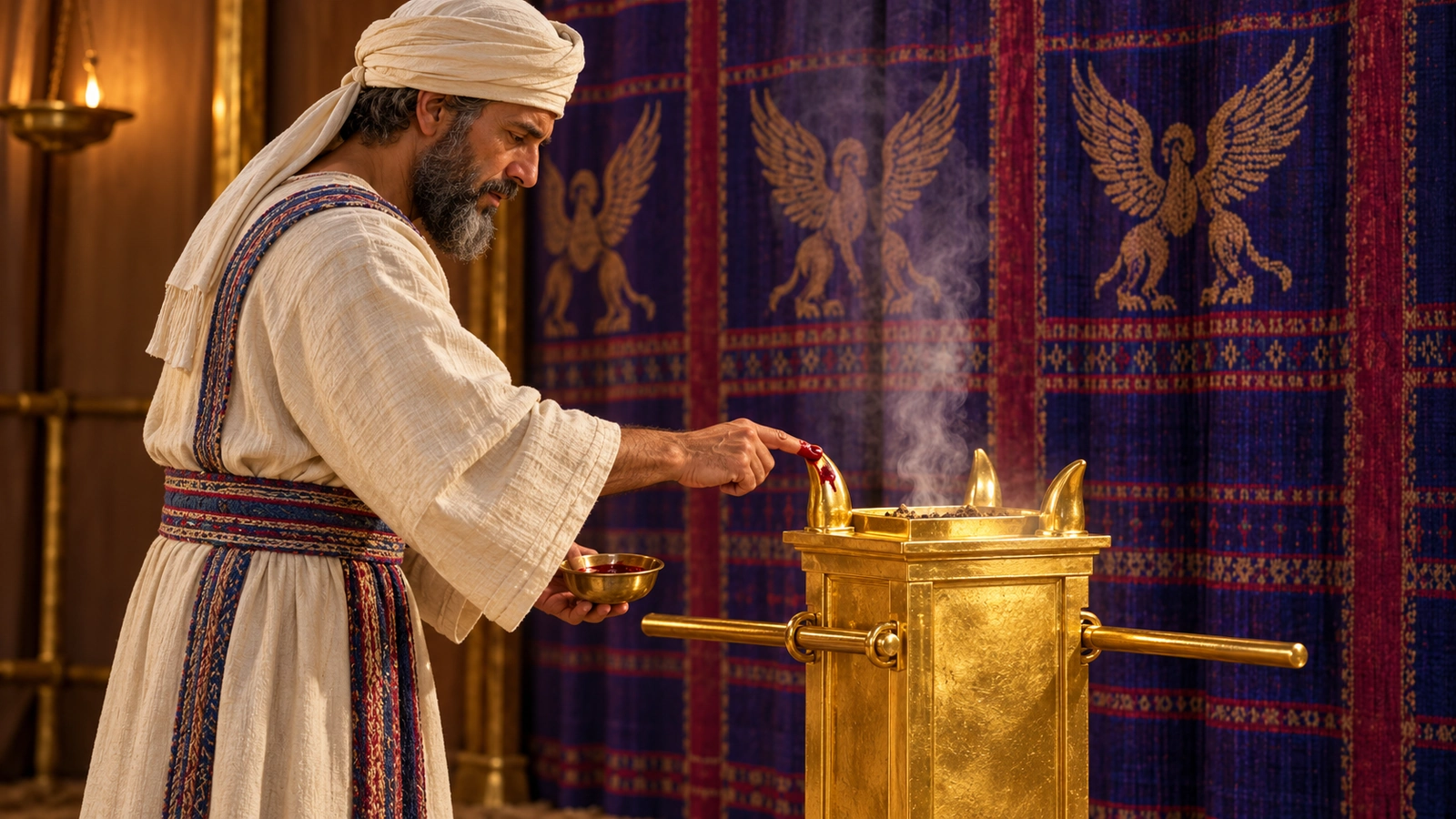
The priests dash the blood against the altar’s sides. The Hebrew zāraq (זָרַק) conveys a throwing or splashing action; it should not be confused with the more specific sprinkling described in other ceremonies. Later sacrificial instructions place blood on altar horns or take it into the sanctuary. Those are different procedures, not interchangeable descriptions of this one.
Why does blood receive such careful treatment? Leviticus 1 provides the action before its fullest theological explanation. Leviticus 17:11 later connects blood with the life of the creature and its use in making atonement. That statement informs the book’s larger sacrificial logic, although it does not explain every movement in chapter 1.
Once the carcass has been prepared, the priests arrange the wood and place the prescribed portions above the fire. The entrails and legs are washed first. These details belong to the practical handling of an animal intended for the altar, and the instructions give no independent symbolism for each anatomical part. Assigning the head to human thoughts or the legs to moral conduct would be an allegorical application, not an explanation found in these verses.
The sequence ends with the sacrifice rising in smoke before the LORD.
Sheep, Goats, and the North Side of the Altar
Verses 10–13 move from cattle to the flock. A sheep or goat must likewise be a male without defect. Slaughter, the treatment of blood, cutting the carcass, washing its internal parts, and burning it follow the general pattern already established.
The new detail is geographical: the animal is killed on the north side of the altar (1:11). The instruction is precise, but no reason for that direction appears here. Its place in the procedure is certain; proposed symbolic explanations require evidence beyond the compass point.
After the priest places the prepared portions upon the fire, the description closes with the same favorable formula used for the bull. The repetition will matter even more when a much smaller sacrifice enters the picture.
Birds and the Limits of What a Worshiper Could Bring
The third option is a turtledove or young pigeon (1:14–17). Because of the bird’s size, the handling changes. The priest performs the killing at the altar and drains the blood against its side. He removes specified internal material, deposits it east of the altar where the ashes are kept, opens the bird by its wings without separating it completely, and burns it.
One expression in verse 16 remains difficult. English versions differ over the identification of what is removed: translations refer to the crop with its contents, entrails, or material associated with feathers. The general sequence is clear, but no exact anatomical reconstruction should be presented as undisputed.
Neither the placement of a hand on the bird nor an explicit statement of atonement is repeated in this paragraph. Yet it is still identified as a burnt offering. Recognizing those omissions keeps the account accurate without inventing additional steps.
Bird offerings also have a social dimension. Leviticus 5:7 and 12:8 explicitly make smaller offerings available to people unable to afford more costly animals. That wider evidence supports the importance of economic accessibility in Israel’s sacrificial system. Leviticus 1:14, however, does not say that a bird may be presented only by someone who is poor.
The distinction leaves room for a meaningful observation about cost without turning a likely practical accommodation into a rule this chapter never states.
What Does a “Pleasing Aroma” Mean?
The closing words of each procedure describe the result as a fire offering with an aroma pleasing to the LORD (1:9, 13, 17). The smoke belongs to the sensory world of sacrifice: an animal is burned, its scent rises, and the account uses the language of favorable reception.
The Hebrew ʾiššeh (אִשֶּׁה) in this formula is translated in different ways, including “food offering” and “offering by fire.” The food terminology belongs to a broader ancient sacrificial idiom in which gifts are presented to a deity. It need not imply divine hunger. Psalm 50:12–13, for example, explicitly challenges the notion that God depends upon people for nourishment.
There is an earlier biblical parallel. After Noah offers burnt offerings in Genesis 8, the LORD responds to the pleasing aroma. Leviticus takes up familiar sacrificial language and places it within the regulated worship of the tabernacle.
The phrase communicates acceptance through ritual imagery. It does not invite readers to imagine a physical appetite in God, nor does its ancient Near Eastern setting establish direct borrowing from one particular neighboring culture.
The Deeper Discovery
The Bird Missing from the Opening List
A detail at the beginning of Leviticus 1 becomes more revealing after the chapter’s three procedures have been read together.
Verse 2 introduces offerings from the herd and the flock. It does not mention birds. Those enter only in verse 14, after the instructions for cattle, sheep, and goats have already been given.
That expansion is subtle. The first two cases concern familiar livestock and largely parallel one another. The final case introduces a different kind of victim, a different method of handling its blood, and a greater role for the priest. Even the hand-laying described for the bull has no corresponding instruction in the bird procedure.
Yet all three passages end with the same description: the sacrifice is a burnt offering presented as a pleasing aroma to the LORD.
The refrain gives the unit its coherence. The bird is not a lesser type of sacrifice simply because its preparation differs or its cost is presumably lower. Within the terms prescribed for it, the smallest permitted animal belongs to the same recognized category as the bull.
This does not mean Leviticus teaches that every sacrifice has an identical purpose or that economic inequality has disappeared. Nor can we prove that the author included birds solely to make an argument about social class. The narrower literary conclusion is more secure: after introducing herd and flock animals, the chapter admits birds and gives their burnt offering the same closing description.
What begins as a list of livestock becomes a wider set of acceptable possibilities. The final refrain asks the reader to notice the shared standing of offerings whose material value and handling are very different.
Reading Leviticus on Its Own Terms
For Christian readers, the subject naturally recalls the sacrificial language applied to Jesus in the New Testament, especially Hebrews. That later interpretation is significant, but it belongs to a different moment in the history of these texts. Hebrews combines and develops several strands of Israel’s ritual traditions rather than simply repeating the instructions of Leviticus 1.
The earlier regulations already possessed meaning for the Israelites who brought their gifts and for the priests who served at the sanctuary. Reading them first in their own setting prevents the procedures from becoming mere props for a theology formulated centuries later. It also makes the subsequent Christian reuse of sacrificial imagery easier to understand with precision.
The opening question can now be answered. Leviticus begins with the burnt offering because the tabernacle is occupied and the people need instructions for presenting gifts before the LORD. The book starts not by explaining every future law of holiness, but by laying out one recognized act of worship—its permitted materials, its human participants, and the conditions under which it is received.
FAQ
What is a burnt offering in Leviticus 1?
It is the ʿōlāh, a sacrifice whose flesh is burned on the altar rather than eaten by the worshiper. Leviticus 1 permits cattle, sheep, goats, and certain birds, with different procedures for each.
Why did the worshiper put a hand on the animal?
The gesture links the person to the sacrifice presented on their behalf. Verse 4 associates it with acceptance and atonement but does not describe an explicit transfer of sins.
Did every burnt offering deal with a specific sin?
No particular offense is named in Leviticus 1. Elsewhere burnt offerings accompany several occasions, including vows and requests for divine help. The category should not be confused with the purification offering of Leviticus 4.
Why was blood dashed against the altar?
That was the prescribed priestly action for the burnt offering. Leviticus 17:11 later connects blood with life and atonement; the exact treatment of blood varies among sacrificial rites.
Could someone offer a bird instead of livestock?
Yes. Turtledoves and young pigeons are expressly allowed in Leviticus 1:14–17. Other laws give bird offerings as an option for people of limited means, although this chapter does not restrict birds to them.
Does a “pleasing aroma” mean God needed food?
No. It describes favorable reception using the idiom of sacrifice. Psalm 50 rejects the suggestion that the LORD depends on the meat of animals for sustenance.
What Comes Next?
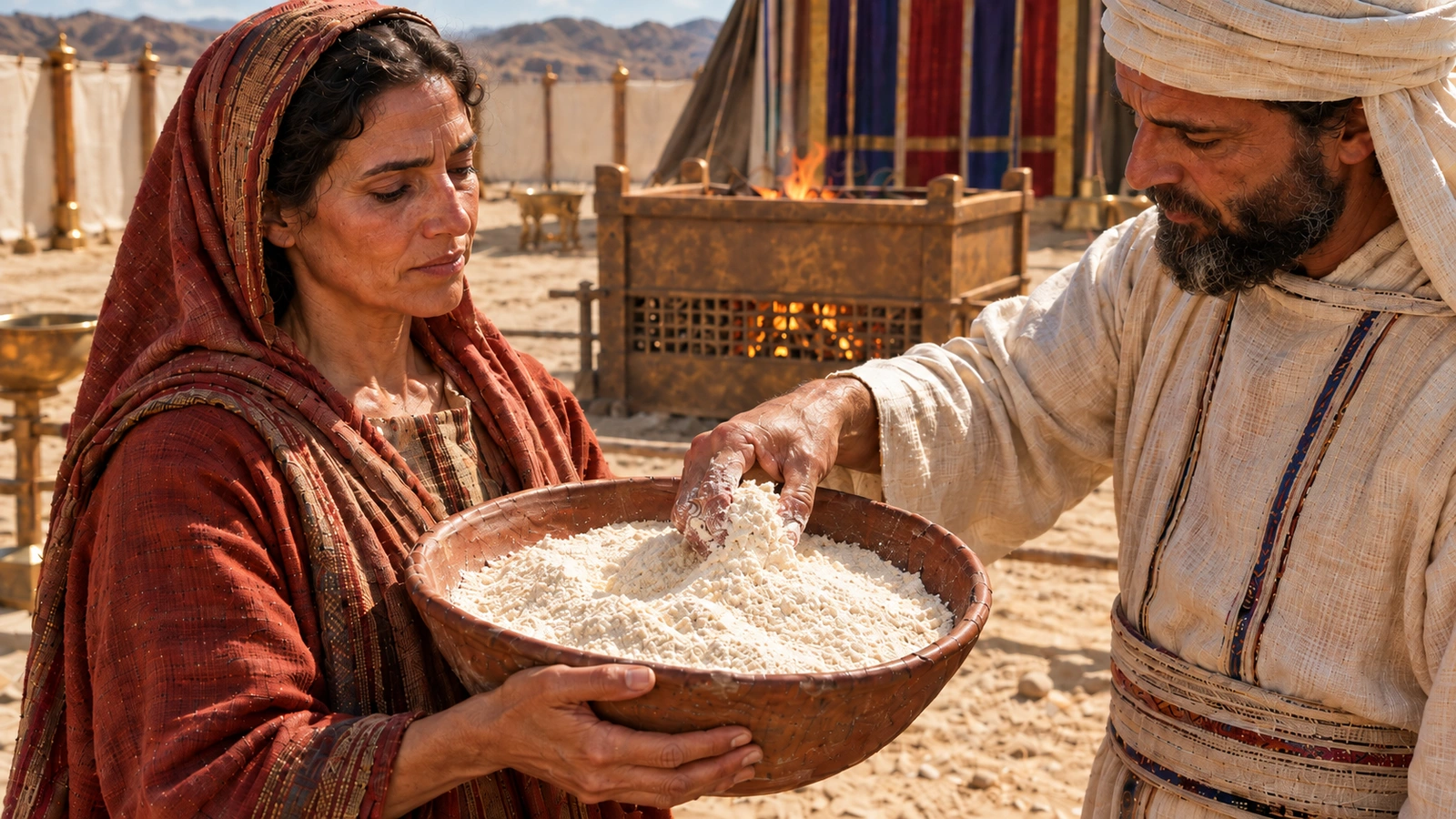
Leviticus 1 concentrates on animals, blood, and an offering consumed on the altar. The next chapter begins with fine flour. Oil and frankincense accompany a grain offering, and only a portion is burned; the remainder belongs to the priests.
Why does a gift without slaughter or blood also receive the language of a pleasing aroma?
Why Does Leviticus 2 Require Grain, Oil, and Frankincense?
Selected Sources
- Roy E. Gane. “Sacrifice and the Old Testament.” St Andrews Encyclopaedia of Theology. University of St Andrews, August 17, 2022.
- NET Bible: Leviticus 1:1–17, with Translators’ Notes. New English Translation.
- Christian Eberhart. “Sacrifice and the New Testament.” St Andrews Encyclopaedia of Theology. University of St Andrews, November 30, 2023.
- Jonathan Klawans. Purity, Sacrifice, and the Temple: Symbolism and Supersessionism in the Study of Ancient Judaism. Oxford University Press, 2005.
- Jacob Milgrom. Leviticus 1–16: A New Translation with Introduction and Commentary. Anchor Bible 3. Doubleday, 1991.
- Baruch A. Levine. Leviticus: The Traditional Hebrew Text with the New JPS Translation. JPS Torah Commentary. Jewish Publication Society, 1989.
- William K. Gilders. Blood Ritual in the Hebrew Bible: Meaning and Power. Johns Hopkins University Press, 2004.