Why Does Leviticus 21 Set Distinct Rules for Priests?
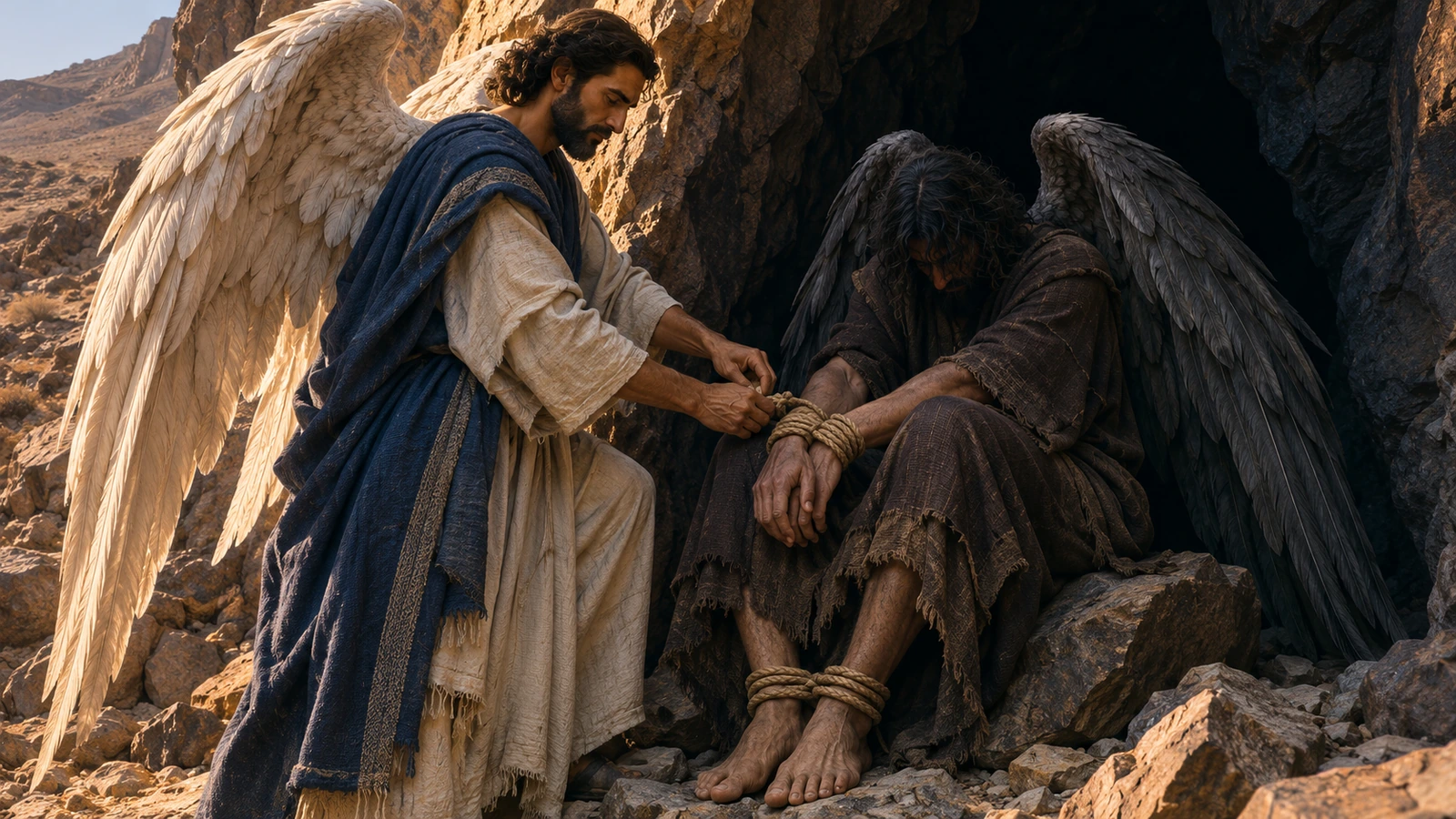
One priest could attend to a parent’s burial while another had to remain at the sanctuary. Both belonged to the same family.
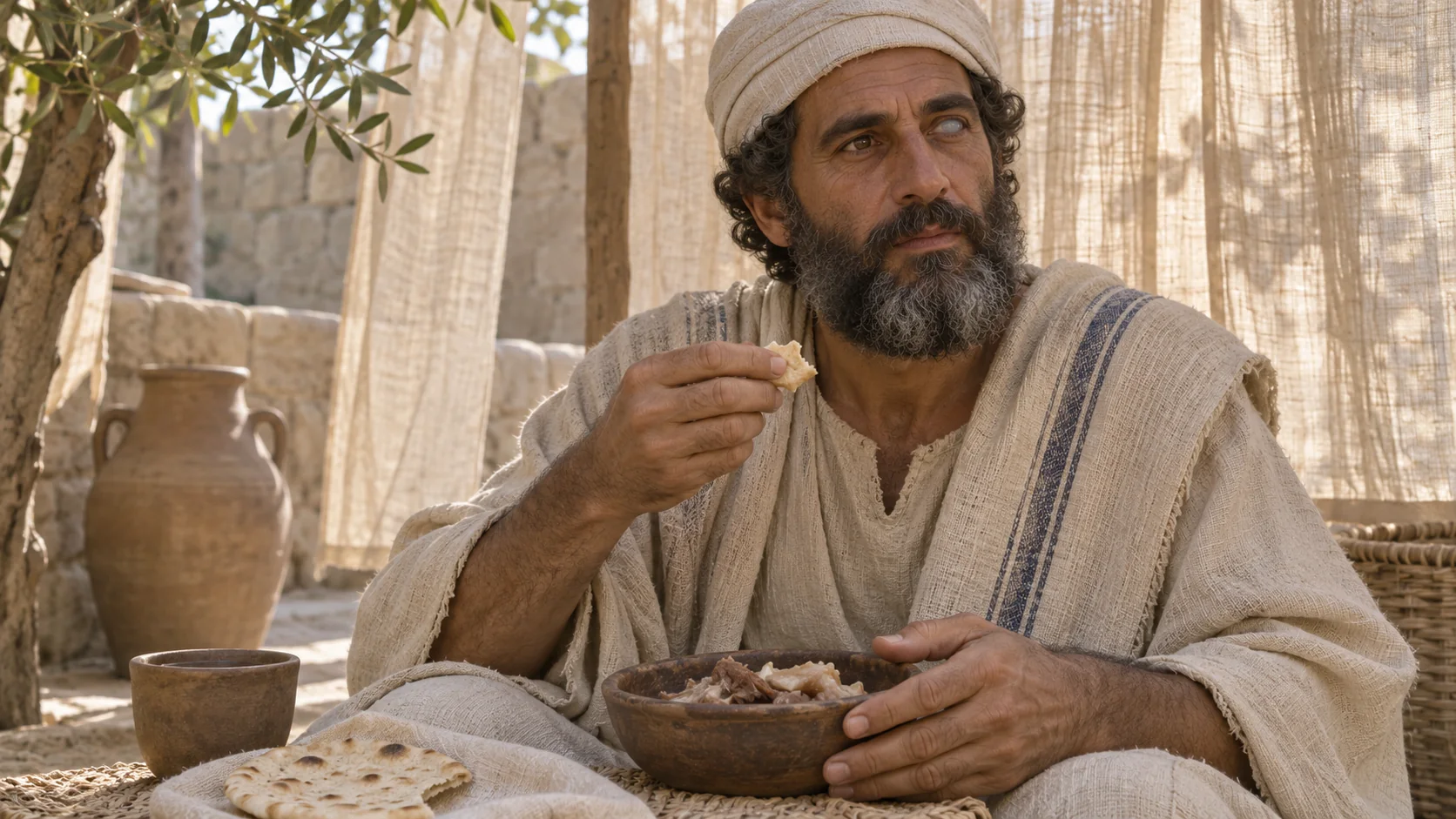
Source: AI-generated image created for Beyond The Known.
An ordinary priest could become ritually unclean when his mother died. The high priest could not. Leviticus 21 explains the difference by pointing to the high priest’s anointing and his responsibility for the sanctuary (vv. 10–12). The chapter also gives a reason for the duties shared by Aaron’s sons: they present Israel’s offerings to God (vv. 6–8). Yet ancestry, consecration, and permission to officiate do not always coincide. In verse 22 a descendant of Aaron who cannot approach the altar retains the right to eat even the most sacred portions.
Our previous study, Why Does Leviticus 20 Prescribe Penalties for Forbidden Practices?, followed a set of laws addressed to Israel as a people. Here Moses receives a narrower address. To see what changes, follow one household through the three matters the chapter regulates: what a priest may do when someone dies, whom he may marry, and what he may do with the food brought to the sanctuary.
When a priest’s parent dies
The opening prohibition has an exception built into it. Verses 2–3 name a mother, father, son, daughter, brother, and an unmarried sister who belongs to the priest’s household. The list gives kinship practical force. A priest whose father has died is permitted to incur the impurity associated with the dead. The law does not accuse him of doing wrong if he exercises that permission. Nor does it prescribe the details of the funeral or tell us which relative prepared the body.
The sister receives more description than anyone else on the list. The conditions attached to her place in the household matter to the ruling. A reader who abbreviates the provision to “priests could mourn relatives” loses both the restriction on kin and the distinction between grief and contact with the dead. The chapter regulates actions that could be seen: approaching a body, cutting the skin, shaving parts of the head or beard. It gives no instructions about what a bereaved son should feel.
Verse 4 is harder. The New American Bible, Revised Edition, and its note on verse 4 understand the difficult wording in relation to marriage and suggest that it may concern relatives by marriage, possibly the wife herself. The explicit list in verses 2–3 is firmer ground. It would be misleading to add a wife to that list without acknowledging the difficulty, or to treat her absence from it as a measure of affection.
Who must treat the priest as holy?
The opening address can give the impression that everyone hearing these laws is a son of Aaron. In verses 6–8 the grammar changes. First Moses speaks about the priests and their obligations. Then someone is told how to regard the priest who brings an offering. A priest might observe every restriction on his own conduct and still be unable to fulfill that second command by himself. It requires someone else to recognize what his work means.
Look at the Hebrew of Leviticus 21:8. The object of the opening verb is singular, referring to the priest. So too is the person addressed at the beginning of the verse. Its final word, meqaddishkhem, addresses a plural “you” as recipients of God’s sanctifying action. English uses the same pronoun for one person and for many, so a reader can easily miss the widening at the end. The person singled out for honor performs an act with significance for others. The verse grounds their obligation in the holiness of the God to whom the offering belongs.
Whom, precisely, does Moses address in that middle instruction? One natural reading hears the Israelite who brings an offering. Verse 24 gives that reading substantial support by expressly including all Israel among those who receive the teaching. A medieval Jewish reader, Nahmanides, in his commentary on verse 8, also considers how the language can address the priests themselves, taking seriously the chapter’s opening audience. These readings need not yield the same account of who must uphold the marriage restrictions. What the verse clearly does is speak of the priest in the third person and place a duty upon the person hearing about him. Verse 24 is decisive about the public audience of the chapter as a whole; it cannot settle every shift of address inside it.
The reason attached to the command is remarkably concrete. A worshiper supplies an offering another person will present. The worshiper has an interest in what happens at the altar despite having no authorization here to take the priest’s place. A public duty to honor that service follows intelligibly from the division of responsibilities. The text does not say that every decision made by a priest must therefore be accepted, nor does it assign the priest a greater share in the holiness of God than the worshiper. The pronoun at the end of verse 8 gives no warrant for either conclusion.
What the anointing changes
Verse 10 introduces the senior priest by describing what happened to him: oil was poured on his head, and he was ordained to wear the vestments. Only then does the law describe his response to a death. He may neither tear his clothes nor leave his hair disheveled. More strikingly, he may not approach the dead even when the deceased is his father or mother. Precisely the relationship that justified an exception in the opening paragraph becomes the test case for the stricter rule.
Verse 12 connects remaining at the sanctuary in this setting with the oil of consecration. To turn that into a lifelong ban on ever stepping outside would take the clause out of its mourning context. The point concerns what the office costs its holder in a particular circumstance. His mother stands first among the exceptions allowed other priests. Neither relationship suspends the obligation attached to his consecration.
Compare the death of Nadab and Abihu in Leviticus 10. Relatives carry away the dead while Moses gives Aaron and his surviving sons specific instructions about their hair, garments, and remaining at the entrance. Leviticus 10 places those commands inside a particular family crisis. Leviticus 21 lets us see why one should be cautious about deriving a uniform rule for every priest from that episode.
Why mention the oil and the garments?
The description in 21:10 is an unusually economical way to recall a whole ceremony. In Leviticus 8:3–13 the people are summoned to witness the ordination. Moses clothes Aaron, anoints the tabernacle and its equipment, and pours oil on Aaron’s head. Readers of chapter 21 have already seen the connection between this man and the place whose sanctity he must guard. The law can identify the office by an action performed on its holder. It does not have to rehearse the ceremony every time a duty of the office is in view.
Reading the two passages together also identifies a limit on a familiar explanation. It is tempting to say that priests were forbidden to mourn because death was incompatible with a religion devoted to life. But such a broad theory predicts the same restriction for all of Aaron’s sons. Verse 3 permits what verse 11 forbids, even for a death in the same family. The law itself accounts for the difference by recalling consecration and assigning a particular responsibility to the anointed priest. An explanation that fits his case alone cannot erase the express permission given to his brothers.
Marriage brings the priestly household into view
The two marriage provisions repay a side-by-side reading. Verse 7 restricts marriage for priests generally. Widowhood first appears as an explicit disqualification in verse 14, where the high priest is to marry a virgin from his own people. Applying the later restriction to every priest would undo a distinction the chapter has taken care to make. The reason given in verse 15 looks forward to the high priest’s offspring. A rule about the marriage of one man carries consequences for a family through which the office continues.
Verse 9 brings the household into focus from a different, harsher angle. It prescribes death by burning for a priest’s daughter who engages in prostitution and says that her conduct profanes her father. The penalty falls upon her. The verse gives no corresponding rule here about a son and no account of a case being tried. Its asymmetry belongs in a reading of the chapter: the standing of the male officeholder has consequences for a daughter who does not hold his office.
The priest who may eat but may not officiate
In verse 16 a new divine speech begins. The question is now whether a descendant of Aaron with one of several named bodily conditions may present the offerings. The list includes blindness, difficulty walking, and a broken limb. It brings together conditions a modern reader might classify quite differently. The ensuing ruling is specific about the places and actions at issue: the man may not approach the altar to present offerings or go to the veil. No offense, confession, or act of expiation is assigned to him.
Compare the two verbs in verses 21–22: offer and eat. They have much the same object, the sacred food, and a different ruling. If the man were deemed incapable of contact with holy things altogether, verse 22 would be difficult to explain. It expressly permits him to eat from both grades of sacred food. The NABRE note on verses 16–23 draws out the implication: the bodily condition does not render the priest ritually impure. He retains a share in food whose distribution elsewhere in Leviticus is closely guarded.
The permission still leaves a substantial exclusion in place. In her study of disability and Leviticus 21, Julia Watts Belser asks what happens when a community takes a particular kind of body as its ideal for service before God. That question exposes a cost that the food entitlement cannot settle. Two members of Aaron’s family could receive the same sacred portion while only one could stand before the altar to present it. An accurate description must account for the privilege they share and the one withheld.
Where could the priest eat his share?
The phrase about sacred food in verse 22 can sound like a provision for sending a meal home to someone excluded from the sanctuary. The rules for distributing an offering give a more precise picture. In Leviticus 10:12–15, Moses distinguishes what is left of the grain offering from the breast and thigh assigned from the people’s sacrifices. The first is to be eaten in a sacred place by Aaron and his remaining sons. The second may be eaten in a clean place, and daughters are expressly included among those entitled to a share. Where the meal may be eaten depends on which portion is being distributed.
Now return to the two kinds of portions mentioned in 21:22. Permission to eat the most sacred food has a spatial consequence. The person covered by this law must have access sufficient to participate in a meal whose location is itself regulated. At the same time, verse 23 names the veil and the altar as limits on his approach. A map that colored the entire sanctuary as forbidden territory would make the provision for eating difficult to carry out. A map that showed him officiating at the altar would plainly contradict verse 21. The text allows a finer distinction within the sacred precincts than either picture suggests.
That detail has produced a genuine disagreement about the human cost of the provision. In his discussion of disability and social justice, pp. 365–367, David Calabro asks whether the law could have protected a priest against being made to work at the altar as the price of receiving a share. The guarantee of food counts in favor of his proposal. He acknowledges the difficulty of proving a legislative motive. We have a statement of entitlement in verse 22; we have no reported dispute in which another priest actually withheld the meal.
Belser’s ethical question survives that reading. An entitlement can be valuable even when the exclusion alongside it is painful. Conversely, recognizing the exclusion should not turn the meal into a charitable concession. Receiving it was one of the priestly family’s sacred responsibilities and privileges. The passage tells us which acts were permitted and forbidden. It leaves us without testimony from an affected priest about which aspect of the ruling mattered most to him.
A comparison that tests the distinction
In Leviticus 22:4–7 there are circumstances in which a descendant of Aaron really must refrain from eating sacred food. For the cases of contact specified in verses 5–7, washing and waiting until sunset govern the return to the meal. That instruction supplies precisely the kind of language missing from the list of bodily conditions in chapter 21. There the named condition restricts service at the altar; there is no instruction to bathe until it disappears. The distinction has practical force even for a reader unfamiliar with the vocabulary of ritual purity: does this rule remove the portion from the priest’s table, and what, if anything, allows him to eat it again?
The comparison works in the other direction as well. Permission under 21:22 does not suspend every rule about eating. It establishes that a listed bodily condition itself does not disqualify the priest from the meal. A separate circumstance addressed in chapter 22 would still have to be considered on its own terms. Someone trying to apply these laws could not answer the question by looking at the man’s ancestry or his body alone. The kind of food, the setting, and the specific act all matter.
The Deeper Discovery
Something changes in the meaning of the food as the chapter unfolds. Near the beginning, it explains why the community must honor the priest (v. 8). Near the end, it marks the boundary between two priestly rights that a reader might have assumed were inseparable (vv. 21–22). The same expression lets the argument move from the office as Israel sees it to distinctions that operate within Aaron’s own family.
That movement also clarifies the closing verse. Moses passes these instructions to Aaron, to his sons, and to the Israelites. The whole people hear a law whose individual requirements differ sharply. An Israelite bringing an offering, an anointed priest grieving a parent, and a descendant eating his portion stand in different relationships to the altar. Leviticus 21 gives each of them a place in the same public account of holiness.
FAQ
Does the phrase about God’s food prescribe what priests eat at home?
It describes offerings in relation to God and, in verse 22, the sacred portions a priest may eat. Instructions for particular offerings determine who receives each portion and where it may be eaten (Leviticus 10:12–15).
Does verse 12 mean the high priest could never leave the sanctuary?
The instruction occurs in a ruling about death and mourning (21:10–12). It explains his obligation in that setting. The chapter gives no general schedule for his movements.
Are all the marriage rules in verses 13–15 imposed on every priest?
Verse 10 has introduced the anointed high priest. The requirement concerning a virgin from his people and the express mention of widowhood occur in the rules for that office. Verse 7 gives the earlier rule for priests generally.
Who heard these instructions?
The final verse names Aaron, his sons, and all Israel. A public reading allowed people bringing offerings and the household receiving them to hear the same terms, even where their obligations differed.
What Comes Next?
Having distinguished presenting the food from eating it, the next chapter follows the food itself. Under what circumstances must a priest temporarily refrain from eating, who else in his household may share the portions, and which animals may be presented? Continue with Who May Eat the Sacred Offerings in Leviticus 22?
Explore the Leviticus Studies reading map.
Selected Sources
Leviticus 21, New American Bible, Revised Edition. Primary passage and translation notes on kinship in verse 4, marriage in verses 7 and 13–14, and sacred food in verses 16–23.
Julia Watts Belser, “Priestly Aesthetics: Disability and Bodily Difference in Leviticus 21.” Interpretation 73, no. 4 (2019), 355–366. The author’s published abstract frames the ethical question discussed above.
Hebrew text of Leviticus 21:8 and Nahmanides on this verse. The commentary illustrates a medieval reading of the change in address.
Leviticus 8:3–13, 10:12–15, and 22:4–7, New American Bible, Revised Edition. Primary passages on ordination, distribution of offerings, and temporary impurity.
David Calabro, “Disability and Social Justice in Ancient Israelite Culture,” especially pp. 364–367. Discussion of the right to sacrificial food and competing explanations for the altar restriction.