Who Were the Nephilim?
Genesis 6, the Nephilim, the “Sons of God,” and the Mystery Behind an Ancient Name
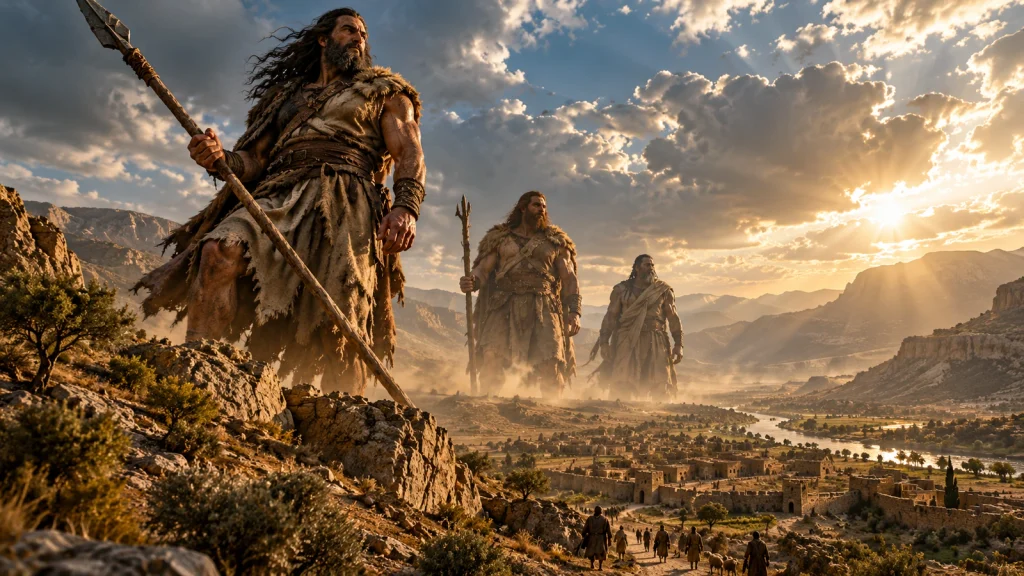
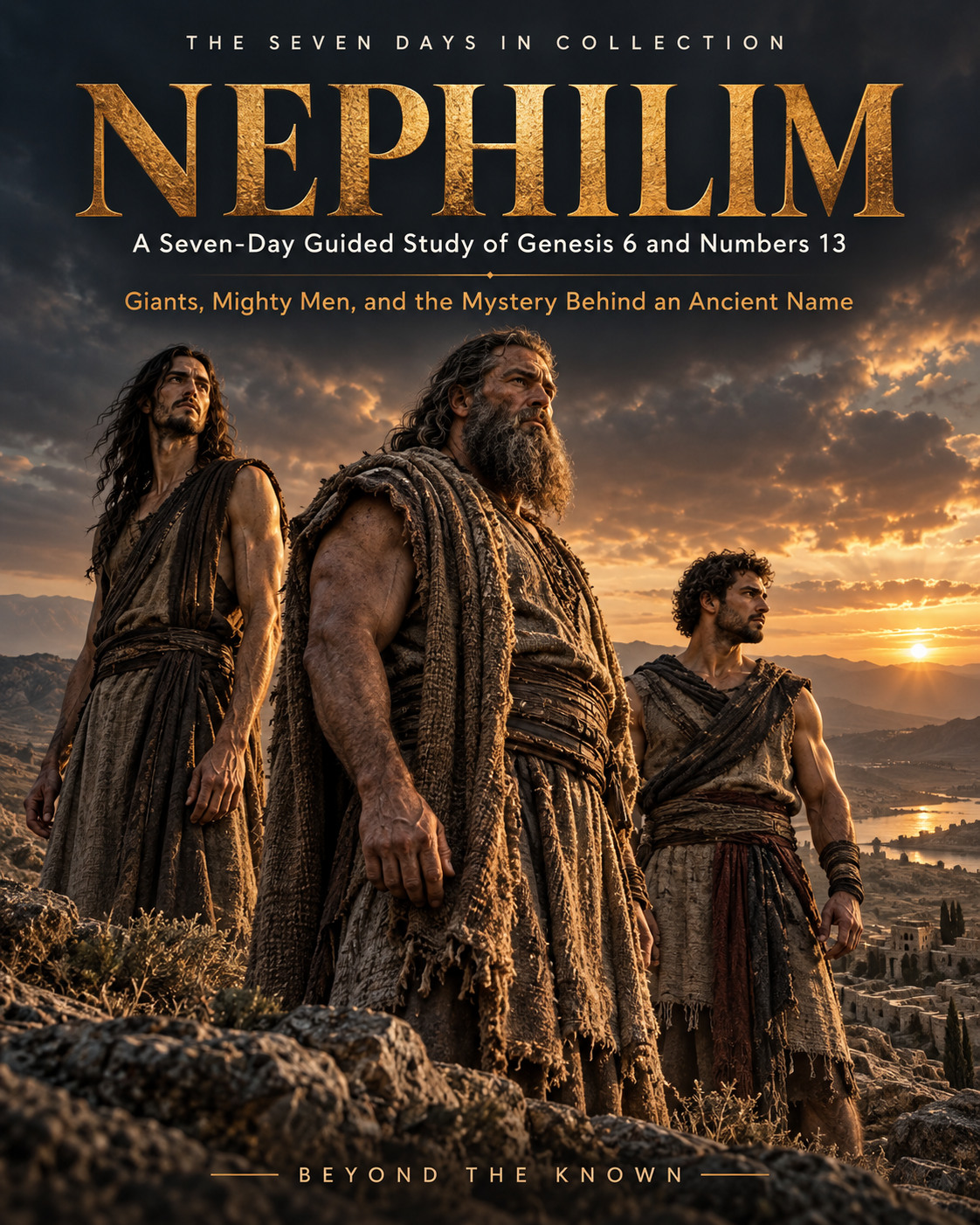
Source: AI-generated illustration created for Beyond The Known.
Genesis has just introduced the mysterious “sons of God,” whose possible identity was examined in Who Were the Sons of God in Genesis 6? Angels, Sethites, or Kings? Yet identifying those figures does not automatically identify another group named in the same passage. Genesis calls them the Nephilim. The most careful answer is that the Nephilim were extraordinary figures associated with the ancient world of Genesis 6. The passage connects them with the time when the sons of God took human women and describes figures from that period as mighty men of renown. Numbers 13 later associates the name with the formidable Anakites and with extraordinary size.
Numbers 13 explains why the name became associated with giants, but that association does not settle every question raised by Genesis. It does not establish that “giants” is the literal meaning of the Hebrew name or that the Nephilim were themselves fallen angels. Even their identification as the children born from the mysterious unions requires an interpretation of Genesis 6:4 rather than a definition supplied separately by the narrator.
What Does Genesis Actually Say About the Nephilim?
The Name Appears Without an Explanation
Genesis 6:4 begins:
“The Nephilim were on the earth in those days—and also afterward.”
Genesis 6:4, NIV
The rest of Genesis 6:4 mentions unions between the sons of God and human women, children being born, and ancient gibbōrîm, mighty men or heroes remembered for their renown. The narrator introduces the Nephilim without explaining their name or describing their bodies. The name appears again in Numbers 13:33, making the relationship between these two passages central to the investigation. Later translations and ancient Jewish interpretations provide additional evidence for how readers understood the figures, but they need to be distinguished from the wording of Genesis.
Genesis makes several points explicit:
- the Nephilim were present “in those days”;
- the sons of God took women and children were born;
- ancient gibbōrîm became famous;
- the Nephilim were also known “afterward.”
What remains less certain is how those statements fit together.
Were the Nephilim the Children of the Sons of God?
The familiar reading identifies the Nephilim with the offspring of the sons of God and human women, who became the mighty figures remembered in verse 4. This is especially natural when the sons of God are understood as heavenly beings. It also underlies the account of angels and their giant children in 1 Enoch 6–7. Its antiquity makes it important evidence for the passage’s reception, although an early interpretation still needs to be distinguished from an explicit explanation in Genesis itself.
Genesis 6:4 first locates the Nephilim in the ancient world and then describes the unions and births before referring to the mighty men of renown. A reader can take these clauses together as an account of the Nephilim’s origin. Ronald Hendel follows the interpretation of the figures as semidivine heroes in “Of Demigods and the Deluge” (1987, pp. 15–16). The sentence nevertheless leaves its relationships less explicit than a genealogy naming a father, mother, and child.
A different grammatical reading is developed by Ki-Eun Jang (2025, section 4). Jang argues that the birth clause does not require the Nephilim to be its unnamed direct object and reads their presence as already belonging to the period of the unions. This challenges the familiar offspring interpretation rather than representing scholarly agreement. The disagreement concerns how the clauses relate, so the cautious conclusion is that the offspring reading is plausible and influential, while the Hebrew sentence has also supported another analysis.
What Does Nephilim Mean in Hebrew?
The Hebrew name is נְפִלִים — nəp̄îlîm. It is commonly related to the root n-p-l, “to fall”; the NABRE note on Numbers 13:33, for example, explains it in terms of fallen heroes. Genesis itself supplies no explanation of the name and does not describe a fall from heaven. An association with “falling” therefore cannot, on its own, establish that the figures were fallen angels.
Were the Nephilim Fallen Angels?
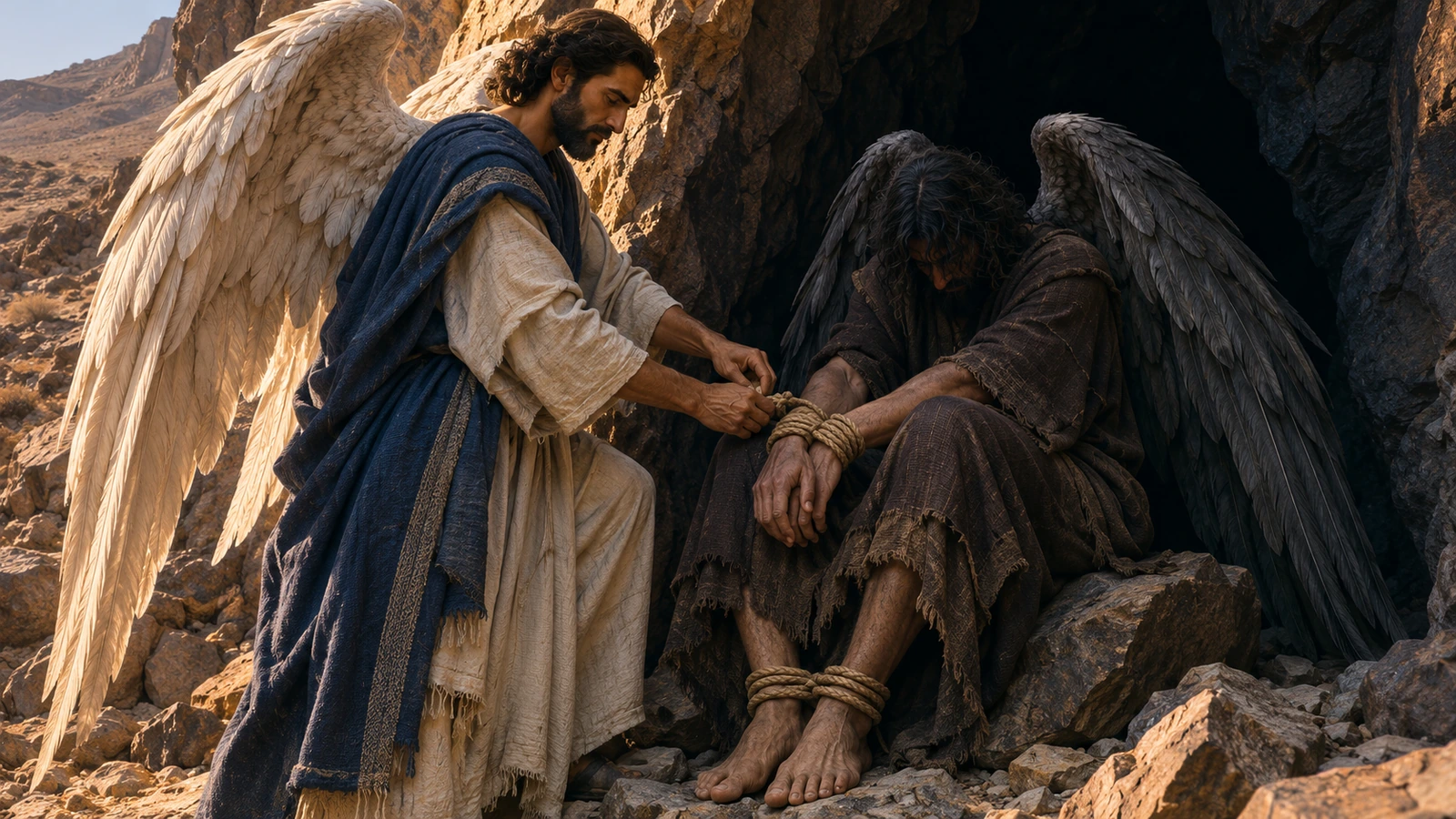
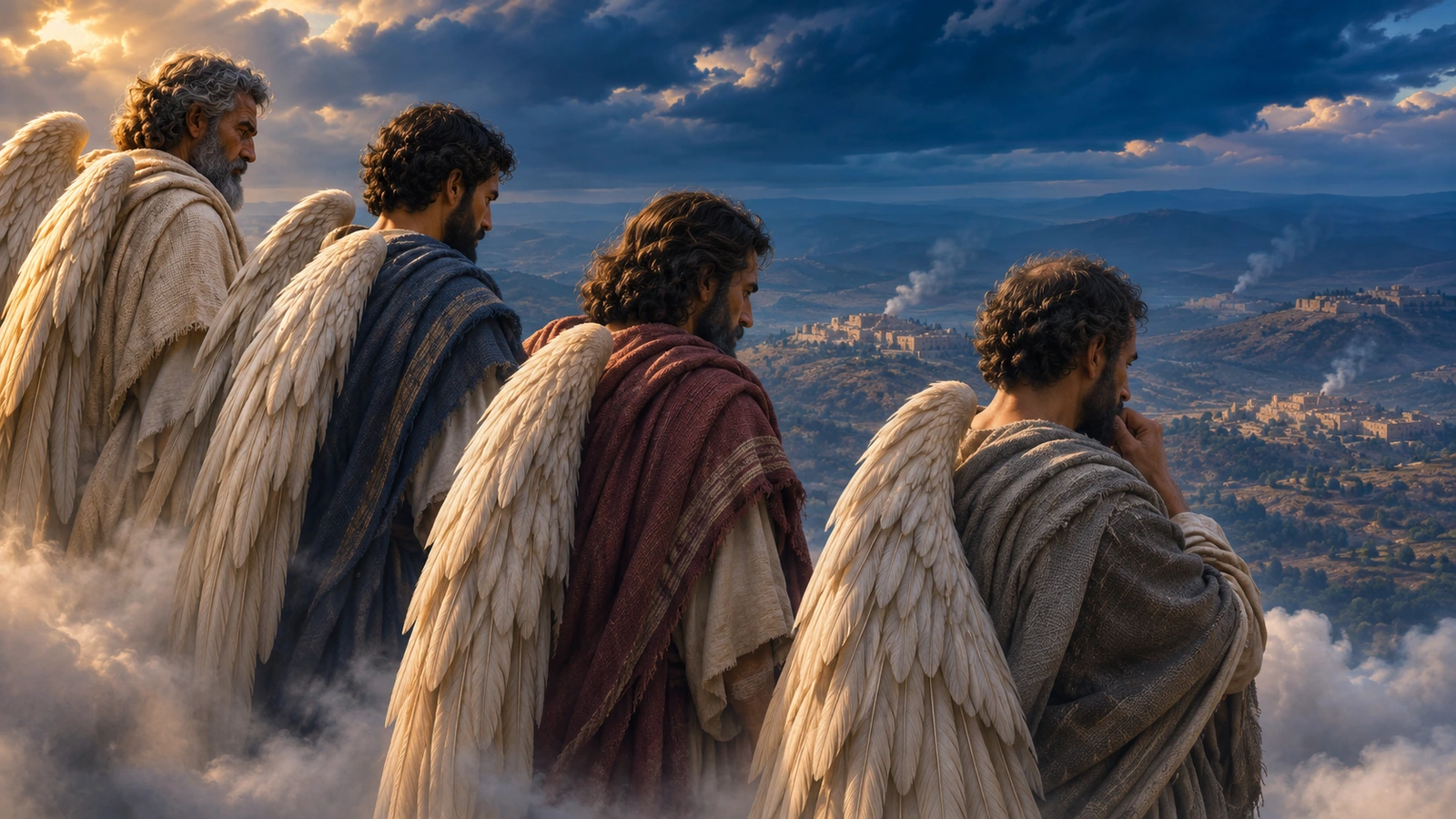
Genesis never calls the Nephilim angels—fallen or otherwise. The confusion usually begins by merging every mysterious figure in the passage. If the sons of God were heavenly beings and if they violated a divine boundary, they may be described theologically as rebellious or fallen beings. The Nephilim, however, are named separately.
The distinction becomes clearer in 1 Enoch 6:1–7:6. The beings who descend are angels; the giants are the children subsequently born to the women. Within that narrative, rebellious heavenly parents and giant offspring are different groups with different roles. Identifying the Nephilim with those offspring does not turn them into the angels who fathered them.
CONTINUE BEYOND THE ARTICLE
Who Were the Nephilim? Go Deeper.
Explore Genesis 6 and Numbers 13 through a careful seven-day guided study.
✓ 50 pages ✓ Two PDF editions
Why Did the Nephilim Become Known as Giants?
The Septuagint Shaped the Tradition
The ancient Greek translation known as the Septuagint renders the name with γίγαντες — gigantes, as the NABRE note on Numbers 13:33 also records. That rendering is an important witness to the ancient association with giants, but a translation choice does not settle the Hebrew word’s derivation. Brian Doak’s study of biblical giants also places them within the symbolic and heroic traditions of antiquity. The category involves more than a description of unusually tall bodies.
Numbers 13 Provides the Strongest Biblical Connection with Size
The association with physical size does not depend on the Septuagint alone. When the Israelite spies describe the inhabitants of Canaan, they report:
“We saw the Nephilim there … We seemed like grasshoppers in our own eyes.”
Numbers 13:33, NIV
Read Numbers 13:25–33 as a complete report rather than isolating the name. Verse 32 describes the inhabitants as large, and verse 33 connects the Nephilim with the Anakites. The association with extraordinary stature is clear in this setting. Yet the description comes from scouts arguing against entering the land, immediately after Caleb urges Israel to proceed.
Yet the narrative setting matters. Numbers 13:32 calls the spies’ account a damaging or bad report, and their words are designed to persuade Israel that entering the land is impossible. The grasshopper comparison is rhetorical, not an objective measurement. The report may contain real observations expressed through fear and exaggeration; the text does not require readers to treat every detail as neutral description.
Numbers nevertheless establishes something Genesis 6 alone does not: in later biblical memory, the name Nephilim could evoke terrifying people of exceptional size. Calling them giants is therefore not a baseless tradition. It is a contextual interpretation built especially from Numbers, not a complete lexical translation supplied by Genesis.
What Does “And Also Afterward” Mean?
The phrase “and also afterward” raises a problem that Genesis does not resolve in a separate explanation. Readers must set it beside both the coming Flood narrative and the later report in Numbers 13. Jang’s discussion of the passage’s literary relationship to the conquest traditions (sections 2–3) approaches the difficulty through the connection between the two texts. That is a proposal about literary history, not a biblical account of how particular individuals survived the Flood.
Genesis supplies no account of a Nephilim ancestor aboard the ark and no second narrative of heavenly beings producing another generation after the Flood. Such reconstructions add events in order to explain the later occurrence of the name. They should be identified as proposals rather than repeated as information given by Genesis. The phrase preserves a connection across the traditions while leaving its mechanism unstated.
How Did the Book of Enoch Expand the Story?
The Book of the Watchers gives the figures a fuller story. In 1 Enoch 6–7, angels take human women and father giants whose appetites turn destructive. Chapters 8–11 connect forbidden teaching, violence, and judgment; 15:8–12 then describes evil spirits arising from the giants. The narrative distinguishes the heavenly beings, their children, and the spirits that remain after the children’s deaths.
Genesis 6:1–4 does not record the Watchers’ names, the oath on Hermon, the catalog of forbidden teachings, or the account of the giants’ spirits. Reading these details in Enoch shows how an ancient Jewish narrative developed the brief biblical episode. It does not supply permission to insert every detail into Genesis without identifying its source. Our introduction to the Book of Enoch places that work within its own textual and historical setting.
The Deeper Discovery
The Flood narrative explicitly identifies human wickedness in Genesis 6:5 and pervasive corruption and violence in 6:11–13. It does not state that unusual height was the reason for judgment. That distinction concerns the wording of the present narrative; it does not settle the scholarly question of whether the Nephilim episode once supplied a different explanation for the Flood.
Hendel (1987, p. 16) argues that the union of divine beings and mortals originally helped motivate the Flood story. Jang (2025, section 2) disputes an original connection and instead relates the Nephilim to later conquest traditions. These are competing reconstructions of the text’s background. Neither should replace the explicit account of human evil and violence when explaining what Genesis 6:5–13 says.
The question of identity therefore has several parts: what the name means, how the clauses in Genesis fit together, why Numbers connects the figures with the Anakites, and how Enoch develops their story. Keeping those questions distinct makes the evidence easier to assess. It also prevents a conclusion drawn from one text from being presented as the direct statement of another.
Genesis now moves from the remembered heroes of old to the corruption of the entire earth. The mystery of the Nephilim therefore opens directly into the next question: Why Did God Send the Flood in Genesis?
Read about our editorial method and corrections process.
Selected Sources
- Genesis 6:1–13. Biblical context for the unions, the Nephilim, human wickedness, and violence. Linked text: NABRE; the short quotation above is identified as NIV.
- Numbers 13:25–33, with the NABRE note on verse 33. The scouts’ report, the Anakite connection, and the Hebrew name’s association with fallen heroes and the Greek rendering.
- 1 Enoch 6–11 and 15:8–12, translated by R. H. Charles, in The Apocrypha and Pseudepigrapha of the Old Testament. Primary evidence for the distinction between the Watchers, their giant children, and evil spirits.
- Hendel, Ronald S. “Of Demigods and the Deluge: Toward an Interpretation of Genesis 6:1–4.” Journal of Biblical Literature 106.1 (1987): 13–26, especially pp. 15–16. A semidivine-hero interpretation and a proposed original connection to the Flood.
- Jang, Ki-Eun. “The Problems of Sons of Gods, Daughters of Humans, and the Nephilim in Genesis 6:1–4: A Reassessment.” Religions 16.8 (2025): 972, especially sections 2–4. An alternative grammatical and literary-historical interpretation, distinguished above from scholarly consensus.
- Doak, Brian R. The Last of the Rephaim: Conquest and Cataclysm in the Heroic Ages of Ancient Israel. Dissertation, 2011. The author’s repository abstract supports the limited observation above about the symbolic and heroic setting of biblical giants.