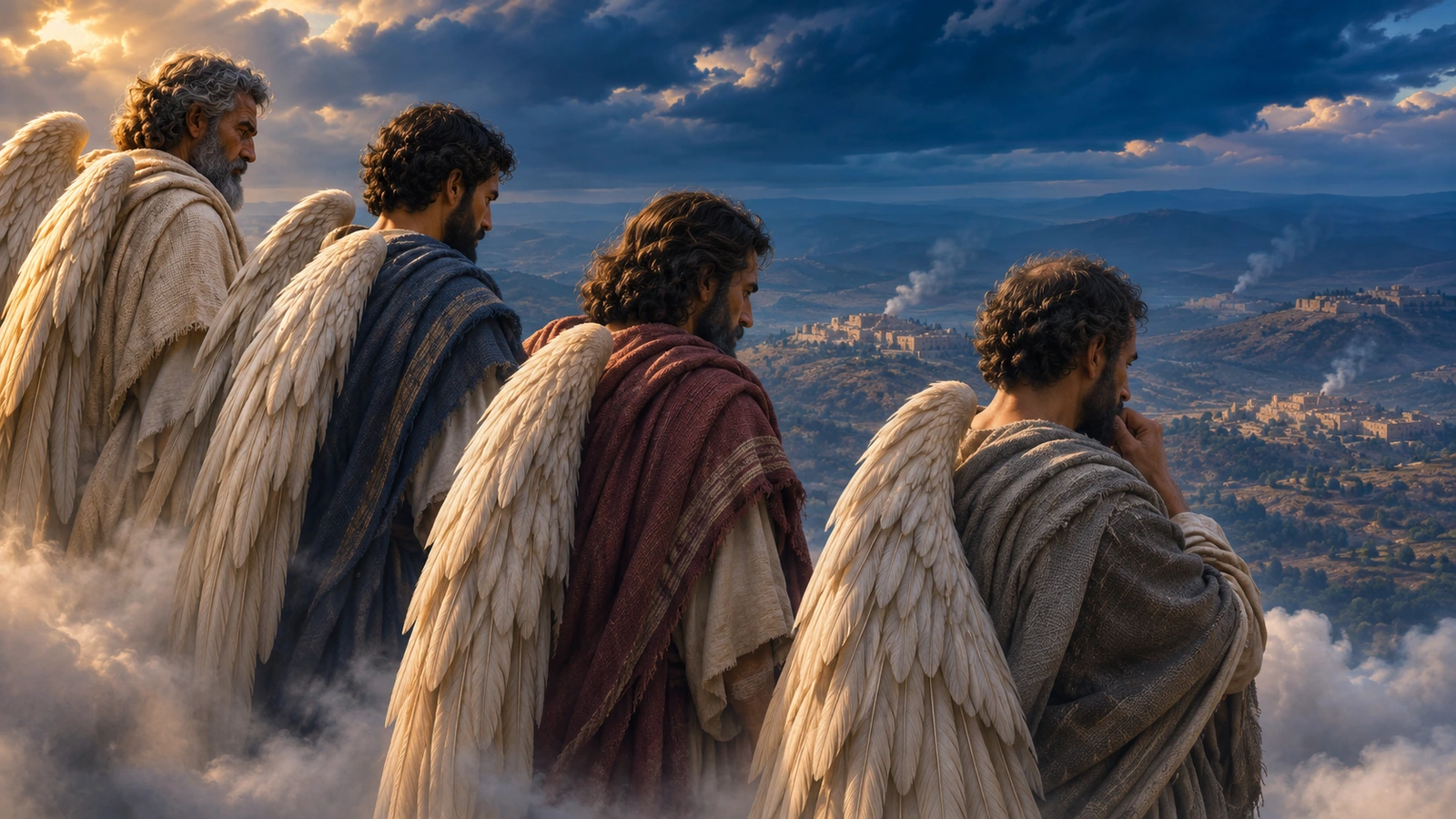
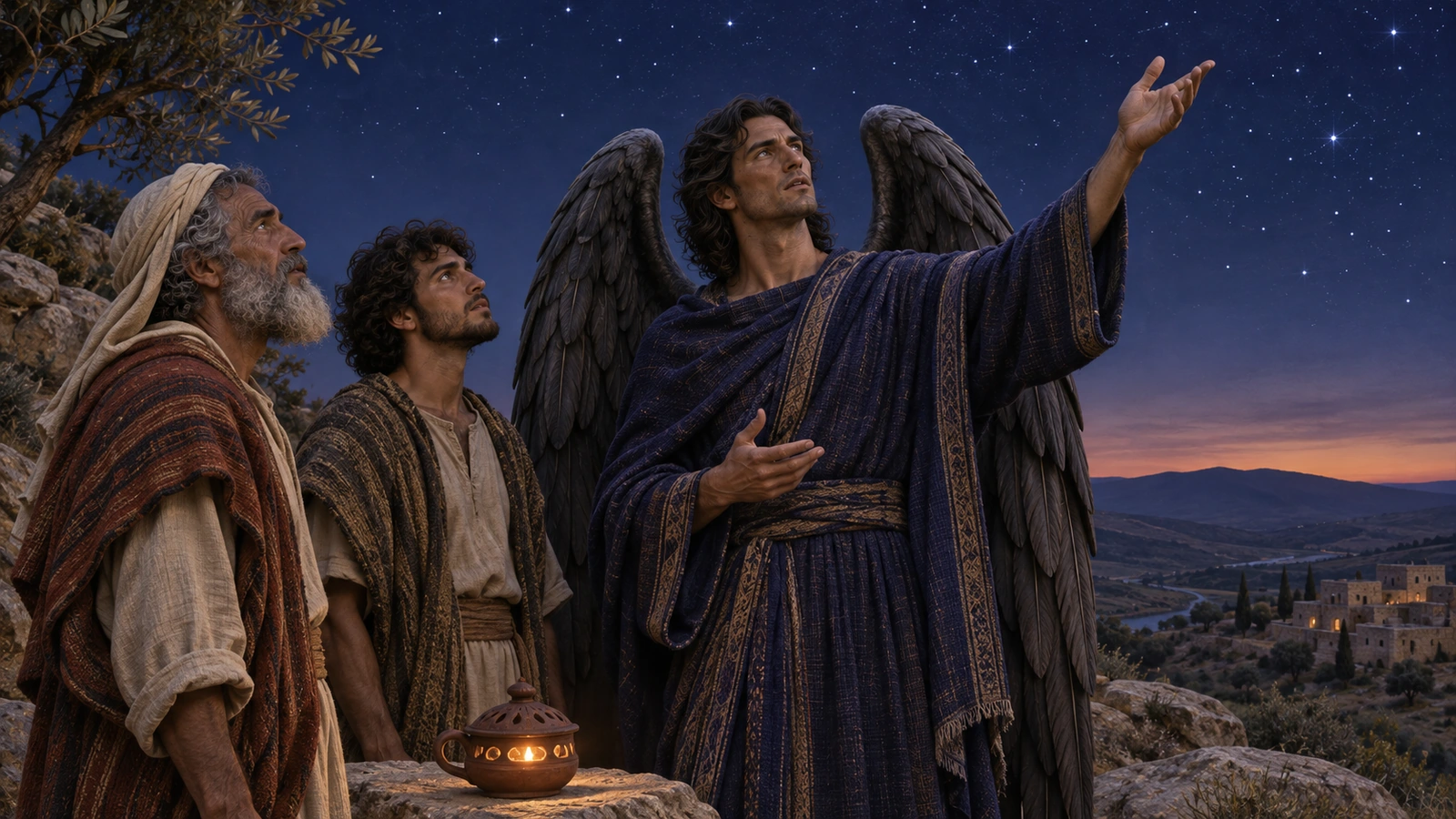
Who May Eat the Sacred Offerings in Leviticus 22?
A priest must wait for sunset. A daughter may return to her father’s table. Each recovers access to sacred food under a different rule.
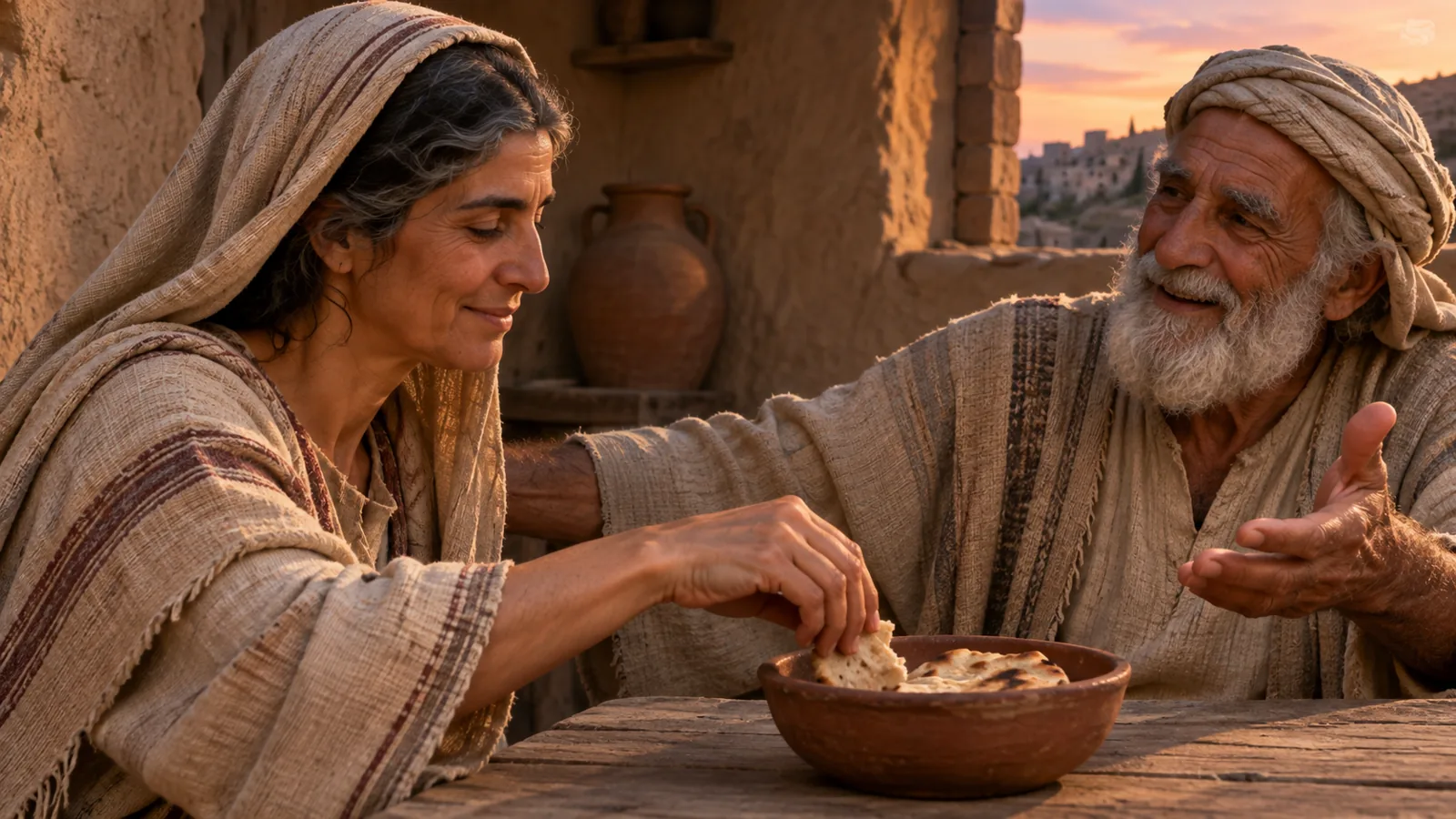
Source: AI-generated editorial illustration for Beyond The Known.
A priest’s daughter can lose her right to eat a sacred contribution and later recover it. Her father remains a priest throughout. What changes, in Leviticus 22:12–13, is the household to which she belongs. A priest can also have a portion that is rightfully his and still have to wait until sunset to eat it (vv. 4–7). To know who may eat, the reader needs three pieces of information: whose share the offering is, which members of the household may share it, and whether the person entitled to it is presently clean.
The previous study, Why Does Leviticus 21 Set Distinct Rules for Priests?, ended with a descendant of Aaron who could eat sacred portions although he could not officiate at the altar. The new chapter begins almost where that ruling leaves off. Imagine seeing him eat alongside a priest with no bodily condition listed in chapter 21. Which of them must withdraw from the next meal? Looking at the two men would not settle the question. Something that happened between meals might.
A portion can be yours before you may eat it
The opening instruction names three parties. Israelites consecrate gifts, the gifts belong to the Lord, and Aaron’s descendants are charged with handling them. The passage does not treat dedication as a transfer of the food into unrestricted private ownership. Once a portion has been assigned to a priest, the sanctity that attached to it as a gift remains relevant at his table. The warning in 22:2 concerns what the priests do with the gifts after the Israelites have brought them.
Verse 3 introduces a deliberately hard case. The person approaching the holy things in an unclean state is himself a descendant of Aaron. His family connection is specified before the threat of exclusion is pronounced. The danger arises precisely because this is a man who ordinarily has access. A priest could not defend his conduct by producing his pedigree. Neither could a bystander infer from a priest’s temporary withdrawal that his right to the priestly portions had been permanently revoked.
The cases in verses 4–7 have different time frames. A person with the skin condition or discharge named at the beginning of verse 4 must wait until clean. The chapter gives a shorter timetable for the contacts described from the second half of verse 4 through verse 6, including bathing and the arrival of evening. To prescribe a bath and a single night’s wait for every case would overlook the way verse 4 first leaves the duration open. Readers following the earlier discussions of discharges and skin conditions will recognize why a single timetable would be inadequate.
Follow the food through that sunset. Nothing in verse 7 directs the priest to present it again or obtain a new allotment. What changes is his eligibility to eat the portion he already receives. The explanation at the end of the verse is almost domestic in its simplicity: this is what he lives on. In the same sentence the law restores his access and acknowledges his dependence. Verse 3 warns of exclusion from God’s presence for approaching the offerings while unclean. Verse 7 describes someone who waits as instructed. It gives him a time to eat again without suggesting that sunset reverses the sanction in verse 3.
Who actually belongs to the priest’s household?
The case of a hired worker in verse 10 rules out a tempting answer. A person can work for the priest and still lack a right to his sacred provisions. The verse also names a resident or tenant. English renderings differ on the status of that second figure, but the contrast in the next verse is clear. A person enslaved and purchased by the priest, or born into his house in that condition, is permitted to eat. The NABRE note on Leviticus 22:11 identifies incorporation into the household as the relevant distinction.
It is worth pausing over what that contrast would look like at a meal. Of two people doing work in the same place, the hired person could have greater freedom to leave yet less access to this particular food. Work performed, proximity to the kitchen, and personal freedom therefore make poor guides to the distribution. Verse 11 operates within an ancient household in which a human being could be purchased. The permission gives that person a share in the food. It does not release the person from slavery, and the law says nothing about how that person experienced either provision.
Terms such as “outsider” or “unauthorized person” can be misleading if they suggest someone who is unknown to the family. A laborer known to the priest for years would still fall under verse 10. In the following paragraph, an Israelite from another family may stand outside this particular entitlement. Conversely, the person in verse 11 need not establish descent from Aaron. The question is narrower than ethnic identity or personal familiarity. What claim, if any, does this person have upon the portions assigned to this house?
The daughter who comes home
In verses 12–13 the same person appears on opposite sides of the rule. A priest’s daughter marries a man outside the priestly entitlement and may no longer eat the sacred contributions. Then the law considers the dissolution of that marriage through death or divorce. She has no children and returns to her father’s house. The verse permits her to eat there again, recalling the arrangement in her youth. Its most revealing feature may be that the return requires no new consecration ceremony.
The sequence is easily flattened in translation or retelling. Widowhood and divorce are alternatives. Having no children and returning to her father’s household are further conditions. The law does not say that every widow of priestly descent has an automatic lifelong claim on her father’s portions. Nor is a casual visit home the situation described. The NET translation of verses 10–15 makes that last distinction especially clear by describing her return to live there. A social relationship has resumed, with a corresponding right to food.
Consider the difficult case left outside that sentence. What if she returns with a child? The condition written into verse 13 prevents extending this permission on the strength of that verse alone. It supplies no account of where the mother and child subsequently lived, who provided for them, or whether they could receive ordinary hospitality. Those are real questions about the lives of ancient women. An answer about access to a consecrated contribution cannot be expanded into a general rule forbidding a grandfather to feed his family.
There is a further limit. The father’s food in this paragraph is not an undifferentiated supply of everything brought to the sanctuary. In Leviticus 10:12–15, Moses directs Aaron and his remaining sons to eat the grain-offering remainder in a sacred place. The breast and thigh from the communion sacrifices can be eaten by sons and daughters in a clean place. Verse 13 of chapter 22 reopens a daughter’s access to the portions appropriate to her. It never says she acquires every prerogative of a son who serves at the altar. If one wants to reconstruct the table in the illustration, the distinction between a suggested household setting and an identifiable ritual menu matters.
What would have come through the door?
Numbers 18:11–13 gives some texture to the word “food.” The instructions there speak of contributions for sons and daughters, then name oil, wine, grain, and first produce. They again specify members of the house who are clean. This is a broader picture of priestly provision than one would get by imagining that every sacred portion was a piece of meat carried directly from the altar. The rules could matter to a family across the agricultural year, whenever Israelites brought contributions from what their land produced.
The parallel helps explain why the daughter’s case merits space among laws about worship. The right restored to her could affect the ordinary means by which she was fed. Numbers describes an ongoing provision and immediately sets Aaron’s position in relation to land and inheritance (18:19–20). Leviticus asks what happens to one dependent when her relationship to the household changes. Read together, the passages allow us to see the economic stakes without calculating an income the texts never specify. Neither tells us how much food this woman received in any particular year.
What happens when the wrong person eats?
A law about distribution has to address a portion that has already disappeared. Leviticus 22:14 considers inadvertent consumption by someone outside the entitlement. The eater must restore what was taken to the priest and add one fifth. If five equal measures were consumed, the reckoning would yield six measures in value. The extra fifth is calculated on what was consumed. It belongs to a requirement of restitution, distinct from the waiting period that governs an unclean priest.
Why specify the recipient? In verse 2 the Israelites consecrate the gifts to God. By verse 14 a particular person, the priest, is to receive the replacement. The rule holds those facts together. Sacred status does not make the material loss too spiritual to repay. Equally, compensating the priest does not make the original consumption into an ordinary purchase. The person who took the food repairs a loss after the fact. No verse establishes a price at which an unauthorized guest may buy admission to the meal.
The word indicating inadvertence also limits the application of the remedy. The text provides a realistic provision for error without explaining how intent was determined in a disputed case. One should resist filling that silence with an imagined hearing, oath, or penalty. The NABRE identifies the priests as the ones responsible in verses 15–16. The NET note on verse 15 explains a translation choice: the Hebrew pronoun could refer to the people or to the priests. The note favors the priests. On that reading, the eater owes restitution, and the priest who distributes the portions has a duty to prevent their misuse.
Why the chapter turns from people to animals
Verse 18 widens the audience to include the Israelites and specifies that a resident foreigner may also bring an offering. Someone who could not eat a priest’s contribution might nevertheless be entitled to bring an animal. Permission to give and permission to eat are separate questions. This helps explain the apparent change of subject midway through the chapter. Once we ask why a portion is available for distribution at all, we have to look back to the gift offered at the sanctuary.
Read the two principal cases with an eye to the offering named. Verses 18–20 specify a male without blemish from the herd or flock for the burnt offering described there. Verse 21 speaks of a communion sacrifice brought to fulfill a vow or given voluntarily. The requirement of soundness carries over, but the reader should not automatically transfer every detail of the burnt-offering rule into a sentence dealing with another sacrifice. The text repeats the condition it wishes to stress and then names examples in verse 22.
Verse 23 presents a useful test of whether an interpretation has become too tidy. The condition specified there concerns an ox or sheep with a disproportionately long or stunted limb in the NABRE rendering. The law allows such an animal as a voluntary offering but rules it out for fulfillment of a vow. That is a narrow exception involving a specified condition. The contrast does not license presenting blind or injured animals generally as long as the donor calls the gift voluntary. Read it against verse 22 and against the succeeding prohibition in verse 24.
The difference between a vow and a spontaneous gift gives the exception some purchase. A vow places the offering in relation to an undertaking already made. The chapter holds a worshiper to a stricter requirement in the case it singles out. The NABRE note on verse 23 proposes the prior promise as an explanation. That makes sense of the contrast, although the text gives the rulings themselves more explicitly than it gives a theory of why that one condition is treated differently.
Verse 25 closes a possible loophole. Receiving an animal with the specified damage from a foreign source does not make the animal acceptable. To read this as a ban on all foreign worshipers would put the passage at odds with its own invitation in verse 18. In one verse the issue is who may present a gift. In the other it is whether a particular animal qualifies. The two judgments can only appear contradictory if the condition of the animal drops out of the second one.
A week with the mother and a day for the meal
An animal may be sound and still be too young. Verses 26–27 give the newborn ox, sheep, or goat seven days with its mother. From the eighth day it can be accepted. That is an earliest permissible day, not a command that every eligible animal be offered on that date. Verse 28 adds a related prohibition on slaughtering a dam and her young on the same day. The care taken to preserve these particular intervals is explicit. A comprehensive account of the lawgiver’s attitude to animal life would require evidence beyond these verses.
The timetable runs the other direction for a thanksgiving sacrifice. An offered animal might have to wait, but the thanksgiving meal, once offered, may not be postponed until the next morning (vv. 29–30). This provision is easy to miss if the entire chapter is summarized as a list of people barred from sacred meals. Here the command requires the food to be eaten within the designated time. Someone could have the right food and the right company and still fail to observe the terms of the gift by keeping it too long.
The closing appeal to the exodus places these small acts within Israel’s public history. In verses 31–33 the speaker identifies himself as the God who brought the people out of Egypt. The people are to guard his name in their midst. Nothing in the conclusion dissolves the detailed distinctions that precede it. It asks an Israelite to see the choice of animal, a family’s handling of a contribution, and the day a thanksgiving meal is finished as matters that concern the God to whom the people belong.
The Deeper Discovery
The most revealing word in the daughter’s case is the ordinary possessive: she may eat her father’s food. One might expect the law to describe an elaborate restoration of purity. Instead it describes a return home. Set that beside verse 7, where the priest is allowed to eat after sunset because the offerings are his food. He never left the household. She need not wait for a sunset in order to become her father’s dependent again. The legal language gives two quite different answers to what would look from outside like the same question about a place at dinner.
There is an important asymmetry in how a mistake could be corrected. Sending the daughter away to wash would fail to address whether she had resumed membership in her father’s house. Inviting the temporarily unclean priest to demonstrate his ancestry would establish something everyone already knew. Neither response would protect the meal. The particulars that can sound most alien to a modern reader are the very things that prevent holiness from becoming a vague judgment about which people are worthy of food.
FAQ
Could an Israelite who brought an offering eat the priest’s share?
Bringing the gift did not itself entitle the donor to the portion assigned to the priest. The rules for the kind of sacrifice and the distribution of its portions govern who may eat.
May every member of a priestly household eat every offering?
No. Chapter 22 addresses household eligibility, while passages such as 10:12–15 give different instructions for particular portions, eaters, and places.
Does widowhood alone restore a daughter’s access?
Verse 13 also specifies that she has no children and returns to live in her father’s house. It describes restoration of an earlier household entitlement.
Is adding a fifth a penalty for becoming unclean?
Verse 14 attaches restitution and the additional fifth to inadvertent consumption. Verses 4–7 address uncleanness and describe the circumstances of return to eating.
What Comes Next?
Chapter 22 closes a thanksgiving meal before the following morning. Chapter 23 expands the question of appointed time to the whole community, beginning with the weekly Sabbath before naming the annual occasions. Explore the Leviticus Studies reading map. Next study: Why Does Leviticus 23 Begin Its Festival Calendar with the Sabbath?
Selected Sources
Leviticus 22, New American Bible, Revised Edition. Primary text throughout. The accompanying notes discuss household membership, the daughter’s portions, and the distinction between voluntary and votive offerings.
NET Bible, Leviticus 22:10–15. Comparison of the wording for the daughter’s return to her father’s house.
Leviticus 10:12–15, New American Bible, Revised Edition. The distribution of grain and animal portions to different members of Aaron’s family.
Numbers 18:11–20, New American Bible, Revised Edition. Household portions, first produce, and the provision for Aaron.