Why Does Leviticus 15 Treat Bodily Discharges as Unclean?
Leviticus 15 examines the ritual consequences of genital discharges in men and women, distinguishing ordinary bodily functions from prolonged conditions. Its regulations illuminate how ancient Israel understood purity, the human body, and the holiness of the Tabernacle.

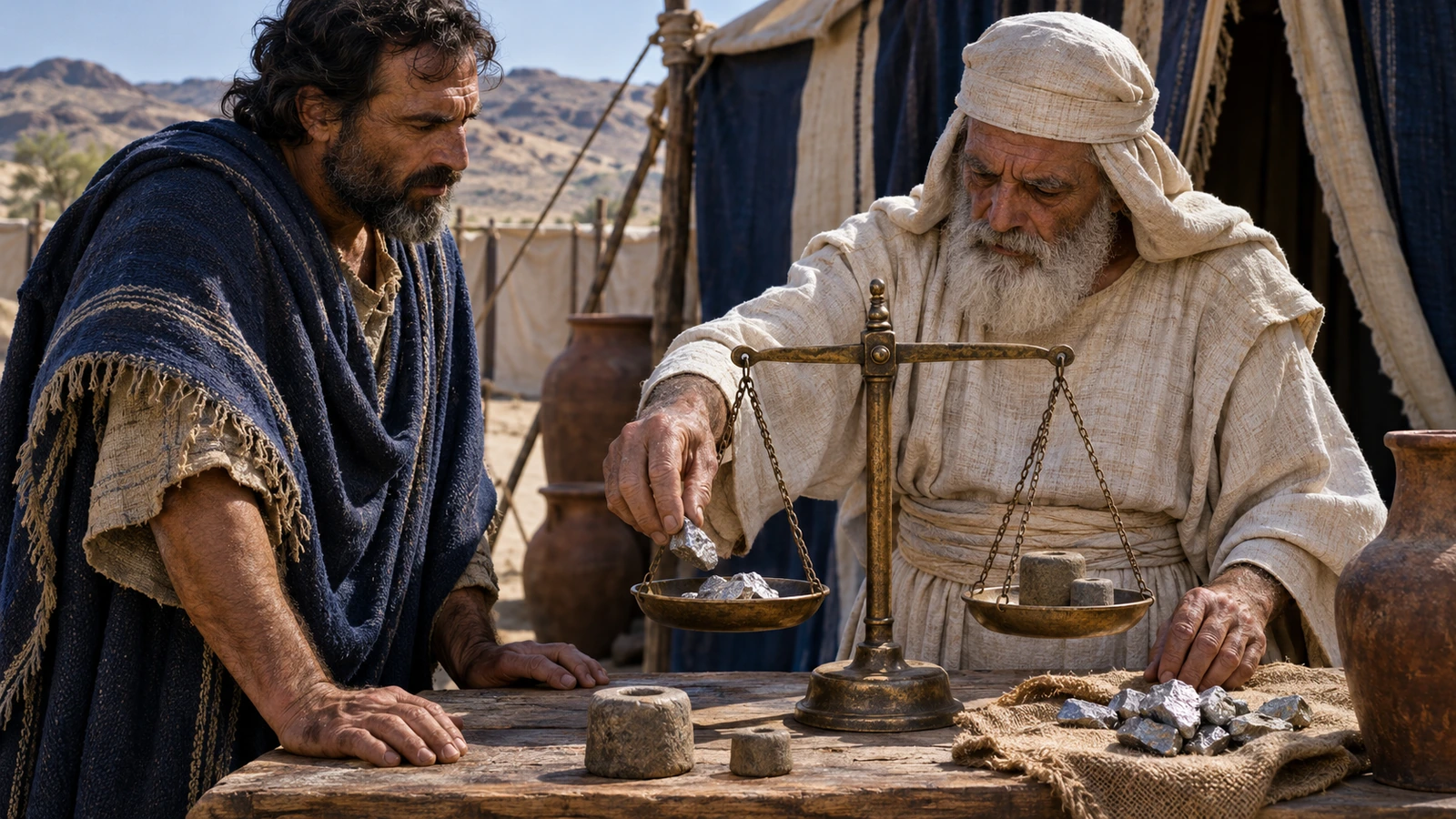
Source: AI-generated image created for Beyond The Known.
A man experiences an emission of semen and must bathe. His ritual impurity lasts until evening. A menstruating woman, however, remains unclean for seven days. Someone suffering from an unusual or prolonged genital discharge faces additional requirements after the condition ends, including offerings presented at the sanctuary. Why did these bodily processes produce different forms of impurity? Leviticus 15 classifies certain genital discharges as sources of ritual uncleanness because Israel’s life was organized around a holy sanctuary. The laws established how bodily conditions affected people, household objects, and participation in sacred activities. They did not automatically treat menstruation, seminal emission, or illness as moral wrongdoing.
The distinctions are precise. Ordinary seminal emission requires washing and waiting until evening. Menstruation brings a seven-day period of impurity. Prolonged male discharges and irregular female bleeding require seven additional days after the flow ceases, followed by a purification offering and a burnt offering. The underlying concern becomes explicit near the chapter’s conclusion: the Israelites must guard against defiling the LORD’s Tabernacle, which stands among them (15:31).
Our previous study, Why Did Leviticus 14 Require Birds, Blood, and Oil for Cleansing?, examined how a recovered person completed the prescribed requirements for returning to communal and ritual life. Leviticus 15 continues the discussion of purity but moves into experiences that could arise repeatedly within ordinary households.
These regulations raise difficult questions about bodily functions, gender, ritual status, and the meaning of atonement. Their arrangement also contains a revealing pattern: the opening and closing cases require nearly identical offerings, while the two middle cases concern normal reproductive processes.
Understanding that structure will help explain why a chapter devoted to human bodies ends with a warning about God’s dwelling—and why the Day of Atonement follows immediately afterward.
What Did Ritual Impurity Mean in Ancient Israel?
The Hebrew adjective ṭāmēʾ (טָמֵא), usually translated “unclean” or “impure,” describes a condition that affected a person’s relationship to the purity requirements of Israel’s religious life. Its opposite, ṭāhôr (טָהוֹר), denotes the state of being clean. Neither word corresponds exactly to modern ideas of physical cleanliness. Someone might wash thoroughly and still remain ritually unclean until evening. In other circumstances, the completion of purification required a specified period of waiting or an offering at the sanctuary.
The distinction matters because modern readers often associate uncleanness with dirt, infection, or moral corruption. Those associations can obscure what the regulations actually address.
Was Being Unclean the Same as Committing a Sin?
Leviticus 15 does not describe every source of impurity as an offense against God. Menstruation is not presented as an act of disobedience. Neither is the ordinary emission of semen. Both produce ritual consequences without requiring confession or restitution. Jonathan Klawans examines this distinction in Impurity and Sin in Ancient Judaism. He differentiates ritual impurity, often associated with bodily processes and contact with certain substances, from forms of moral impurity arising through serious wrongdoing.
The categories are related to Israel’s understanding of holiness, but they should not be collapsed into one. A person could become unclean without having deliberately violated a command. Disregarding the restrictions attached to that condition, especially in relation to sacred space, presented a different problem. The laws therefore presuppose that ritual impurity can occur during normal life. They also establish the steps by which an individual returns to the required state of cleanness.
Did Impurity Mean That God Rejected the Person?
The procedures in this chapter are temporary and carefully defined. Most end with washing and the passage of time. Prolonged conditions involve additional requirements, yet the law still provides a path to purification. Nothing in Leviticus 15 authorizes the conclusion that a woman is morally inferior because she menstruates or that a man becomes spiritually corrupt merely through seminal emission. At the same time, the restrictions were not insignificant. They affected household objects, physical contact, and access to sacred activities.
Understanding their seriousness requires taking the ritual system on its own terms rather than replacing it with either modern hygiene or a general moral judgment about the body.
Why Did a Man with a Discharge Become Unclean? (15:1–3)
The first case concerns a man experiencing a discharge from his genital organs. The relevant Hebrew terminology is associated with flowing. The person affected is described through the language of zov (זוֹב), a discharge, and zav (זָב), one who has such a flow. The condition differs from an ordinary emission of semen, which receives separate treatment in verses 16–18. Verse 3 includes circumstances in which the discharge continues and those in which it becomes obstructed. In either situation, the man remains unclean. The legislation identifies the condition and its ritual consequences without supplying a precise medical diagnosis.
Was the Discharge Caused by a Sexually Transmitted Disease?
Some medical and historical commentators have suggested that the condition could have involved urethritis or another disorder affecting the genital tract. Certain infections can produce persistent discharge, making such comparisons understandable. Nevertheless, the biblical description is insufficient to identify a particular disease. No pathogen is named, and the law does not attribute the condition to sexual misconduct. It also offers no medical treatment. The priestly instructions are concerned with recognizing impurity, regulating contact, and determining the procedure required once the discharge has ceased.
The distinction from ordinary seminal emission is therefore established by the structure of the legislation, not by a modern diagnostic category.
What If the Discharge Was No Longer Flowing Freely?
Verse 3 does not make visible fluid at every moment a necessary condition for impurity. The wording includes the possibility that the discharge is obstructed. The man’s status depends upon the condition described by the law rather than a continuous outward flow. This detail becomes useful when reading the following regulations. The individual himself is considered unclean, while certain objects and contacts can acquire impurity through their relationship to him. The system involves both bodily condition and prescribed forms of transmission.
How Did Impurity Spread Through Everyday Contact? (15:4–12)
Much of the first section concerns the objects a man uses and the people who come into contact with him. His bed becomes unclean. So does an object on which he sits. Someone who touches his bed must wash clothing, bathe, and remain unclean until evening. A comparable procedure applies to a person sitting on something the affected man used. The regulations also address direct contact, saliva, riding equipment, and objects that have been beneath him.
Verse 11 introduces a further qualification: when the man touches another person without having rinsed his hands, that person must wash clothing, bathe, and remain unclean until evening. The result is a detailed account of how impurity can extend beyond the person experiencing the discharge.
Was This an Ancient Form of Quarantine?
There are practical similarities between these restrictions and some modern efforts to manage exposure to bodily fluids. But Leviticus 15 does not present a scientific theory of infection. The affected bed is ritually unclean. Contact with it brings prescribed washing requirements and a period ending at evening. That endpoint belongs to a religious legal system, not to an established biological timeline. Christophe Nihan’s study, “Forms and Functions of Purity in Leviticus,” examines the social and religious purposes of such classifications. He considers how the laws regulate bodily conditions and domestic objects through different degrees of impurity and corresponding purification measures.
The scope of the rules is important. They reach into sleeping, sitting, traveling, and the use of household possessions. Ritual purity was therefore not confined to ceremonies performed at the altar. It also shaped everyday interactions within Israelite society.
Why Did an Earthenware Vessel Have to Be Broken?
Verse 12 distinguishes between two kinds of objects. An earthenware vessel touched by the affected man must be broken. A wooden vessel, however, can be rinsed with water. A similar distinction appears in the regulations concerning certain animal carcasses. Our study of Leviticus 11 examined how contact with unclean animals or dead creatures could affect objects and utensils. The treatment of pottery may reflect its material characteristics, including porosity, but Leviticus does not explicitly identify absorbency or microbial contamination as the rationale.
What can be established is the difference in procedure: the earthenware object is destroyed, while the wooden one may be cleansed. The law treats the material involved as relevant to the required response.
Why Were Seven Days and Two Birds Required After Recovery? (15:13–15)
The procedure changes when the discharge stops. The man must count seven days for his purification, wash his clothing, and bathe his body in fresh water. On the eighth day, he brings two turtledoves or two young pigeons to the entrance of the Tent of Meeting. The priest offers one bird as a purification offering and the other as a burnt offering, making atonement before the LORD. Recovery and completion of the prescribed ceremony occur at different stages.
What Was the Significance of “Living Water”?
The Hebrew expression mayim ḥayyim (מַיִם חַיִּים), often rendered “living water,” refers in this setting to fresh water associated with a natural or flowing source. The phrase also appears in Leviticus 14:5, where water is required for the ceremony involving two birds. That repeated vocabulary connects two different purification procedures. In each case, the relevant physical condition has already changed before the final ritual requirements are completed. The presence of fresh water should be understood first as a concrete instruction. Later biblical uses of “living water” may carry broader theological imagery, but such associations do not replace its immediate meaning here.
Why Was an Offering Necessary?
The bird sacrifices do not treat the bodily condition. They come after the flow has ended and the seven-day interval has been observed. The offering called ḥaṭṭāʾt (חַטָּאת) is commonly translated “sin offering,” although “purification offering” often better communicates its ritual function in contexts involving bodily impurity. The man is not accused of a specific moral offense. The sacrifice forms part of the completion of his purification. This distinction becomes especially clear in the next passage, where an ordinary reproductive function produces a shorter period of impurity without requiring any sacrifice.
Why Did Seminal Emission Cause Impurity? (15:16–18)
Verses 16–18 address the emission of semen. A man who experiences such an emission must bathe his whole body and remain unclean until evening. Clothing or leather affected by semen must be washed and likewise remains unclean until evening. When sexual intercourse involves an emission of semen, both the man and woman must bathe and remain unclean until evening. The requirements are considerably simpler than those for a prolonged discharge.
No seven-day count follows the event, and neither participant is instructed to bring an offering merely because intercourse has occurred.
Did Leviticus Consider Sexual Intercourse Sinful?
The passage does not identify ordinary sexual relations as morally wrong. Its stated concern is the ritual impurity associated with seminal emission. The distinction is important because it prevents a reader from interpreting the law as a general condemnation of sexuality. Ancient Israelite legislation elsewhere assumes marriage, childbirth, and family life. Leviticus 15 regulates a bodily event that can occur within those relationships. The condition lasts until evening, after the required bathing.
Whether the emission occurs apart from sexual intercourse or during it, the chapter gives a defined procedure for returning to cleanness.
Why Was This Different from the Earlier Male Discharge?
The contrast is found in the requirements themselves. A man with a prolonged discharge must wait seven days after it stops and then present offerings. An ordinary seminal emission requires bathing and a shorter interval. The two situations therefore receive different legal treatment, even though both concern fluid from the male genital organs. The passage does not provide a complete explanation of why the durations were selected. It does, however, preserve a clear distinction between the circumstances. That distinction has a close counterpart in the regulations concerning women.
Why Was Menstruation Considered Unclean? (15:19–23)
The next section concerns a woman’s regular menstrual flow. Leviticus assigns her a seven-day period of ritual impurity. The relevant Hebrew term is niddah (נִדָּה), which refers here to menstrual impurity. Anyone who touches her becomes unclean until evening. Beds and objects on which she sits also acquire impurity, with additional washing requirements for specified forms of contact. These rules resemble the earlier provisions involving a man with a prolonged discharge, particularly in their attention to domestic objects. Yet the woman’s condition is presented as part of an ordinary bodily cycle.
Did Menstruation Make a Woman Morally Guilty?
No accusation of wrongdoing appears in verses 19–23. The legislation does not require the woman to confess a sin, compensate anyone, or bring a sacrifice simply because her monthly period has occurred. The distinction resembles the one encountered in our study of Leviticus 12 and purification after childbirth. Childbirth and menstruation both concern bodily processes associated with reproduction. Their ritual consequences differ, but neither event is described as an offense committed by the woman.
The laws should therefore be understood as regulations of status, contact, and purification. They also imposed substantial practical restrictions, a point that should not be minimized when discussing women’s experiences in ancient religious communities.
Why Did Menstruation Last Seven Days While Seminal Emission Lasted Until Evening?
The difference is explicit, although its rationale is not supplied. Ordinary seminal emission leads to impurity until evening. Menstruation brings a seven-day period. Scholars have proposed explanations involving blood, the duration of the physical process, and the symbolic relationship between bodily fluids and life. Some possibilities are more persuasive than others, but none is identified by Leviticus 15 as the definitive reason. The unequal duration deserves recognition. Men and women are both subject to impurity regulations, but their ordinary reproductive functions do not produce identical legal consequences.
Those differences shaped daily life and should remain visible in any interpretation claiming that the chapter treats both sexes in a parallel manner.
Did a Woman Have to Bring Sacrifices After Every Menstrual Period?
Leviticus 15 does not prescribe an animal offering at the end of ordinary menstruation. The bird sacrifices appear in verses 29–30, following a different condition: bleeding that occurs outside the normal menstrual period or continues unusually long. Confusing the two cases would make the law more demanding than its wording requires. The ordinary monthly cycle receives a defined period of impurity and regulations concerning contact, without an accompanying eighth-day offering.
What Does Leviticus 15:24 Say About Intercourse During Menstruation?
Verse 24 introduces a complicated circumstance. If a man lies with a menstruating woman and her menstrual impurity comes upon him, he becomes unclean for seven days. Any bed on which he lies also becomes unclean. This differs from the earlier rule concerning seminal emission during sexual intercourse, where the resulting impurity lasts only until evening. The longer duration reflects the menstrual condition described in the verse.
Does This Mean Intercourse During Menstruation Was Permitted?
Leviticus 15:24 states the resulting ritual status rather than issuing an explicit prohibition within that verse. Other passages provide additional legal context. Leviticus 18:19 forbids sexual relations during menstrual impurity, and Leviticus 20:18 describes the consequences of violating that prohibition. The texts have therefore generated discussion about how the purity regulation and the sexual prohibitions should be understood together. One influential interpretation appears in Abraham Ibn Ezra’s medieval commentary on Leviticus 15:24.
Ibn Ezra understands the case as an inadvertent encounter, such as intercourse during which menstruation begins unexpectedly. This reading reconciles the description of ritual consequences with the prohibition of deliberate sexual relations during menstruation. It is a later Jewish interpretation, rather than an explanation stated directly in Leviticus 15. The biblical passages themselves establish two relevant points: verse 24 describes a seven-day consequence, while Leviticus 18 and 20 contain prohibitions addressing sexual conduct. Keeping those legal functions distinct avoids treating an apparent difference in emphasis as permission to disregard the wider legislation.
Why Did Prolonged Female Bleeding Require Additional Purification? (15:25–30)
The final major case concerns a woman whose bleeding occurs outside her regular menstrual period or continues beyond its usual duration. The law treats this condition differently from ordinary menstruation. For as long as the bleeding continues, the woman remains unclean. Beds and seating surfaces she uses acquire impurity, and those who touch the affected objects are subject to washing and temporary restrictions. Once the discharge ends, she counts seven days.
On the eighth day, she brings two birds to the entrance of the Tent of Meeting. The priest offers one as a purification offering and the other as a burnt offering.
What Is the Difference Between Niddah and Zavah?
In Leviticus 15, niddah identifies the ritual condition associated with ordinary menstruation. Later Jewish terminology commonly uses zavah for a woman experiencing irregular or prolonged bleeding, corresponding to the situation described in verses 25–30. The distinction has a substantial interpretive history. Charlotte Elisheva Fonrobert examines it in “Menstruant as Zavah: How the Laws of Niddah Developed.” Her analysis traces how later rabbinic interpretation addressed the relationship between regular menstruation and abnormal bleeding, eventually developing practices that differ from a straightforward reading of the two biblical cases.
Those later developments should not be confused with the original wording of Leviticus 15. The passage itself differentiates the conditions through their descriptions and purification requirements.
Why Did the Woman Bring the Same Offerings as the Man?
The correspondence with verses 13–15 is unusually close. Both the man with a prolonged discharge and the woman with irregular bleeding must count seven days after the condition ends. Each brings two turtledoves or two young pigeons. The priest performs the same two categories of sacrifice and makes atonement before the LORD. The bodily conditions are different, but the final ritual requirements are remarkably similar. This shared procedure helps explain the chapter’s organization.
The prolonged cases stand at opposite ends of the regulations, enclosing the instructions concerning ordinary seminal emission and menstruation. The author does not say that the experiences of men and women are identical. The parallel concerns their prescribed response to prolonged discharges.
Why Did Some Bodily Conditions Require Atonement?
The appearance of atonement language in Leviticus 15 may seem surprising. In ordinary usage, atonement is often associated with forgiveness after wrongdoing. Here, however, the offerings follow bodily conditions that are not explicitly described as sins. The Hebrew verb kipper (כִּפֶּר), frequently translated “make atonement,” must be interpreted according to the particular ritual involved. The prolonged-discharge ceremonies concern the restoration of ritual cleanness and the individual’s relationship to the sanctuary.
How Does the Purification Offering Differ from an Offering for Sin?
The sacrifice known as ḥaṭṭāʾt appears in several contexts throughout Leviticus. Our study of Leviticus 4 examined its role in dealing with specified acts of unintentional wrongdoing. Leviticus 15 presents another situation. A bodily discharge has ceased, and the prescribed period of waiting has passed. The person then brings the offerings required for completion of the purification process. The same category of sacrifice can therefore appear in different circumstances. Its presence does not establish that every person presenting it has committed an identifiable moral offense.
Why Were Two Birds Sufficient?
Both prolonged-discharge cases prescribe two turtledoves or two young pigeons. No lamb is required. This differs from the standard ceremony described in Leviticus 14, where more extensive offerings are prescribed for someone who has recovered from ṣāraʿat. The legislation does not explain the difference in animal requirements. What it establishes is the sufficiency of the two-bird procedure for the particular cases addressed in Leviticus 15. The same provision applies to the man and the woman.
That correspondence is one of the chapter’s clearest signs that its individual regulations have been organized into a coherent collection.
Were These Laws Intended to Prevent Disease?
Some requirements have practical effects associated with cleanliness. People wash their bodies and clothing. Certain objects are rinsed, while others must be destroyed. Yet the full system cannot be adequately explained as an ancient public-health code. The periods of impurity differ according to ritual categories, and their completion is sometimes tied to sunset. Other cases require ceremonies at the sanctuary after the physical condition has ended. Neither the timing nor the use of sacrifices corresponds to a general medical program. The closing warning in verse 31 points instead toward the holiness of the divine dwelling.
Why Did Scholars Connect Bodily Impurity with Life and Death?
Jacob Milgrom explored this question in “The Rationale for Biblical Impurity.” His interpretation considers the relationship between bodily discharges, the weakening or loss of vitality, and the symbolic opposition between life and death. Blood and semen can be understood within this framework because of their relationship to life and reproduction. Conditions involving the deterioration of the body may likewise be associated with mortality. This proposal has influenced biblical scholarship, although it does not explain every detail without difficulty.
Leviticus 15 never explicitly declares that semen symbolizes death or that menstruation represents the destruction of potential life. The interpretation therefore remains a scholarly attempt to explain the pattern rather than a statement supplied by the law.
What Does the Social Context Contribute?
Nihan approaches the purity regulations through their religious and social functions. The legislation establishes different levels of impurity and assigns procedures proportionate to the conditions involved. Its requirements govern the body, household objects, contact between individuals, and participation in sacred life. Such laws also communicate boundaries within a community. They distinguish ordinary activities from circumstances requiring temporary restriction and establish procedures for return. This perspective helps explain why the regulations are so detailed without turning every individual instruction into a coded theological symbol.
Historical-critical scholarship may also investigate the development of these priestly traditions and the processes through which they became part of Leviticus. Those reconstructions differ from the meaning of the book in its received form. Whatever their earlier history, the laws now appear within a sustained account of the LORD dwelling among Israel. That literary setting gives the final warning its particular force.
Why Did Bodily Impurity Matter to the Tabernacle? (15:31)
Verse 31 brings the entire collection into focus. Moses and Aaron must instruct the Israelites to remain separate from their impurities so that they do not defile the LORD’s Tabernacle and die as a result. The emphasis falls upon the divine dwelling located among the people. The sanctuary is not an incidental setting in Leviticus. It is the place where Israel approaches the LORD through prescribed forms of worship. Its holiness affects how the community understands ordinary bodily life.
Could Someone Die Simply Because of Menstruation or Seminal Emission?
The warning should not be read as a declaration that these natural events deserve death. The danger concerns defiling the sanctuary. That distinction is consistent with the temporary nature of the conditions described earlier. Washing, waiting, and the appropriate offerings provide ways for impurity to end. The regulations do not instruct Israel to punish a person merely for experiencing an ordinary bodily function. Instead, they establish boundaries intended to prevent the inappropriate introduction of impurity into sacred space.
The seriousness of those boundaries reflects the holiness attributed to the Tabernacle, not a claim that reproduction is inherently sinful.
Why Is the Sanctuary Mentioned Only Near the End?
The chapter begins with the body. It moves through beds, garments, seating surfaces, physical contact, and washing procedures before explicitly identifying the sacred dwelling as the source of the legislation’s urgency. The reader encounters the domestic consequences first. Only afterward does verse 31 explain why managing impurity matters within Israel’s covenantal life. The sequence connects the most private aspects of human existence with the community’s religious center. Life in the camp did not become disconnected from the sanctuary simply because an activity took place at home. The holiness of God’s dwelling was understood to place requirements upon the people among whom it stood.
How Does Leviticus 15 Relate to the Woman with the Flow of Blood in Mark 5?
Mark 5:25–34 describes a woman who has experienced persistent bleeding for twelve years. She has suffered greatly, sought treatment, and spent her resources without obtaining relief. When she approaches Jesus in a crowd, she touches his clothing and is healed. The episode naturally invites comparison with Leviticus 15:25–30.
Would the Woman Have Been Considered Unclean?
The prolonged bleeding described in Mark resembles the condition regulated by Leviticus 15. If her situation fell within that legal category, it would have carried ritual consequences. The Gospel does not, however, provide enough information to identify her precise medical condition. Nor does Mark describe the seven-day interval or the bird offerings prescribed after an abnormal discharge has ceased. The Torah supplies relevant background, while the Gospel focuses on a particular encounter and its outcome.
Did Touching Jesus Make Him Ritually Unclean?
Leviticus contains regulations concerning the transmission of impurity. Mark’s account nevertheless does not state that Jesus became ritually unclean or describe him performing a subsequent purification ceremony. Instead, the narrative centers on the woman’s healing, her fearful acknowledgment of what happened, and Jesus’ words to her. Readers may develop theological interpretations concerning Jesus’ authority, but those claims should remain distinct from the actions explicitly narrated. The account does not provide sufficient grounds for reconstructing every ritual consequence of the encounter.
What Does the Comparison Add?
The woman’s twelve years of bleeding were not merely a brief interruption in ordinary life. The condition had persisted through years of unsuccessful treatment and financial loss. Leviticus 15 helps illuminate the potential religious implications of such prolonged bleeding within the world of biblical purity law. Mark adds a personal dimension absent from the legal material. The woman has a history, has endured suffering, and actively seeks relief. Reading the two passages together allows the legal background and the Gospel narrative to inform one another without collapsing their different purposes. Leviticus explains the requirements associated with a condition. Mark recounts the healing of a particular person.
The Deeper Discovery
The Four Cases Form a Deliberate Literary Pattern
Leviticus 15 may initially seem like an extended collection of repeated instructions. Closer examination shows that its principal cases are arranged in a recognizable sequence.
| Passage | Condition | Main purification requirement |
|---|---|---|
| 15:2–15 | Prolonged male genital discharge | Seven days after cessation, followed by two bird offerings |
| 15:16–18 | Ordinary seminal emission | Bathing and impurity until evening |
| 15:19–24 | Ordinary menstruation | Seven-day menstrual impurity |
| 15:25–30 | Irregular or prolonged female bleeding | Seven days after cessation, followed by two bird offerings |
The opening and closing sections address prolonged conditions. The two middle cases concern ordinary reproductive functions. This creates a broad A–B–B′–A′ arrangement, with corresponding male and female regulations positioned around the center. The structure is not merely a modern invention imposed on the text. It follows the observable order and content of the four cases. Richard Whitekettle, in “Leviticus 15.18 Reconsidered: Chiasm, Spatial Structure and the Body,” proposes a more detailed chiastic reading in which verse 18 occupies a central position.
His interpretation includes a wider theory concerning reproductive physiology and the symbolic relationship between the body and the Tabernacle. That theoretical explanation remains open to discussion. The literary correspondences themselves are easier to establish.
Why Is Verse 18 an Interesting Turning Point?
Verse 18 concerns sexual intercourse involving both a man and a woman. It concludes the regulations on ordinary male seminal emission while introducing the woman’s participation in the resulting period of impurity. The next verse begins the instructions concerning menstruation. This movement provides a natural transition between the male and female halves of the chapter. Whitekettle’s proposal draws attention to that position within the literary arrangement. The significance of the verse need not depend upon accepting every aspect of his symbolic reconstruction.
At the level of the written sequence, it serves as a bridge between the regulations concerning male and female reproductive conditions.
The Most Exact Parallel Is Found at the Two Ends
The strongest correspondence occurs between verses 13–15 and 28–30. The man with a prolonged discharge and the woman with irregular bleeding follow virtually the same final procedure. Each waits seven days after the condition ends. Each brings two birds on the eighth day. One bird is used for a purification offering, the other for a burnt offering. The priest makes atonement before the LORD. These matching requirements are more precise than a general statement that men and women were both subject to impurity laws.
They show that different bodily conditions could lead to the same prescribed ritual response. At the same time, the middle cases preserve unequal durations: seminal emission lasts until evening, while menstruation involves seven days. The chapter combines structural correspondence with substantive differences.
Leviticus 15 Also Completes a Larger Literary Unit
The chapter’s placement offers another perspective. Leviticus 12 begins with regulations concerning childbirth. Chapters 13–14 address ṣāraʿat in people, textiles, and houses. Leviticus 15 returns to reproductive physiology through the laws of genital discharges. Mary Douglas, in Leviticus as Literature, draws attention to this wider arrangement of the purity legislation. Her reading suggests that the chapters form a literary unit whose opening and closing concerns are connected through their treatment of the body and reproduction.
The proposal is interpretive, but it highlights a useful feature of the book’s organization. Leviticus does not simply move from one unrelated impurity to another. The regulations are gathered and arranged in ways that invite comparison. The repeated references to cleansing, bodily conditions, and priestly procedures establish continuity across the section.
The Sanctuary Warning Leads Directly into the Day of Atonement
The chapter’s final development becomes clearer when verse 31 is read beside Leviticus 16:16. Leviticus 15 warns that Israel must not defile the Tabernacle through its impurities. Leviticus 16 describes atonement being made for the sanctuary because of the impurities, transgressions, and sins of the Israelites. The relationship is substantial. The first chapter regulates conditions arising in the lives of individuals. The next introduces a comprehensive rite performed by the high priest to purify the sanctuary.
Their concerns overlap, but their procedures differ. Leviticus 15 explains how particular forms of bodily impurity are addressed. Leviticus 16 turns toward the sacred dwelling itself and the broader consequences of Israel’s impurities and wrongdoing. The progression can be summarized without assigning symbolic meanings that the text never states: Individual bodily conditions → prescribed purification → protection of sacred space → annual sanctuary cleansing. The chapter thus serves two literary purposes.
It completes an important sequence of impurity regulations and prepares the reader for the Day of Atonement. The relationship between the human body and the divine dwelling, introduced through ordinary experiences of life, reaches a new level of significance in the ceremony that follows.
Frequently Asked Questions
Why did Leviticus 15 treat bodily discharges as unclean?
The chapter assigns ritual impurity to certain genital discharges and prescribes procedures for cleansing. Verse 31 connects these requirements with protecting the Tabernacle from defilement.
Is ritual impurity the same as sin?
No. Menstruation and ordinary seminal emission produce temporary impurity without being identified as moral offenses. Violating the requirements governing sacred space is a separate issue.
Was menstruation considered sinful in the Old Testament?
Leviticus 15 does not describe ordinary menstruation as a sin. It establishes a seven-day period of impurity and rules concerning contact.
Did men become unclean through normal bodily functions?
Yes. Seminal emission required bathing and remaining unclean until evening. Prolonged genital discharges involved additional waiting and offerings.
Why did prolonged discharges require animal offerings?
After the discharge ended, the affected person completed a seven-day count and brought two birds on the eighth day. These sacrifices formed part of the prescribed purification process.
Was sexual intercourse during menstruation prohibited?
Leviticus 15:24 describes ritual consequences. Explicit prohibitions appear in Leviticus 18:19 and 20:18.
How does Leviticus 15 prepare for Leviticus 16?
Leviticus 15:31 warns against defiling the Tabernacle. The following chapter describes the Day of Atonement, including the purification of the sanctuary from Israel’s impurities and sins.
What Comes Next?
Leviticus 15 completes the principal regulations concerning ritual impurity introduced in Leviticus 11. Throughout these chapters, Israelites encounter distinctions between clean and unclean in connection with food, childbirth, skin conditions, domestic spaces, and bodily discharges. The final warning gathers those concerns around the sanctuary. Israel must not defile the LORD’s dwelling. But the next chapter addresses a more demanding question. What must happen when the sanctuary itself requires purification? Leviticus 16 introduces the Day of Atonement. The high priest performs a carefully prescribed series of sacrifices and enters the Most Holy Place under exceptional conditions.
Two goats occupy a central place in the ceremony. One is sacrificed. The other is sent away after Israel’s iniquities are confessed over it. Their different functions open a new investigation into sin, impurity, the removal of guilt, and the cleansing of sacred space. Next Study: Why Did Leviticus 16 Require Two Goats on the Day of Atonement? Related Study: Why Did Nadab and Abihu Die After Offering Unauthorized Fire? Explore the complete series in Leviticus Studies.
Selected Sources
- Hebrew Bible. Leviticus 15. Hebrew text and available translations. Primary source for the regulations concerning male and female discharges, the requirements for cleansing, and the sanctuary warning.
- New American Bible, Revised Edition. Leviticus 15 and Explanatory Notes. United States Conference of Catholic Bishops. Provides textual and interpretive notes on the different kinds of discharges and their ritual consequences.
- Klawans, Jonathan. Impurity and Sin in Ancient Judaism. Oxford University Press, 2000. Examines distinctions between ritual and moral impurity in biblical and later Jewish traditions.
- Nihan, Christophe. “Forms and Functions of Purity in Leviticus.” In Purity and the Forming of Religious Traditions in the Ancient Mediterranean World and Ancient Judaism, edited by Christian Frevel and Christophe Nihan, 311–367. Brill, 2013. Analyzes purity regulations in relation to social boundaries, ritual practice, and the final literary form of Leviticus.
- Milgrom, Jacob. “The Rationale for Biblical Impurity.” Journal of the Ancient Near Eastern Society 22 (1993): 107–111. Investigates explanations for bodily impurity, especially interpretations involving vitality, bodily deterioration, and the relationship between life and death.
- Whitekettle, Richard. “Leviticus 15.18 Reconsidered: Chiasm, Spatial Structure and the Body.” Journal for the Study of the Old Testament 16, no. 49 (1991): 31–45. Proposes a chiastic reading of Leviticus 15 centered on verse 18 and examines possible relationships between bodily physiology and sacred space.
- Douglas, Mary. “Atonement for Sick Bodies.” In Leviticus as Literature, 176–194. Oxford University Press, 1999. Discusses the literary relationships among Leviticus 12–15. The publicly available chapter abstract was consulted.
- Fonrobert, Charlotte Elisheva. “Menstruant as Zavah: How the Laws of Niddah Developed.” TheTorah.com, 2018. Explains the distinction between ordinary menstruation and prolonged bleeding, together with its later rabbinic interpretation.
- Ibn Ezra, Abraham. Commentary on Leviticus 15:24. Medieval Jewish interpretation of the apparent tension between the ritual consequences of intercourse during menstruation and the prohibitions in Leviticus 18 and 20.
- Gospel of Mark. Mark 5:25–34. Primary New Testament account of the woman with prolonged bleeding, used for comparison with Leviticus 15:25–30.